
Lexi Home Tri-Ply Cookware: 4 Pieces Compared

Lexi Home Tri-Ply 10-Inch Frying Pan is the named Lexi Home Tri-ply piece here, and its 10-inch frying surface makes it the direct pick for everyday frying. Choose a different piece if you need a lidded vessel for sauces, stir-frying or larger-batch cooking; the cookware type and capacity are the deciding differences.
We earn a commission if you buy through links on this page. As an Amazon Associate I earn from qualifying purchases. Products are compared on manufacturer specifications, not hands-on testing.
- Best overall: Lexi Home Tri-Ply 10-Inch Frying Pan – The 10-inch frying pan is the direct match for everyday frying.
- Best for sauces: Lexi Home Tri-Ply 2.7-Qt Saucepan – The 2.7-quart saucepan includes a glass lid.
- Best for stir-frying: Lexi Home Tri-Ply 5-Qt Wok – The 5-quart wok is shaped for wok-style cooking and includes a glass lid.
- Best for casserole cooking: Lexi Home Tri-Ply 4.8-Qt Casserole Pot – The 4.8-quart casserole pot includes a glass lid.
| Product | Best for | Cookware type | Capacity/size | Glass lid | Shop |
|---|---|---|---|---|---|
| Lexi Home Tri-Ply 10-Inch Frying Pan | Everyday frying | Frying pan | 10 in | — | Check Price on Amazon |
| Lexi Home Tri-Ply 2.7-Qt Saucepan | Sauces and sides | Saucepan | 2.7 qt | Yes | Check Price on Amazon |
| Lexi Home Tri-Ply 5-Qt Wok | Wok-style cooking | Wok | 5 qt | Yes | Check Price on Amazon |
| Lexi Home Tri-Ply 4.8-Qt Casserole Pot | Covered pot cooking | Casserole pot | 4.8 qt | Yes | Check Price on Amazon |
Lexi Home tri-ply cookware compared
Choose by the shape and capacity that match the food and cooking task.
Lexi Home Tri-Ply 10-Inch Frying Pan

Lexi Home Tri-Ply 10-Inch Frying Pan is the only frying pan among these four pieces, with a 10-inch cooking surface and a nonstick interior. Its three layers are stainless steel, aluminum and stainless steel; the maker says this construction distributes heat evenly. The maker also says the surface is scratch-resistant and needs only 1 teaspoon of oil for cooking. This is the straightforward choice for frying when a 10-inch pan is the right size. It does not include a glass lid, so choose a lidded piece for covered simmering.
Bottom line: Choose this for frying in a 10-inch pan without a lid.
Lexi Home Tri-Ply 2.7-Qt Saucepan

Lexi Home Tri-Ply 2.7-Qt Saucepan is the smaller covered vessel in this group, with a 2.7-quart capacity and glass lid. The maker describes its three-layer stainless steel and aluminum construction as distributing heat evenly, and says its nonstick surface is scratch-resistant and needs only 1 teaspoon of oil for cooking. Its saucepan form suits sauces and smaller portions better than the wide frying pan or wok. The maker also describes a stay-cool handle, but the available product facts do not give a temperature limit; use a potholder if the handle is hot.
Bottom line: Choose this for smaller stovetop portions and covered cooking.
Lexi Home Tri-Ply 5-Qt Wok
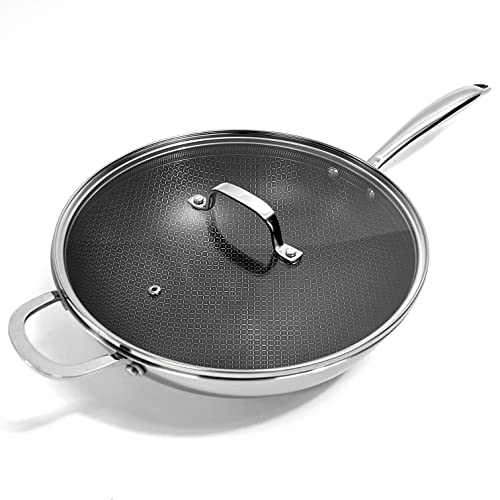
Lexi Home Tri-Ply 5-Qt Wok offers the largest capacity in this set at 5 quarts, in a wok shape with a glass lid. That wider form is suited to tossing ingredients while stir-frying, unlike the deeper, narrower saucepan. Its maker says the stainless steel–aluminum–stainless steel layers spread heat evenly and describes the nonstick surface as scratch-resistant; the maker also says cooking needs 1 teaspoon of oil. Pick it when the wok form and larger capacity suit the meal. The product facts do not establish cooktop compatibility, so verify that before choosing it for a particular stove.
Bottom line: Choose this for wok-style cooking and a 5-quart vessel.
Lexi Home Tri-Ply 4.8-Qt Casserole Pot

Lexi Home Tri-Ply 4.8-Qt Casserole Pot is a 4.8-quart casserole pot with a glass lid, making it a covered-pot option between the 2.7-quart saucepan and 5-quart wok by capacity. Its three layers combine stainless steel with an aluminum middle layer. The maker says that construction distributes heat evenly and says the nonstick surface is scratch-resistant and uses 1 teaspoon of oil for cooking. This piece suits covered cooking when a pot shape is more useful than a wok.
Bottom line: Choose this for covered cooking in a 4.8-quart pot.
How to choose Lexi Home tri-ply cookware
Choose by cooking shape first, then by capacity: a frying pan offers a broad, shallow surface, while a saucepan or casserole pot holds liquid in a deeper vessel and a wok has a wide form for tossing. These four pieces range from a 10-inch pan to lidded vessels of 2.7, 4.8 and 5 quarts. Tri-ply cookware generally sandwiches an aluminum layer between stainless steel layers; aluminum moves heat efficiently, while stainless steel forms the cooking surfaces. The maker says these pieces use that arrangement to distribute heat evenly. A measurable rule: choose the 2.7-quart saucepan when that capacity covers the portion you plan to cook; move to 4.8 or 5 quarts for a larger batch. Do not assume cooktop compatibility from the word tri-ply.
What the tri-ply construction means
Tri-ply means three bonded layers, and these pieces use stainless steel, aluminum and stainless steel in that order. The aluminum core spreads heat through the pan more effectively than a single thick stainless steel layer, while the stainless steel faces provide a durable cooking structure. The maker says the construction helps heat distribute evenly, but actual results also depend on burner size and heat setting. Match the burner to the pan base as closely as practical; a flame or heating element extending far beyond the base can heat sidewalls unevenly. Compatibility is separate from layer count: induction cooktops require a magnetic base, so verify the specific piece’s compatibility before buying for induction.
When a glass lid and nonstick surface matter
A glass lid lets you watch food while keeping a covered cooking setup, but a lid does not make a pan oven-safe or establish a maximum temperature. The three lidded pieces here are the saucepan, wok and casserole pot; the frying pan has no lid stated. The maker describes the interiors as nonstick and scratch-resistant and says cooking needs 1 teaspoon of oil. For coated cookware, use wood, silicone or plastic utensils rather than sharp metal tools, and avoid overheating an empty pan; high heat can damage many nonstick surfaces. Let cookware cool before washing to reduce the risk of thermal shock, especially for glass lids.
Match the piece to the cooking task
The shape and capacity are more useful selection cues than the shared tri-ply construction. A shallow frying pan handles foods that benefit from broad contact with the cooking surface, while a saucepan and casserole pot contain liquids and covered dishes. The wok’s form favors tossing and stirring ingredients. Use this table to narrow the choice by task and size.
| Cooking need | Piece | Capacity or size |
|---|---|---|
| Frying | Frying pan | 10 in |
| Sauces and smaller portions | Saucepan | 2.7 qt |
| Wok-style cooking | Wok | 5 qt |
| Covered pot cooking | Casserole pot | 4.8 qt |
Frequently Asked Questions
Does tri-ply cookware work on induction stoves?
Tri-ply construction alone does not confirm induction compatibility; induction requires a magnetic base. Check for explicit compatibility or test the base with a magnet before relying on it.
Can nonstick cookware be heated when empty?
Avoid heating an empty nonstick pan, because high heat can damage many coated surfaces. Add food or cooking fat before heating and use low to medium heat for most stovetop cooking.
What utensils should I use with nonstick cookware?
Wood, silicone or plastic utensils are safer choices for coated surfaces than sharp metal tools. Scratch-resistant wording is not a reason to use utensils that could gouge the coating.
How should I clean a glass-lid saucepan?
Let the cookware cool before washing, then use warm soapy water and a nonabrasive sponge. Sudden temperature changes can stress glass, so avoid putting a hot lid under cold water.
How much capacity do I need in a saucepan?
A 2.7-quart saucepan suits smaller portions and sauces, while 4.8- to 5-quart cookware accommodates larger batches. Leave room at the top when cooking liquids to reduce spillovers.