
Lime Away Toilet Bowl Cleaner: 4 Products Compared

For cleaning lime and rust inside a toilet bowl, Lysol Lime & Rust Toilet Bowl Gel, 24 oz is the closest match because it is a clinging toilet-bowl gel; the Lime-A-Way products here are surface stain removers rather than toilet bowl cleaners. Choose a Lime-A-Way spray if your main job is hard-water buildup on fixtures, glass, or tile.
We earn a commission if you buy through links on this page. As an Amazon Associate I earn from qualifying purchases. Products are compared on manufacturer specifications, not hands-on testing.
- Best overall: Lysol Lime & Rust Toilet Bowl Gel, 24 oz – Its clinging gel is made for toilet bowls and targets lime, rust, and hard-water stains.
- Best for bathroom spray: Lime-A-Way Hard Water Stain Remover Spray, 22 oz – The 22-ounce trigger spray targets mineral stains on multiple bathroom surfaces.
| Product | Best for | Product type | Size | Package | Shop |
|---|---|---|---|---|---|
| Lysol Lime & Rust Toilet Bowl Gel, 24 oz | Toilet bowl stains | Clinging gel | 24 fl oz | 2 pack | Check Price on Amazon |
| Lime-A-Way Hard Water Stain Remover Spray, 22 oz | Bathroom mineral stains | Trigger spray | 22 fl oz | 1 bottle | Check Price on Amazon |
| LIME-A-WAY Lime, Calcium & Rust Remover, 28 oz | Multi-surface mineral buildup | Liquid remover | 28 oz | 1 bottle | Check Price on Amazon |
| Lime-A-Way Bathroom Cleaner, 16 oz, 2 Pack | Bathroom lime and rust | Bathroom cleaner | 16 oz | 2 pack | Check Price on Amazon |
Lime Away Toilet Bowl Cleaner and Alternatives
Match the formula to the surface: a bowl gel is designed for toilets, while sprays and liquids target hard-water deposits elsewhere.
Lysol Lime & Rust Toilet Bowl Gel, 24 oz
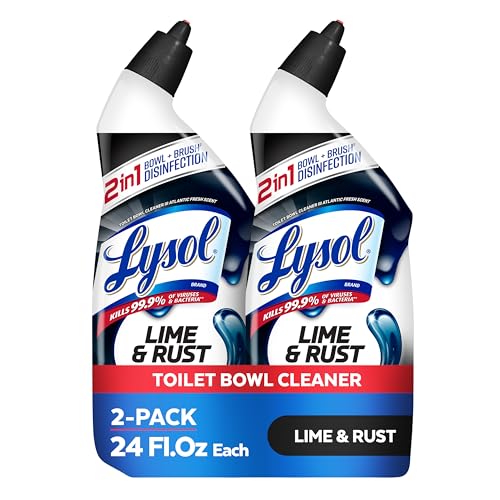
Unlike the Lime-A-Way options here, this product is a toilet-bowl cleaner: its thick gel clings under the rim and targets lime, rust, rings, mineral deposits, and hard-water stains. The package contains two 24-fluid-ounce bottles. The maker says it kills 99.9% of bathroom viruses and bacteria and is septic safe when used as directed. Choose this formula when the bowl itself is the cleaning target. Its use is limited to toilet cleaning, so it is not the best fit for treating mineral buildup on shower doors, faucets, or other bathroom surfaces.
Bottom line: Choose this for a toilet bowl that needs clinging gel coverage and lime or rust stain removal.
Lime-A-Way Hard Water Stain Remover Spray, 22 oz

The 22-ounce trigger spray is the most surface-flexible Lime-A-Way option here, covering hard-water stains on sinks, faucets, tubs, tiles, shower doors, and glass. The maker says its formula dissolves lime, calcium, and rust deposits without scrubbing. It is not a toilet-bowl gel, so choose it for mineral marks around the bathroom rather than as a substitute for a cleaner designed to coat the bowl. The maker excludes natural stone and marble; buyers with those surfaces should keep the spray away from them.
Bottom line: Choose this for hard-water stains across compatible bathroom surfaces, not as a toilet bowl gel.
LIME-A-WAY Lime, Calcium & Rust Remover, 28 oz

It targets lime, calcium, and rust and is described for sinks, tubs, tiles, and glass in kitchens and bathrooms. The maker says the formula works without scrubbing. Unlike the clinging gel, it is not identified as a toilet-bowl cleaner, and its surfaces do not include toilets. It suits buyers focused on mineral buildup around the bathroom rather than stains inside the bowl.
Bottom line: Choose this for the specified sink, tub, tile, or glass surfaces rather than toilet-bowl cleaning.
Lime-A-Way Bathroom Cleaner, 16 oz, 2 Pack

This two-pack of 16-ounce bathroom cleaner is the only Lime-A-Way option here identified specifically as a bathroom cleaner rather than a spray or general-purpose liquid. Its formula is described as breaking down lime and red rust stains. The package contains two bottles. This option is better suited to buyers seeking a Lime-A-Way bathroom cleaner for mineral and rust marks.
Bottom line: Choose this for bathroom lime and rust stains when toilet-bowl-specific use is not required.
How to choose a toilet bowl cleaner for lime stains
Choose a cleaner labeled for the toilet bowl when the stain is inside the bowl or under its rim. Clinging gels stay on curved porcelain longer than a runny liquid, giving the cleaner more contact time before brushing or flushing. For deposits on faucets, glass, or tile, use a surface-specific hard-water remover instead; toilet gel and bathroom spray are not interchangeable. Hard water contains dissolved minerals, and repeated evaporation leaves mineral rings and scale. Match the product to both the stain and the surface, and do not mix toilet cleaners with bleach or other cleaners: mixing acids with bleach can release chlorine gas.
Toilet gel and hard-water spray compared
Toilet gel is the bowl-focused choice, while a trigger spray is easier to direct onto open surfaces such as shower doors or faucets. A bathroom cleaner may cover stains around the room, but its use still needs to fit the target surface.
| Cleaning need | Formula to choose | Why |
|---|---|---|
| Inside bowl or under rim | Toilet bowl gel | Clings to the bowl surface |
| Mineral marks on glass or faucets | Hard-water spray | Can be directed onto compatible surfaces |
| Lime or rust in the bathroom | Bathroom cleaner | Check that its intended surface matches |
Use Lysol Lime & Rust Toilet Bowl Gel, 24 oz for the bowl among these products; the Lime-A-Way choices are surface cleaners, not toilet bowl gels.
Using mineral removers on bathroom surfaces
Hard-water sprays work on mineral deposits on compatible surfaces, but material compatibility matters. Natural stone and marble can be damaged by acidic cleaners, and Lime-A-Way Hard Water Stain Remover Spray, 22 oz excludes those surfaces. Test an inconspicuous area when a product permits use on a surface but its finish is unfamiliar. Apply only to the intended area, keep the room ventilated, and follow the label’s contact and rinse directions. Do not combine acidic lime removers with bleach, ammonia, or another cleaner; chemical mixtures can produce hazardous fumes. For toilet interiors, use a product expressly intended for toilet bowls and apply it under the rim as directed.
Preventing toilet rings and mineral scale
Toilet rings often form where water repeatedly evaporates at the waterline, leaving minerals behind. A weekly bowl cleaning and prompt attention to new rings can make deposits easier to remove than a thick, established scale layer. Hardness is measured in grains per gallon (gpg): water above 7 gpg is generally considered hard, and above 10.5 gpg very hard. A home water test can help explain recurring mineral buildup, but a water softener is a separate plumbing decision. Avoid abrasive scouring pads on porcelain; they can scratch the glaze, giving future stains more places to cling.
Frequently Asked Questions
Can Lime-A-Way be used inside a toilet bowl?
The Lime-A-Way products here are described as bathroom or multi-surface stain removers, not toilet-bowl gels. Use a cleaner labeled for toilet bowls when treating stains inside the bowl or beneath the rim.
What removes hard-water rings in a toilet?
Use a toilet-bowl cleaner formulated for mineral and hard-water stains, then brush the waterline and under the rim. Rings return faster in hard water above 7 grains per gallon, so regular cleaning helps limit buildup.
Can I mix toilet cleaner with bleach?
No; never mix toilet-bowl cleaners with bleach or other cleaning products. Acidic cleaners combined with bleach can release chlorine gas, so use one product at a time and rinse as its label directs.
How often should I clean a toilet bowl?
A weekly cleaning is a practical routine for many households, while hard water or frequent use can call for more frequent cleaning. Remove a new mineral ring early rather than waiting for scale to build up.
Can mineral remover damage bathroom surfaces?
Yes; acidic mineral removers can etch natural stone such as marble, and the spray here specifically excludes those surfaces. Keep the cleaner on compatible materials and follow its surface-use directions.