
Louis Forest Floor Paint: 4 Options Compared

Louis Forest Epoxy Floor Paint, Sesame Gray, 176 oz is the clearest choice for a small floor project because its 176-ounce package is listed to cover about 30 to 34 square feet. Choose another color or package size if that finish does not suit your space; the smaller packages are especially hard to compare by coverage.
We earn a commission if you buy through links on this page. As an Amazon Associate I earn from qualifying purchases. Products are compared on manufacturer specifications, not hands-on testing.
- Best overall: Louis Forest Epoxy Floor Paint, Sesame Gray, 176 oz – Its 176-ounce package has a coverage range of about 30 to 34 square feet.
- Best for larger areas: Louis Forest Colored Sand Epoxy, Cambrian Rock Gray – Its 423.29-ounce container is the largest package among these options.
- Best for beige floors: Louis Forest Epoxy Floor Paint, Beige – It is the beige-colored option and has a high-gloss marble-effect finish.
| Product | Best for | Color | Package size | Shop |
|---|---|---|---|---|
| Louis Forest Epoxy Floor Paint, Sesame Gray, 176 oz | Small floor projects | Sesame gray | 176 oz | Check Price on Amazon |
| Louis Forest Colored Sand Epoxy, Cambrian Rock Gray | Larger projects | Cambrian rock gray | 423.29 oz | Check Price on Amazon |
| Louis Forest Epoxy Floor Paint, Beige | Beige finish | Beige | 1 oz | Check Price on Amazon |
| Louis Forest Epoxy Floor Paint, Dark Gray | Dark gray finish | Dark gray | 1 fl oz | Check Price on Amazon |
Louis Forest floor paint options
Compare the colors and package sizes first, then match the coverage to the area you plan to coat.
Louis Forest Epoxy Floor Paint, Sesame Gray, 176 oz

Louis Forest Epoxy Floor Paint, Sesame Gray, 176 oz is the most straightforward option for estimating a small project: the 176-ounce package is stated to cover about 30 to 34 square feet. It has a high-gloss marble-effect finish, a colored sand appearance, and a waterproof, anti-slip surface according to the maker. The sesame gray color suits buyers looking for a neutral gray. Its coverage is approximate, so measure the floor and account for edges and unevenness before deciding whether one package is enough; the range should not be treated as a guaranteed yield.
Bottom line: Pick this when sesame gray and a roughly 30-square-foot project are the priority.
Louis Forest Colored Sand Epoxy, Cambrian Rock Gray

Louis Forest Colored Sand Epoxy, Cambrian Rock Gray has the largest package among these choices at 423.29 ounces, making it the option to consider when a small container would be impractical. It is a colored sand epoxy coating intended for prepared concrete in garages, basements, workshops, and utility areas, with a high-gloss marble-effect finish. The package color is Cambrian Rock Gray. The key tradeoff is that its project coverage cannot be compared directly with the 176-ounce option from the figures, so measure your floor and confirm the expected coverage for your application before committing to the larger quantity.
Bottom line: Choose this for a larger concrete area when Cambrian Rock Gray fits the space.
Louis Forest Epoxy Floor Paint, Beige
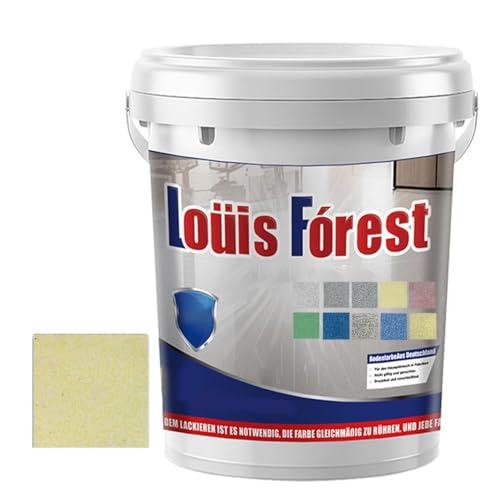
Louis Forest Epoxy Floor Paint, Beige is the beige choice in this group, with a high-gloss marble-effect coating described as waterproof and slip-resistant. The maker also says its glossy surface is easy to maintain and designed to resist impact and wear. Its 1-ounce package is much smaller than the other substantial quantities here, so it is not the practical match for coating a full room unless the intended use is very limited. Buyers choosing it for color should verify that the package quantity is appropriate for their actual floor area before ordering.
Bottom line: Pick this when beige is essential and the very small package suits the job.
Louis Forest Epoxy Floor Paint, Dark Gray

Louis Forest Epoxy Floor Paint, Dark Gray is the dark gray option, with a high-gloss marble-effect finish and a non-slip, waterproof surface according to the maker. The product is presented for garage floors and other spaces, but its package contains only 1 fluid ounce, which sets it apart from the larger floor-coating quantities here. That makes it a poor match for coating a broad floor area; consider it only when the small quantity aligns with your purpose. The maker also describes the coating as resistant to pressure, impact, and wear, but the package size remains the deciding limitation for most floor projects.
Bottom line: Choose this only when dark gray is required and 1 fluid ounce is enough.
How to choose epoxy floor paint
Choose by floor area, color, and the coverage the manufacturer gives for the package. Measure length and width in feet and multiply them to get square footage; for example, a 6-by-5-foot area is 30 square feet. Concrete coatings need a sound surface: remove dust, grease, loose paint, and curing compounds, since contaminants can interfere with adhesion. A coating labeled for concrete is not automatically suitable for every slab condition. For a project below 34 square feet, the sesame gray package with coverage of about 30 to 34 square feet is the only option here that can be matched directly to an area. With larger projects, verify coverage and whether multiple coats are required before estimating quantity.
Preparing concrete for a floor coating
Preparation is often the deciding factor in how well a concrete coating bonds. Start with a clean, dry slab; oil, dust, and loose material can keep a coating from contacting the concrete properly. New concrete commonly needs at least 28 days to cure before coating, though the coating maker’s requirements control because moisture and formulation differ. A simple water-drop check can flag sealed or contaminated surfaces: if drops bead instead of darkening the concrete, the surface may need further preparation. Repair cracks and remove flaking coatings before applying a new layer. Do not coat damp concrete merely because the product is described as waterproof; waterproofing the finished surface does not establish that it bonds to wet substrate.
Marble-effect and colored sand finishes
Marble-effect epoxy uses color and texture to create a decorative floor appearance, while the colored sand wording indicates a textured decorative element rather than a plain solid-color paint. High gloss reflects more light and can make surface dust, scratches, and unevenness easier to notice than a matte finish. A non-slip or anti-slip claim does not provide a standardized slip rating, so it cannot predict traction under every contaminant or wet condition. For a garage, basement, or workshop, decide whether the visual finish or a specified traction level is more important. If users will walk on a wet floor, confirm the coating’s application guidance and whether a separate traction additive is suitable.
Estimating coverage and avoiding waste
Calculate floor area before choosing a package: multiply room length by width, then add separate sections such as alcoves. The 30-to-34-square-foot range for the 176-ounce option is approximate, and porous or rough concrete can consume more coating than a smooth, sealed surface. Two coats also require more material than one, so never treat a single-coat estimate as enough for a multi-coat job. This product group includes package quantities from 1 ounce to 423.29 ounces, but only one includes an area estimate. A useful rule is to avoid choosing a package solely by color when the project area is larger than its confirmed coverage; confirm the usable area and coat count first.
Frequently Asked Questions
How much epoxy floor paint covers 30 square feet?
The sesame gray 176-ounce option is stated to cover about 30 to 34 square feet. Rough or porous concrete and additional coats can increase how much material a project needs.
How long should new concrete cure before epoxy?
New concrete commonly needs at least 28 days to cure before coating. Moisture and the coating formulation can change the requirement, so confirm the product’s concrete-preparation directions.
Does waterproof epoxy mean damp concrete is ready?
No; a waterproof finished coating does not mean it will bond properly to damp concrete. Start with a clean, dry surface because moisture can interfere with adhesion.
Can epoxy floor paint go over existing paint?
Only if the old coating is sound and compatible with the new epoxy. Remove peeling paint and contamination, and prepare the surface so the coating can bond rather than bridging loose layers.
Is a non-slip epoxy floor safe when wet?
A non-slip claim alone does not establish traction under every wet condition. For areas regularly exposed to water, check for a measured slip rating and use conditions before choosing a coating.