
Low Sodium Sardines in Olive Oil: 5 Options Compared

For low sodium sardines in olive oil, Season Skinless & Boneless Sardines is the closest match because it is packed in olive oil and says no salt is added. Choose a water-packed option if the packing medium matters less than avoiding added salt, or verify the Nutrition Facts sodium amount if you need a specific limit.
We earn a commission if you buy through links on this page. As an Amazon Associate I earn from qualifying purchases. Products are compared on manufacturer specifications, not hands-on testing.
- Best overall: Season Skinless & Boneless Sardines – It pairs olive oil with a no-salt-added claim.
- Best for extra-virgin olive oil: Wild Planet Sardines in Organic EVOO – It specifies organic extra-virgin olive oil, but includes sea salt.
- Best for water packing: Beach Cliff Sardines in Water – It is water-packed and says no salt is added.
| Product | Best for | Salt claim | Packing medium | Tin size | Shop |
|---|---|---|---|---|---|
| Season Skinless & Boneless Sardines | Olive oil, no salt | No salt added | Olive oil | 4.37 oz | Check Price on Amazon |
| Wild Planet Sardines in Organic EVOO | Extra-virgin olive oil | Touch of sea salt | Organic extra-virgin olive oil | 4.4 oz | Check Price on Amazon |
| Beach Cliff Sardines in Water | Water-packed, no salt | No salt added | Water | 3.75 oz | Check Price on Amazon |
| Connetable Sardines in Water | Larger water-packed tins | No salt added | Water | 4.38 oz | Check Price on Amazon |
| Season Bone-In Sardines in EVOO | Bone-in olive oil | — | Extra-virgin olive oil | 4.37 oz | Check Price on Amazon |
Low Sodium Sardines in Olive Oil Options
Compare the salt claims and packing medium, then use the Nutrition Facts panel to check sodium per serving.
Season Skinless & Boneless Sardines

Season Skinless & Boneless Sardines is the closest fit for someone seeking sardines in olive oil without added salt. The 4.37-ounce tins contain skinless, boneless, wild-caught sardines; the maker also highlights omega-3 fats and protein. A 12-pack suits pantry stocking, while removing skin and bones may appeal if you prefer fillets without them. “No salt added” does not mean sodium-free: fish can contain naturally occurring sodium, so check the Nutrition Facts amount per serving if you have a firm sodium limit. This option is not the pick if you want bone-in sardines.
Bottom line: Pick this if olive oil and no added salt are your priorities.
Wild Planet Sardines in Organic EVOO

Wild Planet Sardines in Organic EVOO differs from the no-salt-added choices by combining organic extra-virgin olive oil with a touch of sea salt. Each can is 4.4 ounces, and the maker says a serving provides 17 grams of protein, 974 milligrams of EPA and DHA omega-3s, and 25% of the daily value for calcium. Its scale-free sardines and pull-tab can suit a quick meal or recipe. The sea salt means it is not a no-salt-added match, so check sodium per serving before choosing it for a low-sodium eating plan.
Bottom line: Choose this if organic extra-virgin olive oil matters more than avoiding added salt.
Beach Cliff Sardines in Water
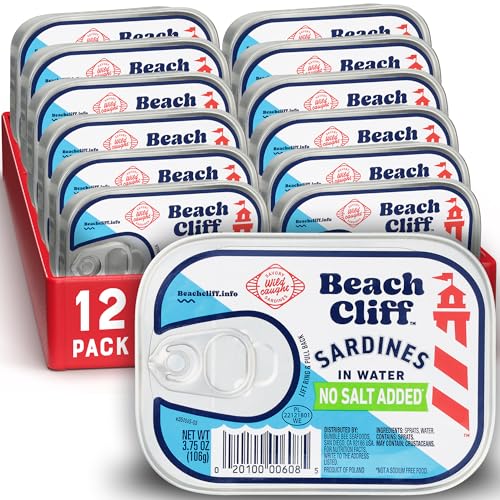
Beach Cliff Sardines in Water keeps the no-salt-added claim but switches the packing medium from olive oil to water. The 3.75-ounce tins come in a 12-pack, and the maker says each tin contains 12 grams of protein. That makes this a related choice for shoppers prioritizing no added salt and a water-packed fish, rather than the requested oil-packed style. The main tradeoff is culinary: it will not bring olive oil along for serving or recipes. Check the Nutrition Facts panel for sodium per serving if you are tracking a daily limit.
Bottom line: Pick this if water packing is acceptable and no added salt is the priority.
Connetable Sardines in Water

Connetable Sardines in Water offers a larger water-packed tin than the 3.75-ounce alternative, while retaining a no-salt-added claim. Each tin is 4.38 ounces, and the maker describes the sardines as wild-caught and responsibly sourced; it also cites BPA NI cans and recyclable aluminum. The water medium makes this a related option rather than an olive-oil match. Buyers seeking an oily texture or the flavor of olive oil should choose another product. As with any no-salt-added canned fish, use its Nutrition Facts panel to judge actual sodium per serving.
Bottom line: Choose this if you want a 4.38-ounce water-packed tin with no salt added.
Season Bone-In Sardines in EVOO

Season Bone-In Sardines in EVOO stands apart with bone-in sardines in extra-virgin olive oil, sold in a 24-pack of 4.37-ounce tins. The maker highlights calcium and protein, and describes the sardines as wild-caught. This may suit someone who wants bones included and prefers to stock a larger case. The maker does not establish a no-salt-added claim, so verify sodium per serving before treating it as a low-sodium choice. The bones and skin also make it a different eating experience from skinless, boneless fillets.
Bottom line: Pick this if you want bone-in sardines in olive oil and can verify the sodium amount.
How to choose low sodium sardines
Start with sodium per serving on the Nutrition Facts panel, not just a front-label phrase. Under FDA labeling rules, “low sodium” means 140 milligrams or less per reference amount customarily consumed; “very low sodium” means 35 milligrams or less. “No salt added” means salt was not added during processing, but it does not guarantee the food has no naturally occurring sodium. Compare the same serving basis across cans, since serving sizes can differ. If you have a prescribed sodium limit, choose by the milligrams that fit your allowance and serving size rather than by the claim alone.
Olive oil versus water packing
Olive oil and water change the eating experience, not the definition of sodium content: use the panel to compare sodium either way. Oil-packed sardines bring oil into the meal, while water-packed tins suit recipes where you want to add your own dressing or cooking fat. Draining can change what you eat, but do not assume a particular sodium reduction without product-specific data. When comparing cans, note both the net tin weight and the serving size; a larger can is not automatically a larger serving or lower-sodium choice. Pick the medium that fits your recipe, then confirm sodium on that exact product.
What no salt added means on canned fish
“No salt added” is not the same as sodium-free, because foods may contain sodium naturally and the claim does not give the amount in a serving. FDA’s “reduced sodium” claim means at least 25% less sodium than the regular version of the same food, which is different from no salt added. For a straightforward comparison, record milligrams of sodium and serving size from each can’s Nutrition Facts panel. If you need a strict ceiling, calculate servings against that ceiling before eating; dividing a can into two portions changes the amount consumed, not the sodium concentration per serving.
Storing opened sardines safely
Opened canned sardines should be refrigerated promptly in a covered container and used within 3 to 4 days. Perishable fish should not sit at room temperature for more than 2 hours, or more than 1 hour when the temperature is above 90°F. Transfer leftovers from the opened can to a covered food-safe container rather than leaving them exposed. For meal planning, portion the fish soon after opening so the serving size is clear and leftovers can be chilled without delay.
Frequently Asked Questions
Does no salt added mean sardines are sodium-free?
No. Sardines can contain naturally occurring sodium even when no salt is added during processing. Check the Nutrition Facts panel for milligrams per serving.
What counts as low sodium per serving?
FDA labeling defines low sodium as 140 milligrams or less per reference amount customarily consumed. Compare the serving size as well as the milligrams.
Are sardines in olive oil lower in sodium?
Packing medium alone does not establish sodium content; the Nutrition Facts panel is the useful comparison. Compare milligrams per serving rather than assuming oil-packed fish is lower in sodium than water-packed fish.
Should I drain the oil before eating sardines?
Drain the oil if you want less of it in the meal, but do not count on draining to reduce sodium by a particular amount. Product-specific sodium after draining would be needed for an exact figure.
How long do opened canned sardines keep refrigerated?
Refrigerate opened sardines promptly in a covered container and use them within 3 to 4 days. Do not leave opened fish at room temperature for more than 2 hours, or 1 hour when it is above 90°F.