
Low Temperature Welding Rods: 5 Options Compared

CoscosX 60-Piece Rods is the most flexible starting point for low temperature welding rods because it includes 60 rods, each about 3 inches long. Choose another set if you need a smaller quantity or a product whose metal uses better match your repair.
These rods are marketed for joining or repairing metal, but “low temperature” alone does not establish compatibility with a particular alloy or tool.
We earn a commission if you buy through links on this page. As an Amazon Associate I earn from qualifying purchases. Products are compared on manufacturer specifications, not hands-on testing.
- Best overall: CoscosX 60-Piece Rods – It includes 60 rods about 3 inches long, more pieces than the other sets.
- Best for a mid-size set: Tandefio 24-Piece Rods – It includes 24 rods measuring about 3.07 inches.
- Best for multi-metal repairs: 6-Piece Universal Aluminum Rods – Its uses include aluminum, stainless steel, copper and iron.
| Product | Best for | Rod count | Rod length | Stated metal compatibility | Shop |
|---|---|---|---|---|---|
| CoscosX 60-Piece Rods | Larger rod supply | 60 | 3 in | Aluminum, stainless steel, iron alloy | Check Price on Amazon |
| 6-Piece Universal Aluminum Rods | Multi-metal repair | 6 | 2.83 in | Aluminum, stainless steel, copper, iron | Check Price on Amazon |
| 6-Piece Low Temperature Aluminum Rods | Small surface repairs | 6 | 3 in | Aluminum, iron, copper, stainless steel | Check Price on Amazon |
| Tandefio 24-Piece Rods | Medium-size set | 24 | 3.07 in | Aluminum, stainless steel, iron | Check Price on Amazon |
| 12-Piece Universal Aluminum Rods | Basic aluminum set | 12 | — | Aluminum | Check Price on Amazon |
Low Temperature Welding Rods Compared
Compare each set’s count, size and stated metal uses before matching a rod to your repair.
CoscosX 60-Piece Rods

CoscosX 60-Piece Rods stands out for its 60-piece quantity, the largest set here, with rods about 3 inches long. The maker identifies tin powder and aluminum powder as the materials and describes the rods for aluminum, stainless steel and iron alloy. The compact length may suit small repair jobs where shorter pieces are easier to handle. The metal list is broad, but it does not establish suitability for every alloy or repair; confirm the rod and tool are compatible with the specific base metal before heating.
Bottom line: Choose this set when having 60 short rods on hand matters more than a smaller pack.
6-Piece Universal Aluminum Rods

6-Piece Universal Aluminum Rods names four metals—aluminum, stainless steel, copper and iron—in its repair uses, giving it a wider named material range than sets focused mainly on aluminum. The six rods are about 2.83 inches long, according to the dimensions. That smaller quantity can fit occasional garage or workshop jobs without a large supply. The maker describes the bonding as shock- and drop-resistant, but that claim does not replace a compatibility check or appropriate joint preparation for the specific metal and application.
Bottom line: Pick this set if its four-metal range matches a small repair job.
6-Piece Low Temperature Aluminum Rods

6-Piece Low Temperature Aluminum Rods is aimed at small repair areas such as cracks, holes and leaks on compatible metal items. Each rod measures about 3 inches, and the set contains six. The maker says no extra solder powder is needed and calls for proper surface cleaning and preparation. Its use list includes aluminum, iron, copper and stainless steel. The small pack is less suited to projects that call for many rods; the broad material list also should not be read as proof that one joining method works for every alloy or leak repair.
Bottom line: Choose this six-rod set for a limited number of small surface repairs.
Tandefio 24-Piece Rods

Tandefio 24-Piece Rods offers 24 powder-cored sticks measuring about 3.07 inches, making it the middle-sized set by count among these options. The maker identifies the rods as aluminum electrodes for stainless steel and iron as well as aluminum. It also cautions that the material is relatively brittle and that some rods may arrive broken; the maker says breakage does not affect use. That caveat matters if you need every stick intact or plan to store them loosely, so handle and store the rods carefully.
Bottom line: Pick this set when 24 rods and a slightly longer stick suit your workload.
12-Piece Universal Aluminum Rods
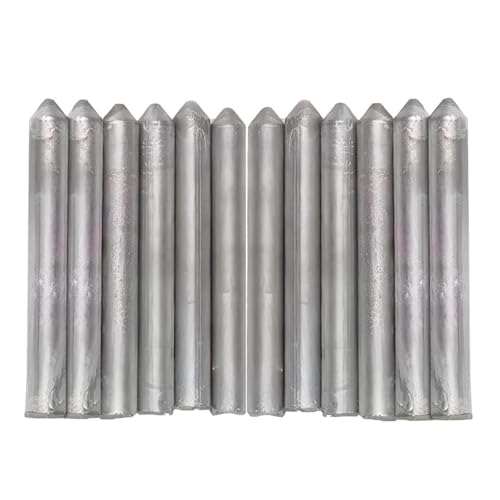
12-Piece Universal Aluminum Rods is an aluminum-focused option with 12 rods, a middle quantity between the six-piece and larger packs. The maker describes the rods as compatible with most arc welding equipment and says their low melting point allows use without specialized equipment or additional preparation. That combination may suit occasional aluminum repair when the equipment matches.
Bottom line: Choose this option for aluminum work if its equipment compatibility fits your setup.
How to choose low temperature welding rods
Start with the base metal and the joining process, not the phrase “universal.” Welding melts the base metal; brazing and soldering join parts with filler while keeping the base metal below its melting point. A rod advertised for several metals may still require a particular surface condition, heat source or technique. Check the exact alloy and tool compatibility before starting, especially when joining dissimilar metals.
Then compare the number and length of rods with the job size. Short rods around 3 inches suit compact work, while pack count determines how many attempts or repairs the set can cover. For a one-off repair, a small pack may be enough; for repeated jobs, compare counts rather than assuming all rods have the same usable length.
What metal compatibility means
A compatibility claim is a starting point, not a guarantee that one filler works on every grade of a named metal. Aluminum forms a tenacious oxide layer, while stainless steel and copper have different surface and heat-transfer behavior. Cleaning the joint and using the correct heat source matter; contamination or insufficient heat can prevent a sound bond.
Use the product’s named metals as a screening tool, then verify the specific alloy and intended joint before heating. “Low temperature” does not give a precise working temperature or identify an alloy. If the repair carries a load, contains pressure, or is safety-critical, use a qualified repair method rather than relying on a general-purpose rod.
Welding rods, brazing rods and soldering rods
Welding, brazing and soldering are different joining processes, even when product names use the word “welding.” In fusion welding, the base metal melts; brazing and soldering instead rely on filler metal flowing into a joint while the base metal remains solid. Brazing is conventionally distinguished from soldering by filler melting above 840°F, though tool and filler specifications govern the actual working process.
Product names here use mixed terms such as “brazing,” “solder” and “welding.” Do not infer a procedure from the name alone. Before using a rod, establish the filler’s working temperature, the compatible base metals and the heat source; these factors determine whether the process is suitable.
Safe setup for small metal repairs
Wear welding or brazing eye protection appropriate to the heat source, keep flammable materials away, and work with ventilation that carries fumes away from your breathing zone. Heated metal and rods can cause burns even when the joining process is described as low temperature. Use a fire-resistant work surface and keep a suitable fire extinguisher nearby.
Clean and fit the joint before applying heat, and avoid heating a closed or pressurized container. A broad claim of use for leaks does not make a rod appropriate for a pressurized line or a structural repair. Stop if the filler does not flow as intended instead of increasing heat without confirming the rod’s temperature and tool requirements.
Frequently Asked Questions
Are low temperature welding rods really welding rods?
Welding melts base metal, while brazing and soldering use filler without melting the base metal; confirm the process and working temperature for the rod.
Can one rod join aluminum and stainless steel?
Some products claim use on both metals, but a broad material claim does not establish suitability for every alloy or joint. Verify the specific base metals and filler compatibility before heating.
Do low temperature rods need flux?
Flux needs depend on the filler, base metal and joining process. One set says it requires no extra solder powder, but that does not establish flux requirements for the other products.
What safety gear do I need for heating metal?
Use eye protection appropriate for the heat source, ventilation, and a fire-resistant work area. Heated rods and workpieces can burn, so keep flammables clear and never heat a sealed or pressurized container.