
Material to Cover a Speaker Box: 4 Fabrics Compared

Speaker grille cloth is the best fit for covering a speaker box when you want a fabric barrier that allows sound through; choose by frame size and fabric construction. For a box that needs a carpet-like finish rather than a speaker grille, choose a different material.
Measure the area to cover before choosing: one option has conflicting size units in its product text, so confirm its dimensions before ordering.
We earn a commission if you buy through links on this page. As an Amazon Associate I earn from qualifying purchases. Products are compared on manufacturer specifications, not hands-on testing.
- Best overall: SAVUK 3D Mesh, 20 x 59 – Its 20 x 59-inch size and polyester 3D mesh construction suit a range of speaker-cover projects.
- Best for a wide cover: Black Speaker Grill Fabric, 55 x 39 – The 55 x 39-inch piece provides a larger stated coverage area.
- Best for a small panel: Black Speaker Grill Cloth, 33 x 20 – The 33 x 20 size suits a smaller project, but confirm whether the dimensions are inches or centimeters.
| Product | Best for | Dimensions | Material | Construction | Shop |
|---|---|---|---|---|---|
| Black Speaker Grill Cloth, 33 x 20 | Small cover projects | 33 x 20; unit to confirm | — | Lightweight mesh | Check Price on Amazon |
| Black Speaker Grill Fabric, 55 x 39 | Large flat panels | 55 x 39 in | — | Lightweight fabric | Check Price on Amazon |
| SAVUK 3D Mesh, 20 x 59 | Layered mesh cover | 20 x 59 in | 100% polyester | 3-layer mesh | Check Price on Amazon |
| Black Speaker Grill Cloth, 55 x 39 | Polyester grille cloth | 55 x 39 in | Polyester | Acoustic fabric | Check Price on Amazon |
Speaker Box Cover Material Compared
Compare the sizes and fabric construction, then match the material to the grille area you need to cover.
Black Speaker Grill Cloth, 33 x 20

This black mesh is the smallest piece among these options, making it a potential fit for a compact grille or repair. The maker gives 33 x 20 inches in its name but 33 x 20 centimeters in its package specification, so confirm the unit before buying. Its fabric is described as lightweight, thin and breathable, with stretch and UV treatment. That stretch may help achieve a smooth wrap, but the conflicting measurement makes it a poor choice when precise coverage is essential.
Bottom line: Choose it for a small repair only after confirming the dimensions.
Black Speaker Grill Fabric, 55 x 39

This option offers a broad 55 x 39-inch piece, which can cover a larger grille area or leave material for trimming. The fabric is described as light and thin, with dust and scratch resistance, making it a straightforward choice when coverage area matters more than a specified layered build. Its material composition is not identified, so buyers who need a particular fiber should choose based on that requirement rather than assume a composition. Measure the frame and allow extra material for wrapping around its edges.
Bottom line: Pick it when your project needs a larger single piece of grille fabric.
SAVUK 3D Mesh, 20 x 59
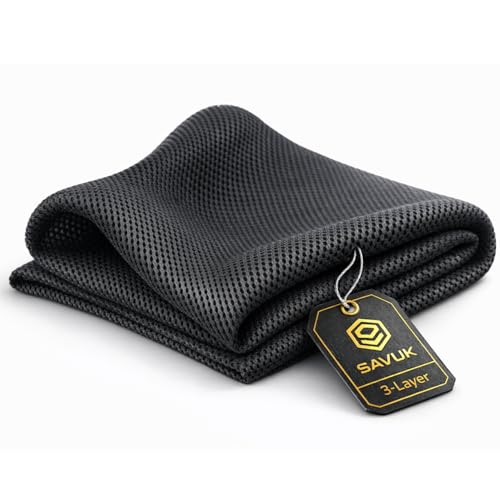
The SAVUK fabric stands out for its three-layer construction and 100% polyester material. At 20 x 59 inches, it is long and relatively narrow compared with the wider 55 x 39-inch options, so check the orientation and dimensions of the grille before selecting it. The product says the breathable fabric allows infrared remote signals through, which may matter for a speaker with a receiver behind the grille. Its narrow width can limit use on wide panels or one-piece wraps.
Bottom line: Choose it for a narrow or elongated grille where layered polyester mesh fits.
Black Speaker Grill Cloth, 55 x 39

This 55 x 39-inch piece combines a broad stated size with an identified polyester composition. The product describes the cloth as acoustically transparent and intended to pass both high- and low-frequency sound, making it an option for conventional speaker grilles rather than a carpet-style box finish. It suits projects where you want fabric coverage plus a defined fiber.
Bottom line: Pick it when you want a large polyester piece for a standard grille shape.
How to Choose Speaker Box Cover Material
Choose speaker grille cloth when sound needs to pass through the cover, and choose a carpet-like liner when the goal is a finished or protected box surface. Grille fabric is generally a porous textile; dense upholstery can obstruct sound more than an open mesh. Fabric thickness, weave density and any backing all affect acoustic transmission, so material names alone do not guarantee identical sound. Match the cut size to the grille frame, not just the speaker cone: include fabric to wrap around the frame edges and secure it on the back. A practical rule is to pick a piece wider and taller than the visible opening by the amount needed for wrapping and fastening, then trim excess after fitting.
Measure the Grille Frame Before Cutting
Measure the frame’s outside width and height, then add wrap allowance on every side before cutting. A frame with a 12 x 8-inch face needs more than 12 x 8 inches of fabric because the cloth must turn around its edges and reach the rear fastening surface. Stretchable mesh can accommodate a smooth wrap, but stretching too hard may distort the weave or leave uneven tension. For a large opening, compare both fabric dimensions to the frame orientation; a long narrow piece may not cover a wide grille even when its total area seems sufficient. Keep the cloth clear of ports and moving speaker parts.
Grille Cloth and Carpet-Like Box Coverings
Grille cloth prioritizes airflow and sound passage, while carpet-style box covering prioritizes a finished exterior surface and abrasion resistance. A breathable mesh is the sensible choice over a driver-facing grille; a carpet liner belongs on enclosure surfaces where a textile finish is wanted. Do not assume a carpet-like material is acoustically transparent just because it is sold for speaker boxes. The table compares the intended role so the covering matches the area being wrapped.
| Cover type | Typical use | Key fit check |
|---|---|---|
| Open-weave grille cloth | Speaker grille or frame | Area plus wrap allowance |
| Carpet-like liner | Exterior enclosure finish | Surface coverage and edge finish |
For an opening in front of a driver, favor a fabric explicitly intended as speaker grille cloth rather than treating all box-cover textiles as interchangeable.
Attach Fabric Without Blocking Sound
Wrap grille cloth evenly over a removable frame and secure it from the back when the frame design permits. Even tension reduces wrinkles; fastening from behind keeps staples or other attachment points away from the visible face. Avoid covering a bass-reflex port, since obstructing the port changes its airflow, and keep fabric from touching a cone or surround that must move freely. On a fixed panel, plan the edge finish before cutting because excess fabric may not be hidden by a frame. After fitting, inspect the full opening for slack, tears, blocked openings and contact with moving components.
Frequently Asked Questions
Does speaker grille cloth affect sound quality?
Yes, the weave and thickness can affect how freely sound passes through the cover. An open, lightweight grille fabric is generally a better fit than dense upholstery, but do not assume every mesh has identical acoustic performance.
How much extra fabric should I allow around a grille?
Allow enough fabric to wrap past every frame edge and reach its rear fastening area. Measure the frame itself, then add the wrap depth on both sides of each dimension before cutting.
Can speaker fabric cover a subwoofer port?
Keep fabric from obstructing a port opening because the port needs clear airflow. Mount the cloth over the grille area while leaving any vent unobstructed.
Can I stretch speaker cloth tightly over a frame?
Use even tension to smooth wrinkles, but avoid pulling so hard that the weave distorts or the fabric tears. Stretchable cloth can help with a smooth finish, but the frame’s corners still need careful, balanced tension.
Should speaker cloth touch the speaker cone?
No; keep the cover from contacting the cone or surround, which move during operation. A grille frame helps hold fabric away from those components.