
Men’s Boots With Fur Inside: 5 Styles Compared

Hanani Fur-Lined Ankle Boots suits most shoppers seeking men’s boots with fur inside because it pairs a synthetic fleece lining with a waterproof Oxford-fabric upper and a zipper closure. Choose another style if you prefer laces, need a removable liner, or expect to wear the boots in dry weather only.
We earn a commission if you buy through links on this page. As an Amazon Associate I earn from qualifying purchases. Products are compared on manufacturer specifications, not hands-on testing.
- Best overall: Hanani Fur-Lined Ankle Boots – The fleece-lined boot has a waterproof Oxford-fabric upper and zipper closure.
- Best for full fur lining: UPSOLO Fully Fur-Lined Ankle Boots – The maker describes the ankle-high boot as fully fur-lined and seam-sealed.
- Best for orthotics: WHITIN Fleece-Lined Winter Shoes – Its sock liner can be removed to accommodate a medical orthotic.
- Best for dry-weather walking: Bruno Marc Faux-Fur Casual Boots – Faux-fur lining and a lightweight MD outsole suit casual wear, but the boot is not waterproof.
| Product | Best for | Lining | Closure | Water protection | Shop |
|---|---|---|---|---|---|
| Hanani Fur-Lined Ankle Boots | Wet-weather walks | Synthetic short fleece | Zipper | Waterproof upper | Check Price on Amazon |
| UPSOLO Fully Fur-Lined Ankle Boots | Cold outdoor use | Artificial fluff | — | Waterproof exterior | Check Price on Amazon |
| WHITIN Fleece-Lined Winter Shoes | Orthotic users | Cozy fleece | Lace-up | Water resistant | Check Price on Amazon |
| Bruno Marc Faux-Fur Casual Boots | Dry casual wear | Faux fur | — | Not waterproof | Check Price on Amazon |
| CARENURSE Water-Resistant Fur-Lined Boots | Lace-up support | Faux fur | Lace-up | Water resistant | Check Price on Amazon |
Men’s Boots With Fur Inside
Compare lining, closure, and weather protection to find a pair suited to your winter routine.
Hanani Fur-Lined Ankle Boots

Hanani Fur-Lined Ankle Boots is the only option here with a zipper closure and an upper the maker describes as waterproof. The ankle-height boot uses synthetic short fleece inside and a rubber sole designed for traction, making it a practical pick for cold, wet-weather walks. The upper’s waterproof claim does not establish that every seam or the entire boot is waterproof, so avoid treating it as a guaranteed waterproof system for prolonged exposure. Choose it when a zipper and a fleece lining matter more than a lace-adjustable fit.
Bottom line: Pick it for a fleece-lined ankle boot with a zipper and a waterproof upper.
UPSOLO Fully Fur-Lined Ankle Boots
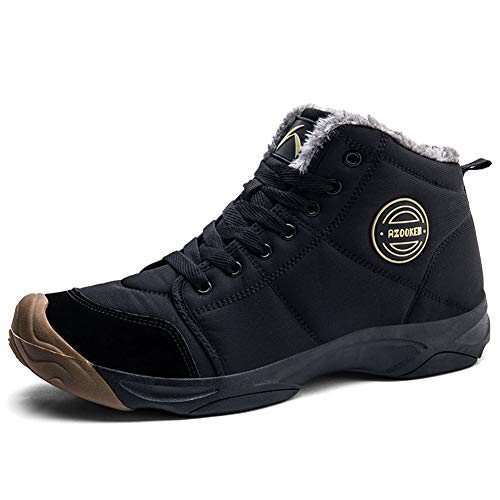
UPSOLO Fully Fur-Lined Ankle Boots stands out for its fully fur-lined interior and seam-sealed, ankle-high construction. The maker says the exterior is waterproof and the rubber outsole provides traction on wet or steep terrain, making this style suited to outdoor winter activities as well as daily walking. The upper is elastic, rather than a lace-up or zipper closure, so shoppers wanting a dialed-in adjustment may prefer another option. Its weight is about 2.31 pounds; that figure can help compare it with lighter-feeling footwear.
Bottom line: Choose it if full fluff lining and outdoor traction are priorities.
WHITIN Fleece-Lined Winter Shoes

WHITIN Fleece-Lined Winter Shoes is the choice for shoppers who need a removable sock liner to make room for a medical orthotic. Its lace-up closure lets the wearer adjust the fit, while speed hooks are intended to make putting the shoes on easier. The maker identifies the upper as nubuck vegan leather and the rubber outsole as slip resistant. Water protection is limited: the maker specifically says this pair is water resistant, not fully waterproof. That distinction matters for anyone walking through deep snow or standing in wet conditions.
Bottom line: Pick it when orthotic space and an adjustable lace fit matter.
Bruno Marc Faux-Fur Casual Boots

Bruno Marc Faux-Fur Casual Boots is a casual walking option with a PU-and-fabric upper, thick faux-fur lining, and an MD outsole. The maker says the outsole is lightweight, shock-absorbent, and resilient, and the sherpa-covered EVA insole adds another warm layer underfoot. The key limitation is weather exposure: the maker says these boots are not waterproof and advises avoiding rain or snow. They fit shoppers seeking lined footwear for dry-weather errands or travel, not a boot for slush or wet winter trails.
Bottom line: Choose it for casual walking in dry winter conditions.
CARENURSE Water-Resistant Fur-Lined Boots

CARENURSE Water-Resistant Fur-Lined Boots combines a lace-up design with a removable plush insole, so it offers both adjustable fit and the option to change the footbed. The synthetic leather upper is water resistant, and the faux-fur lining wraps the foot; the rubber sole is designed for traction. The maker gives a weight of 0.9 pound for size 9, which is not necessarily the weight for the size 11 offered here. Water resistance is not a substitute for a fully waterproof boot in persistent rain or deep slush.
Bottom line: Pick it for a removable insole and lace-adjustable fit.
How to Choose Men’s Boots With Fur Inside
Choose winter boots by matching the lining, weather barrier, and outsole to your route. Faux-fur or fleece adds a warm layer, but warmth also depends on sock thickness and how much room remains around the toes; a cramped fit can make a warm lining less comfortable. For wet snow, favor a boot with a waterproof construction rather than relying on the word “water-resistant,” which means less protection. Rubber outsoles generally suit slick winter ground better than smooth casual soles, but tread depth and compound affect grip. If your walks include slush or standing water, prioritize water protection; for dry errands, lining and fit can take precedence.
Waterproof vs. Water-Resistant Winter Boots
Waterproof and water-resistant are different claims, so match them to the length and wetness of your outing. A waterproof upper can help block water at the material, while seams, tongue openings, and the opening around the ankle can still be routes for moisture. Water-resistant footwear is better suited to brief exposure or damp conditions than prolonged immersion or deep slush. For a practical decision rule, choose a waterproof-design boot for regular wet-snow walks; reserve water-resistant and non-waterproof pairs for short trips on mostly dry ground. Wet footwear should be dried at room temperature, not against a heater, which can damage materials and adhesives.
How Fur-Lined Boots Should Fit
Fur-lined boots should leave toe room after you put on the socks you plan to wear, without allowing the heel to slide excessively. Thick winter socks take up space, so a snug fit in thin socks can become restrictive in cold-weather wear. Lace-up boots offer more adjustment across the foot than a fixed or slip-on opening, while removable insoles can create room for an orthotic or replacement footbed. Check fit while standing and walk a few steps: toes should not press against the front, and the heel should stay reasonably secure. A removable liner or insole also makes it easier to air out damp footwear after use.
Winter Boot Care and Traction
Let fur-lined boots dry fully between wears, especially after snow or sweat, because damp lining loses comfort and can develop odor. Remove an insole when possible and air the boot at room temperature; direct heat can stress synthetic uppers, rubber, and bonded layers. Brush off dried dirt after it loosens, and use a cleaner compatible with the upper material rather than assuming leather-care products suit fabric or PU. For icy surfaces, no ordinary boot tread guarantees a slip-free step: take short steps, keep your center of balance over your feet, and use dedicated traction aids when conditions require them. Replace worn footwear when tread has become smooth or damaged.
Frequently Asked Questions
Are fur-lined boots warm enough for snow?
Fur or fleece lining adds insulation, but it does not by itself make a boot suitable for deep snow. For regular snow walks, pair adequate toe room and warm socks with a waterproof construction and traction-oriented sole.
Can I wear thick socks with fur-lined boots?
Yes, if the boot still leaves toe room and does not squeeze the sides of your foot. Try the boots with your intended winter socks while standing, since a tight fit can make extended wear uncomfortable.
Are water-resistant boots okay for slush?
Water-resistant boots can suit brief exposure to damp ground, but they are a weaker choice for prolonged slush or standing water. For frequent wet-snow walks, favor a waterproof-design boot and remember that openings and seams can still admit moisture.
How should I dry wet fur-lined boots?
Air wet boots at room temperature and remove the insole if the design allows. Avoid placing them against a heater, since direct heat can damage synthetic materials and adhesives.
Do rubber soles prevent slipping on ice?
Rubber soles can provide traction, but no ordinary boot sole guarantees grip on ice. Take short steps on slick ground and use traction aids when conditions are icy.