
Monk Fruit With Allulose: 4 Sweeteners Compared

For a straightforward sugar-for-sweetener swap, choose Micro Ingredients Monk Fruit Sweetener, 2 lb for its 2-pound bag and scoop; the specifications do not give a replacement ratio, so NatureBell Monk Fruit & Allulose, 3 lb is a better fit when you need a 1:1 swap. Monk fruit with allulose combines monk fruit extract and allulose as a sugar alternative.
Choose Lakanto Golden Monk Fruit Sweetener, 1 lb if you want a golden blend intended as a raw cane sugar substitute; choose a white blend for a closer match to white sugar in recipes.
We earn a commission if you buy through links on this page. As an Amazon Associate I earn from qualifying purchases. Products are compared on manufacturer specifications, not hands-on testing.
- Best overall: Micro Ingredients Monk Fruit Sweetener, 2 lb – A 2-pound white blend comes with a scoop for measuring.
- Best for 1:1 swaps: NatureBell Monk Fruit & Allulose, 3 lb – Its 1:1 ratio lets you substitute by volume for cane sugar.
- Best for golden sugar: Lakanto Golden Monk Fruit Sweetener, 1 lb – The golden blend is positioned as a raw cane sugar substitute.
| Product | Best for | Bag size | Color/style | Sugar ratio | Shop |
|---|---|---|---|---|---|
| Micro Ingredients Monk Fruit Sweetener, 2 lb | Scooped measuring | 2 lb | White | — | Check Price on Amazon |
| Lakanto Classic Monk Fruit Sweetener, 3 lb | White sugar style | 3 lb | White | — | Check Price on Amazon |
| NatureBell Monk Fruit & Allulose, 3 lb | Measured swaps | 3 lb | White | 1:1 | Check Price on Amazon |
| Lakanto Golden Monk Fruit Sweetener, 1 lb | Golden sugar recipes | 1 lb | Golden | 1:1 raw sugar | Check Price on Amazon |
Monk Fruit With Allulose Sweeteners
Compare each blend’s bag size, color and stated sugar-substitution ratio to match your recipes and measuring habits.
Micro Ingredients Monk Fruit Sweetener, 2 lb

The 2-pound bag and included scoop distinguish this white blend for cooks who want a dedicated measuring tool. Micro Ingredients says the plant-based sweetener combines monk fruit with allulose and is intended for baking, beverages and everyday recipes; the package contains 226 servings. The product is described as vegan and free of erythritol, soy, dairy and gluten. Choose it if those traits and the scoop suit your routine. One limitation is that the specifications give no sugar-replacement ratio, so it may not suit recipes where a precise 1:1 swap is important.
Bottom line: Pick this if you want a white blend in a large bag with a scoop.
Lakanto Classic Monk Fruit Sweetener, 3 lb
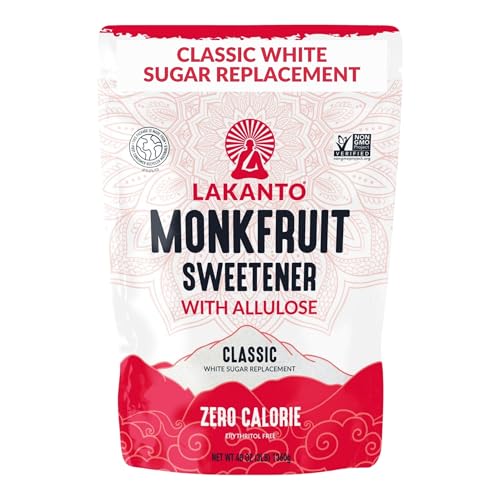
The 3-pound bag makes this the largest white blend here, suited to households that use a sugar alternative regularly. Lakanto says the erythritol-free sweetener dissolves quickly in liquids and keeps baked goods moist, making it a candidate for coffee, tea and baking. The product is positioned as a white sugar substitute and contains allulose with monk fruit.
Bottom line: Choose this for a larger white blend for drinks and baking.
NatureBell Monk Fruit & Allulose, 3 lb
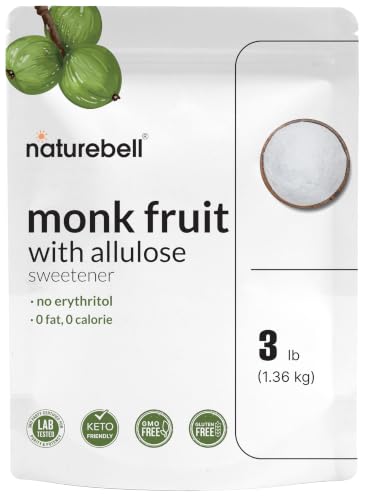
The explicit 1:1 sugar ratio sets this 3-pound white blend apart for recipes measured by teaspoons or cups: the product says 1 teaspoon replaces 1 teaspoon of cane sugar. NatureBell describes it as a monk fruit extract and allulose blend without erythritol, for baking, cooking and beverages. The bag contains 340 servings and is presented as vegan and keto friendly. Choose it when keeping the same volume measurement is useful. A 1:1 volume ratio does not guarantee identical browning, texture or sweetness in every recipe, so delicate baking may need adjustment.
Bottom line: Pick this when a 1:1 volume swap is your priority.
Lakanto Golden Monk Fruit Sweetener, 1 lb

The golden color and raw-cane-sugar positioning distinguish this 1-pound blend from the white options. Lakanto says the erythritol-free allulose and monk fruit sweetener is intended as a brown sugar substitute and dissolves quickly in liquids while keeping baked goods moist. The specifications identify it as vegan, gluten-free and non-GMO. Choose it for drinks or recipes where a golden-sugar style is the intended match. Its smaller 1-pound bag may be less suitable for frequent use, and the specifications do not establish that it will reproduce the flavor or texture of every brown sugar recipe.
Bottom line: Choose this for recipes that call for a golden or raw-sugar style.
How to choose monk fruit with allulose
Start with the substitution ratio, then match the blend’s color to the sugar in your recipe. A 1:1 label means you can begin with the same volume of sweetener as sugar; among these options, NatureBell Monk Fruit & Allulose, 3 lb gives that explicit ratio. For recipes written by weight, volume equivalence is not weight equivalence, so use a weight-based conversion only when the package gives one. White blends suit recipes calling for white sugar, while a golden blend is intended to stand in for raw or brown sugar. Pick a smaller bag if you bake occasionally and a larger one if regular use matters. Allulose can brown and retain moisture more readily than table sugar, so the finished color and texture may differ even when the measured volume matches.
White and golden blends compared
White and golden monk fruit-allulose blends differ in their intended sugar match, not just appearance. A white blend is the natural starting point for coffee, tea and recipes written for white sugar; a golden blend is positioned for raw or brown sugar-style use. The table helps narrow the choice by recipe need.
| Recipe need | Starting choice | What to check |
|---|---|---|
| White sugar replacement | White blend | Whether the package gives a volume ratio |
| Raw or brown sugar style | Golden blend | Whether the recipe depends on brown-sugar texture |
| Exact volume substitution | Blend with a 1:1 ratio | Possible changes in browning and moisture |
Color alone does not establish an exact flavor match. For a recipe where caramel notes or moisture are central, make a small batch before changing a larger recipe.
Using allulose blends in baking and drinks
Allulose is less sweet than sucrose by weight, and it can brown more readily, so results may not mirror ordinary sugar even when a blend claims a 1:1 volume swap. Start with recipes where small texture changes are acceptable, such as beverages, sauces or simple baked goods. In drinks, add the sweetener gradually and stir until dissolved; blends can differ in how readily they disperse. In baking, watch color toward the end rather than relying only on the usual bake time. If a recipe calls for a specific sugar weight, do not convert from cups without checking the package ratio. The blend’s ingredients also do not make it interchangeable with sugar for functions such as whipping egg whites or feeding yeast.
Storage and serving considerations
Keep powdered or granular sweeteners dry and sealed between uses; moisture can cause clumping and make spoon measurements less consistent. Use a clean, dry scoop, and level it when a recipe calls for a measured teaspoon or cup. Allulose may cause digestive discomfort for some people, especially in larger amounts, so begin with a small serving if you have not used it before. These blends are not suitable for people who must avoid one of their ingredients; check the ingredient panel and relevant allergy guidance before serving. A zero-calorie or keto-friendly label does not mean a product is appropriate for every dietary or medical need.
Frequently Asked Questions
Does monk fruit with allulose replace sugar cup for cup?
Only a blend with an explicit 1:1 ratio gives that direction; NatureBell Monk Fruit & Allulose, 3 lb states a teaspoon-for-teaspoon swap. Volume matching does not ensure the same browning, texture or sweetness in every recipe.
Can monk fruit and allulose be used in baking?
Yes, these blends are intended for baking, but allulose can brown more readily and hold moisture differently from table sugar. Monitor color near the end of baking, especially when adapting a familiar recipe.
Is a golden blend the same as brown sugar?
No, a golden blend is positioned as a raw or brown sugar substitute, but that does not establish identical flavor or texture. Choose it when the recipe calls for a golden-sugar style, then test a small batch if texture is important.
Can allulose cause stomach discomfort?
Some people experience digestive discomfort from allulose, particularly with larger servings. Start with a small amount if you are unfamiliar with it and stop if it causes symptoms.