
Motorcycle Riding Tennis Shoes: 3 Models Compared

For motorcycle riding tennis shoes, RIDEIRON Motorcycle Shoes is the clearest match if you want a certified option, with a CE certification and an EN 13634:2017 rating of 1-2-2-1. Choose ILM UB32 Leather Riding Shoes or Milwaukee Leather MBM9113 Shoes instead if waterproof leather is your priority; neither is identified here with that certification.
We earn a commission if you buy through links on this page. As an Amazon Associate I earn from qualifying purchases. Products are compared on manufacturer specifications, not hands-on testing.
- Best overall: RIDEIRON Motorcycle Shoes – Its EN 13634:2017 rating is 1-2-2-1, alongside ankle guards and a reinforced heel.
- Best for waterproofing: ILM UB32 Leather Riding Shoes – Cowhide leather, a water-resistant liner and front-and-back protective plates suit riders prioritizing wet-weather coverage.
- Best for leather construction: Milwaukee Leather MBM9113 Shoes – Full-grain 2.2 mm cowhide leather and a moisture-wicking insole set it apart.
| Product | Best for | Upper | Sole | Protection | Shop |
|---|---|---|---|---|---|
| RIDEIRON Motorcycle Shoes | Certified protection | Water-repellent Oxford fabric | 1.5-inch composite rubber | EN 13634:2017, 1-2-2-1 | Check Price on Amazon |
| ILM UB32 Leather Riding Shoes | Waterproof leather | Cowhide leather | Composite rubber | Ankle pad; front and rear plates | Check Price on Amazon |
| Milwaukee Leather MBM9113 Shoes | Full-grain leather | 2.2 mm full-grain cowhide | — | Ankle support | Check Price on Amazon |
Motorcycle Riding Tennis Shoes Compared
Compare the upper materials, sole construction and protective features that distinguish these three riding shoes.
RIDEIRON Motorcycle Shoes

Unlike the leather options, these shoes use a water-repellent Oxford fabric upper and pair it with a 1.5-inch thickened composite rubber sole. The maker identifies the footwear as CE certified to EN 13634:2017, rating 1-2-2-1, and lists a reinforced heel, ankle guards and a shift pad. A breathable mesh lining supports airflow, while the sole has anti-slip tread. This is the strongest fit for riders who prioritize a protective rating and shift-area reinforcement. The water-repellent fabric is described for light rain, so riders needing waterproof leather should choose another style.
Bottom line: Pick these if a riding-footwear rating and shift pad are priorities.
ILM UB32 Leather Riding Shoes
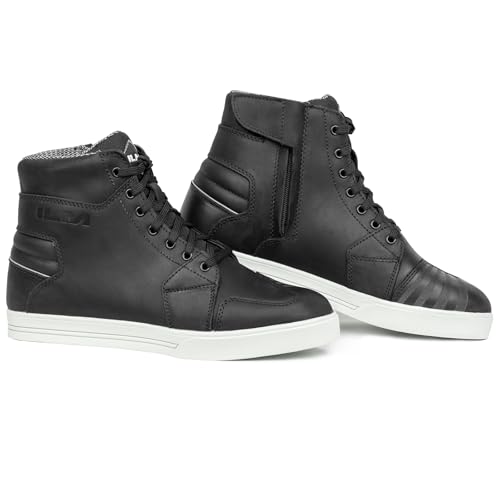
These shoes distinguish themselves with cowhide leather and protective plates at both the front and back, rather than a CE rating in the product name. The maker also specifies a PVC ankle pad, a water-resistant and breathable fabric liner, and a composite rubber sole with anti-slip performance. A shock-absorbing insole is included, though no material or thickness is given for it. The combination suits riders seeking leather construction and multiple reinforcement zones. The maker calls the liner water-resistant, not the shoe waterproof, so riders who need a clearly waterproof upper should verify that point before ordering.
Bottom line: Choose these for cowhide and front-and-back reinforcement, after confirming the water protection you need.
Milwaukee Leather MBM9113 Shoes

These shoes stand apart through a specified 2.2 mm full-grain cowhide upper in a brown caramel color. The maker describes the leather as waterproof and includes a Smart Mask Climate Control insole with moisture-wicking properties and a Flex Power Toe design for flexibility. Ankle support is part of the product name, while the features do not describe a sole material or shift pad. This option suits riders who value full-grain leather and a comfort-focused insole. Riders comparing sole grip or shift-pad coverage will need to confirm those features before deciding.
Bottom line: Choose these if specified full-grain leather and a moisture-wicking insole matter most.
How to choose motorcycle riding tennis shoes
Start with the protection details you can compare: a footwear rating, ankle reinforcement, toe or heel support, and a shift pad. EN 13634 is the European standard for protective footwear for motorcycle riders; a rating such as 1-2-2-1 reports performance across four test areas, so compare the full code rather than treating certification as a single protection level. For regular road riding, prioritize a snug heel and ankle coverage that do not interfere with shifting or braking. If you ride in wet weather, distinguish waterproof leather from water-repellent fabric or a water-resistant lining. Those terms describe different claims, and light-rain resistance is not a substitute for a waterproof construction.
Fit and sizing for riding shoes
Riding shoes should hold the heel securely while leaving room for the toes to move; excess movement can make shifting less precise. Try them with the socks you ride in, and check that the ankle guards sit over the ankle bones rather than above or below them. A thickened sole can change foot position at the controls, so test reach to the shifter and brake before riding. Use the maker’s size chart and measure both feet while standing; choose by the larger foot if the measurements differ. A street shoe size alone is not a reliable fit guarantee because lasts and protective linings vary. Break in new footwear on short, low-traffic rides before longer trips.
Leather and fabric riding shoe construction
Leather and textile uppers trade weather behavior and upkeep, not simply appearance. Full-grain cowhide is a dense leather choice; inspect seams and closures, because construction can affect how well the upper handles repeated flexing. Oxford fabric can reduce bulk and improve airflow, but water-repellent fabric generally sheds light moisture rather than promising waterproof coverage. A waterproof claim should be considered alongside the liner and closure design, since water can enter through openings. Rubber or composite-rubber soles provide the contact surface with pegs and pavement; tread and flexibility affect walking grip and feel at the controls. Choose a sole that lets you feel the shifter without compromising a stable walking step.
Care and safe use of riding footwear
Keep riding shoes dry between rides and clean dirt from seams, tread and closures; trapped grit can wear materials and reduce sole grip. Leather benefits from products made for leather, while textile uppers need cleaning methods compatible with their finish; avoid high heat that can damage adhesives or waterproof treatments. Check soles for separation and inspect ankle, heel and toe reinforcements after a crash or hard impact. A certified shoe is protective equipment, not a guarantee against injury, and certification does not make fit or correct use irrelevant. Replace footwear with damaged protective structures or failed closures rather than relying on appearance alone. Confirm that the shoes do not catch on foot controls before riding in traffic.
Frequently Asked Questions
What does an EN 13634 rating of 1-2-2-1 mean?
EN 13634 is a European standard for motorcycle protective footwear, and the four-part code gives test ratings across four areas. Compare the whole code rather than reading one digit as an overall protection score.
Are water-repellent motorcycle shoes waterproof?
No; water-repellent fabric typically resists light moisture, while waterproof construction makes a stronger claim. For repeated rain, look for an explicit waterproof claim and consider whether closures can admit water.
How should motorcycle riding shoes fit?
A secure heel and snug midfoot help keep the foot stable, while toes should still move without pressure. Test shifter and brake reach while standing in the riding posture, especially with a thick sole.
Can I wear motorcycle shoes for walking?
Many riding shoes use rubber or composite-rubber soles intended to provide grip while walking as well as control feel. Protective reinforcement can make them stiffer than ordinary sneakers, so walk in them before relying on them for long distances.
When should motorcycle riding shoes be replaced?
Replace shoes when a sole separates, a closure fails, or protective sections are damaged. After a crash or hard impact, inspect the reinforcement closely even if the upper still looks intact.