
Mouth Guards for Biting Tongue: Types Compared

For tongue biting caused by an RPE expander, RPE Tongue Guard is the closest match because it forms a barrier between the tongue and the appliance; for biting during sleep, the right choice depends on what is bringing the teeth together. A dental guard made for grinding can separate teeth, but it is not the same as a tongue guard for orthodontic hardware.
Choose a grinding guard only if nighttime clenching or grinding is the suspected cause; recurring tongue bites, sores, or cuts from braces or an expander call for advice from a dental professional.
We earn a commission if you buy through links on this page. As an Amazon Associate I earn from qualifying purchases. Products are compared on manufacturer specifications, not hands-on testing.
- Best overall: RPE Tongue Guard – Designed to create a soft barrier between the tongue and an RPE expander.
- Best for a molded fit: DenTek Professional-Fit Dental Guard – A heat-molded, dual-layer guard is designed for nighttime teeth grinding.
- Best for ready-to-wear use: Plackers Grind No More Night Guard – Disposable guards come ready to wear without boiling or molding.
| Product | Best for | Purpose | Fit method | Count | Shop |
|---|---|---|---|---|---|
| RPE Tongue Guard | RPE tongue barrier | Tongue barrier for RPE | Custom-forming trays | — | Check Price on Amazon |
| DenTek Professional-Fit Dental Guard | Molded grinding guard | Nighttime teeth grinding | Heat-molded | 1 guard | Check Price on Amazon |
| TheSleepGuard Clenching Night Guards | Multiple sizes | Nighttime clenching | Custom-fit sizes | 4 guards | Check Price on Amazon |
| Plackers Grind No More Night Guard | Ready-to-wear guard | Nighttime grinding | Ready to wear | 16 guards | Check Price on Amazon |
| Oral-B Scope Mint Night Guard | Quick custom fitting | Nighttime teeth grinding | Microwave-molded | 1 guard | Check Price on Amazon |
Mouth Guards for Biting Tongue
Match the guard to the source of tongue contact: orthodontic hardware and nighttime grinding call for different designs.
RPE Tongue Guard

The RPE Tongue Guard is the only option here designed specifically to shield the tongue from orthodontic hardware. Its soft barrier separates the tongue from an RPE expander, and included forming trays let the wearer shape it to the mouth. It is intended for preventing tongue sores or cuts caused by the expander, including use soon after placement. This is a targeted orthodontic solution, not a general-purpose night guard; it matters most to people whose tongue is rubbing against an RPE, not those biting it during sleep for another reason.
Bottom line: Choose this if an RPE expander is rubbing or cutting the tongue.
DenTek Professional-Fit Dental Guard

Unlike the orthodontic barrier, the DenTek Professional-Fit Dental Guard is designed to separate teeth during nighttime grinding. It has a cushioned upper layer and a stronger lower grind-shield layer, and it is shaped at home by heating and molding. That makes it a possible fit when tongue biting happens alongside sleep-related clenching or grinding, rather than from an expander or braces. Its purpose is tooth protection, not direct tongue coverage, so choose a tongue-specific orthodontic guard when hardware is the source of contact.
Bottom line: Pick this if you need a molded guard for nighttime grinding.
TheSleepGuard Clenching Night Guards

TheSleepGuard set differs by including four guards in small and large sizes, plus two retainer cases. The guards are intended to cushion the bite and create a barrier during nighttime clenching or grinding. That makes them relevant if tongue biting accompanies sleep clenching, but they are not designed as a protective cover between the tongue and an RPE expander. The assortment may suit someone who needs size options; anyone dealing with tongue cuts from orthodontic hardware should choose a purpose-made tongue barrier instead.
Bottom line: Choose this for nighttime clenching when size options are useful.
Plackers Grind No More Night Guard
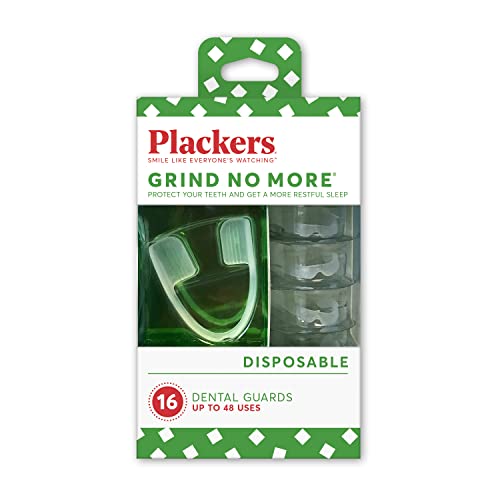
Plackers Grind No More is the ready-to-wear option: its disposable guards need no boiling, cutting, or molding. Each is intended for upper or lower teeth and can be used for up to three days, with 16 guards in the pack. That straightforward format may fit someone whose tongue biting occurs while grinding at night and who does not want to shape a guard. It is a tooth-grinding guard rather than a tongue shield, so it is not the right match for irritation caused by braces or an expander.
Bottom line: Pick this for a no-molding grinding guard used at night.
Oral-B Scope Mint Night Guard

The Oral-B Scope Mint Night Guard is distinguished by a microwave fitting process described as taking less than three minutes and a mint flavor. It includes a guard, impression tray, and storage case, and is designed to prevent upper and lower teeth from contacting even if it does not extend to the rear teeth. That makes it a possible option when nighttime grinding is behind the biting. Because its design separates teeth rather than covering the tongue, it does not address tongue contact with orthodontic hardware.
Bottom line: Choose this for a quickly fitted, flavored grinding guard.
How to choose a guard for tongue biting
Start with what the tongue is hitting: orthodontic hardware calls for a tongue barrier, while nighttime tooth contact may call for a grinding guard. An RPE expander is a fixed appliance that widens the upper jaw; its metal parts can rub the tongue, so a guard made to cover that contact is the closest match. Dental night guards instead sit between upper and lower teeth to limit direct tooth contact. If tongue bites recur without an obvious appliance or grinding trigger, have a dentist assess the cause rather than assuming a night guard will solve it.
Use this decision rule: choose an orthodontic barrier when the bite or sore aligns with an expander or brace; consider a grinding guard only when clenching or grinding is also suspected.
Orthodontic tongue barriers versus night guards
A tongue barrier and a dental night guard protect different surfaces. The RPE-specific guard forms a soft divider between the tongue and expander; the four other options are designed around tooth grinding or clenching. Heat-molded guards require fitting, while ready-to-wear versions avoid that step but offer less individual shaping. A guard that separates teeth should not be treated as a substitute for a barrier over sharp or rubbing hardware.
The table maps each design to the problem it addresses; choose by the contact source, not by the word “mouth guard.”
| Contact source | Guard type | Fit approach |
|---|---|---|
| RPE expander against tongue | Orthodontic tongue barrier | Custom-forming trays |
| Nighttime clenching or grinding | Dental night guard | Molded or ready to wear |
| Unclear or recurring tongue injury | Dental assessment first | Find the cause before choosing |
Fitting and safe use
Fit matters because a guard that shifts can be uncomfortable and may not protect the intended area. Moldable guards use heat to shape material around the teeth, while ready-to-wear guards are used without molding; follow the included fitting directions for the specific design. Do not trim or reshape a guard unless its instructions allow it. Keep the guard clean and inspect it for damage before use, since a torn or cracked appliance can irritate oral tissue.
For braces or an expander, ask the treating orthodontist whether a removable barrier is compatible with the appliance. A night guard intended for tooth grinding may not fit over orthodontic hardware, and a poorly fitting guard should not be forced into place.
Frequently Asked Questions
Can a night guard stop me from biting my tongue?
A night guard may help when the tongue bite happens during nighttime clenching or grinding because it separates upper and lower teeth. It is not designed to cover the tongue, so bites caused by braces or an expander need a different approach.
What guard works for tongue sores from an expander?
A tongue barrier made for an RPE expander is designed to separate the tongue from the metal appliance. If a sore persists or worsens, contact the orthodontist to check the appliance and fit.
Are ready-to-wear guards suitable for braces?
A ready-to-wear grinding guard is not automatically compatible with braces or an expander. Ask the treating orthodontist before placing a removable guard over fixed hardware.
When should I get recurring tongue bites checked?
Have recurring bites, cuts, or sores assessed when they continue, worsen, or have no clear cause. A dental professional can distinguish irritation from an appliance from possible sleep-related tooth contact.