
MS-70 Coin Cleaner: Compare Four Coin-Cleaning Options

MS-70 Coin Cleaner, 8 oz suits buyers seeking MS-70 coin cleaner because its maker says it removes surface substances such as tarnish, oil, dirt and PVC without changing a coin’s color. Choose an E-Z-Est option instead if you want a cleaner specifically named for copper, gold and silver.
Coin cleaners are chemical solutions for removing surface material, but cleaning can permanently affect a collectible coin’s surface and value; leave collectible or potentially valuable coins uncleaned unless a professional conservator advises otherwise.
We earn a commission if you buy through links on this page. As an Amazon Associate I earn from qualifying purchases. Products are compared on manufacturer specifications, not hands-on testing.
- Best overall: MS-70 Coin Cleaner, 8 oz – Its maker says it removes surface contaminants without changing coin color.
- Best for acid-free formulation: MS-70 Coin Cleaner, 8 oz, No Acid – The product is identified as containing no acid and names five metals.
- Best for jewelry too: eZest E-Z-Est Coin Cleaner, 5 oz – Its named uses include coins and jewelry in copper, gold and silver.
| Product | Best for | Container size | Metals named | Shop |
|---|---|---|---|---|
| MS-70 Coin Cleaner, 8 oz | Surface contaminants | 8 oz | — | Check Price on Amazon |
| MS-70 Coin Cleaner, 8 oz, No Acid | Named metal range | 8 oz | Gold, silver, nickel, copper, bronze, brass | Check Price on Amazon |
| eZest E-Z-Est Coin Cleaner, 5 oz | Coins and jewelry | 5 oz | Copper, gold, silver | Check Price on Amazon |
| e-Z-est Coin Cleaner, 5 oz | E-Z-Est format | 5 oz | Gold, silver, copper | Check Price on Amazon |
MS-70 Coin Cleaner and Alternatives
Compare the two MS-70 options with related E-Z-Est cleaners by container size and use materials.
MS-70 Coin Cleaner, 8 oz
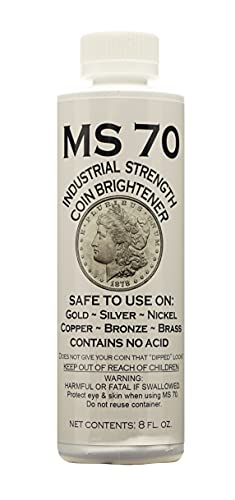
MS-70 Coin Cleaner, 8 oz is the MS-70 option whose maker specifically says it removes surface substances without changing a coin’s color. The 8-ounce bottle is described for tarnish, fog, oil, dirt and PVC, making it the clearest match for someone seeking this cleaner for surface residue. Unlike MS-70 Coin Cleaner, 8 oz, No Acid, its product features do not name particular metals or say it is acid-free. Coin cleaning can leave permanent marks or reduce collectible value, so reserve any cleaner for coins that are not valuable collectibles and confirm compatibility first.
Bottom line: Choose this if the maker’s no-color-change claim and named surface residues match your intended use.
MS-70 Coin Cleaner, 8 oz, No Acid

MS-70 Coin Cleaner, 8 oz, No Acid stands out for naming six metals—gold, silver, nickel, copper, bronze and brass—and identifying the formula as containing no acid. It comes in an 8-ounce bottle, like MS-70 Coin Cleaner, 8 oz, but its features do not make the same specific claim about removing PVC, oil or tarnish without changing coin color. This may suit buyers comparing an MS-70 formula by its ingredients and metal range. A no-acid label does not mean a cleaner is harmless to a coin’s surface; avoid using it on collectible coins.
Bottom line: Pick this when the named metal range and no-acid formulation are the deciding factors.
eZest E-Z-Est Coin Cleaner, 5 oz

eZest E-Z-Est Coin Cleaner, 5 oz is a related E-Z-Est cleaner, not an MS-70 product, and it is expressly described for coins or jewelry in copper, gold and silver. Its features warn against use on stainless steel, lacquered surfaces, platinum and artificially oxidized silver, so its narrower material guidance matters more than choosing by bottle size alone. The jar is identified as 5 ounces. Unlike the MS-70 choices, this product names jewelry as a use; it is not the direct match for someone specifically seeking MS-70.
Bottom line: Choose this alternative for the named coin and jewelry metals, avoiding its exclusions.
e-Z-est Coin Cleaner, 5 oz

The 5-ounce size makes it smaller than the 8-ounce MS-70 bottles, and it is a straightforward choice only if an E-Z-Est product is acceptable instead of MS-70. Its features do not add a formula or surface-removal claim, so buyers choosing by material compatibility should verify that the intended coin is suitable before use. As with any chemical coin cleaner, avoid applying it to collectible coins whose original surface should be preserved.
Bottom line: Consider this when a 5-ounce E-Z-Est option for the named metals suits your needs.
How to Choose a Coin Cleaner
Choose by the exact metal and surface residue involved, not by the broad word “coin.” Coins can be made from copper, nickel, silver, gold, and alloys; a cleaner suitable for one composition may damage another metal, a coating, or an intentionally darkened finish. The named materials differ here: MS-70 Coin Cleaner, 8 oz, No Acid lists six metals and says it contains no acid, while eZest E-Z-Est Coin Cleaner, 5 oz names three metals and warns against several surfaces. Before using any chemical, identify the coin’s composition and finish. For a collectible coin, the safer decision rule is simple: if preservation of its original surface matters, do not clean it at home.
| Need | Choose by feature |
|---|---|
| MS-70 for surface substances | MS-70 Coin Cleaner, 8 oz |
| MS-70 with named metals and no acid | MS-70 Coin Cleaner, 8 oz, No Acid |
| E-Z-Est for named coin metals | eZest E-Z-Est Coin Cleaner, 5 oz or e-Z-est Coin Cleaner, 5 oz |
Why Coin Cleaning Can Be Risky
Coin cleaning can permanently alter a coin’s surface, so collectible coins should generally be left uncleaned unless a professional conservator recommends treatment. Abrasive rubbing can create fine parallel scratches, often called hairlines, while chemical contact can change color or leave uneven surfaces. Even a cleaner described as not changing color is not a guarantee that every coin or finish will be unaffected. A useful decision rule is to avoid home cleaning whenever a coin may have collector value, visible toning, or an unknown coating. For ordinary, noncollectible pieces, test compatibility cautiously and do not combine cleaners or household chemicals.
What Coin Cleaner Labels Tell You
Cleaner labels may identify target metals, excluded surfaces, or the kinds of deposits the maker says the product removes; those claims are not interchangeable. MS-70 Coin Cleaner, 8 oz names surface substances such as tarnish, oil, dirt and PVC, while MS-70 Coin Cleaner, 8 oz, No Acid emphasizes its no-acid formula and a six-metal range. eZest E-Z-Est Coin Cleaner, 5 oz gives an explicit exclusion list that includes stainless steel, lacquered surfaces, platinum and artificially oxidized silver. Match the label to the actual coin material and finish rather than assuming a product works on every coin. Acid-free does not mean risk-free, and broad metal compatibility does not establish suitability for plated or coated objects.
How to Handle Coin-Cleaning Chemicals
Use coin-cleaning chemicals with basic household chemical precautions: keep them off skin and eyes, work with ventilation, and keep containers away from children and pets. Chemical splashes can irritate or injure, so wear protective gloves and eye protection, and follow the container’s handling and disposal directions. Never mix coin cleaner with bleach, ammonia, acids or another cleaner; mixing household chemicals can release harmful vapors. Keep the original container so the product identity and safety instructions stay available. If a coin is valuable, rare-looking or has an unusual finish, stop before applying anything and seek professional conservation guidance.
Frequently Asked Questions
Can coin cleaner reduce a coin’s collector value?
Yes, cleaning can permanently change a coin’s surface and reduce collector value. Leave potentially collectible coins uncleaned unless a professional conservator advises treatment.
Does acid-free coin cleaner mean it is safe?
No, acid-free does not mean harmless to every coin or finish. Verify metal and surface compatibility, and avoid home cleaning when preserving a collectible coin matters.
What metals does the MS-70 cleaner name?
One MS-70 option names gold, silver, nickel, copper, bronze and brass and says it contains no acid. A different MS-70 option specifically describes removing surface substances without changing coin color.
Can E-Z-Est be used on platinum coins?
The E-Z-Est option with an exclusion list says not to use it on platinum. Check the exact product label before applying any cleaner to a coin.
Should I rub a coin while cleaning it?
Avoid abrasive rubbing because it can leave fine scratches called hairlines. If the coin is collectible or its value is uncertain, do not clean it at home.