
Nano Cloth Scratch Remover: 4 Options Compared

For light clear-coat marks, Nanopolix Scratch Remover Cloth is the best fit because its maker identifies scratches, swirls, and water spots as targets and advises a clean, dry surface. Choose another option if you want multiple cloths and a repair wax or cream, or prefer a product that specifies reusable use.
Nano cloth scratch removers are cloth-based products intended to reduce the appearance of minor paint marks; deeper scratches may need a different repair approach.
We earn a commission if you buy through links on this page. As an Amazon Associate I earn from qualifying purchases. Products are compared on manufacturer specifications, not hands-on testing.
- Best overall: Nanopolix Scratch Remover Cloth – Its targets include light clear-coat scratches, swirl marks, water spots, and mild oxidation.
- Best for a multi-piece kit: Nano Magic Cloth, 6-Piece Kit – The package includes six cloths and a box of scratch repair wax.
- Best for reusable use: Breathe Green Nano Sparkle Cloth – Its product name identifies the cloth as reusable.
| Product | Best for | Package contents | Application | Stated targets | Shop |
|---|---|---|---|---|---|
| Nanopolix Scratch Remover Cloth | Light paint marks | 1 cloth | Dry use; moderate pressure | Light scratches, swirls, water spots | Check Price on Amazon |
| Nano Sparkle Cloth, Nano White | Color versatility | 1 cloth | Wipe repeatedly; gel mentioned | Minor scratches | Check Price on Amazon |
| Nano Magic Cloth, 6-Piece Kit | Multiple cloths | 6 cloths; repair wax and sponge | Wipe, then apply cream | Light scratches, swirls, water spots | Check Price on Amazon |
| Breathe Green Nano Sparkle Cloth | Reusable cloth | 1 reusable cloth | Clean, dry, then wipe | Light scratches, swirls, oxidation | Check Price on Amazon |
Nano Cloth Scratch Removers Compared
Compare the target marks and application steps before selecting a cloth-based remover.
Nanopolix Scratch Remover Cloth

Nanopolix Scratch Remover Cloth explicitly calls for dry use, setting it apart from options that describe wet product or cream application. The maker says it is intended for light clear-coat scratches, swirl marks, hairline marks, scuffs, water spots, bird-dropping residue, and mild oxidation. Wash and dry the area first, then test on a hidden spot; keep the cloth free of dust and sand and replace it if contaminated. It suits buyers focused on small surface blemishes. Deeper marks may show limited improvement, so it is not the right choice when a scratch has cut through the paint.
Bottom line: Choose this for light surface marks when dry cloth application is your preference.
Nano Sparkle Cloth, Nano White

Nano Sparkle Cloth, Nano White differs by describing a special nano coating and a gel-assisted process, while the other cloth options emphasize dry wiping or a multi-piece kit. Its maker claims it can be used on cars of different colors and that repeated wiping can improve the appearance of minor scratches. The preparation starts with cleaning the spot, and the maker mentions dabbing repair gel onto the cloth. It may suit someone seeking a color-agnostic option. The wording about deep scratch repair should not be treated as a promise: the claimed use centers on minor marks, and paint damage beyond the clear coat needs a different remedy.
Bottom line: Pick this if broad paint-color compatibility and a gel-assisted process matter most.
Nano Magic Cloth, 6-Piece Kit
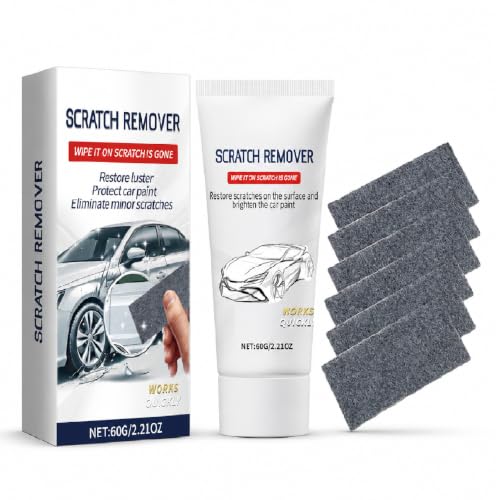
Nano Magic Cloth, 6-Piece Kit is the option with the largest cloth count: six cloths plus a box of repair wax and a sponge. Its process has two stages: clean and wipe the surface with the cloth, then apply the cream wax with the sponge and wipe it off. The maker says it targets light scratches and stains and describes the cloth as non-abrasive. This setup may suit someone who wants cloths and a separate cream step in one kit. It requires more handling than a one-cloth wipe, and the use is for light marks rather than scratches through the paint.
Bottom line: Choose this when multiple cloths and a separate cream-wax step suit your routine.
Breathe Green Nano Sparkle Cloth

Breathe Green Nano Sparkle Cloth is specifically identified as reusable, unlike the other cloth options, and measures 7.5 by 4 inches. Its maker describes it as pre-waxed and says to clean and dry the affected area before gently wiping. The targets are light scratches, swirls, and oxidation, making it a straightforward choice for someone seeking a reusable cloth for minor surface blemishes. The maker’s broad claim of removing imperfections should be read alongside the limited target scope: this is not a substitute for paint repair when a scratch reaches color coat or primer.
Bottom line: Pick this if a reusable cloth with a defined 7.5-by-4-inch size is your priority.
How to Choose a Nano Cloth Scratch Remover
Start with the scratch depth: a cloth product is a reasonable candidate for light marks confined to the clear coat, not a cut that exposes color coat or primer. A common quick check is to run a clean fingernail lightly across the mark; if it catches, polishing alone is less likely to make it disappear. This is only a screening rule, not a diagnosis, because dirt and paint edges can mislead. Match the package to your method: a dry-use cloth avoids a separate cream stage, while kits that include wax or cream require extra application and wipe-off steps. Work on clean paint; grit trapped under a cloth can create additional swirls.
Scratch Depth and Paint Safety
Clear coat is the thin transparent top layer over automotive color paint, and light scuffs may affect only that layer. A scratch that reveals a different color, metal, or primer has gone beyond the surface polishing zone; stop rather than repeatedly rubbing it. Automotive paint correction removes or levels a small amount of clear coat, so repeated aggressive correction can reduce the protective layer. Use gentle pressure and test a small inconspicuous area first, as several cloth makers advise. If the mark remains after a cautious pass, a body shop can assess whether touch-up or refinishing is more appropriate than further rubbing.
Cloth, Compound, and Multi-Step Kits
Cloth-based products and liquid or cream polishes differ mainly in how they are applied and what comes in the package. A cloth is wiped over a prepared area; a compound or cream is applied with an applicator and then removed with a clean towel. Multi-step kits can include more components but ask the user to follow multiple stages. The decision table below separates these approaches by their application style.
| Approach | Typical process | Choose when |
|---|---|---|
| Dry-use cloth | Clean, dry, wipe | You want a simple surface pass |
| Cloth with cream or gel | Wipe, apply product, wipe clean | You accept an additional product step |
| Polish kit | Apply with pad, work, remove residue | You want a conventional polishing method |
Regardless of format, avoid applying any scratch remover to dusty paint or under direct heat, which can make residue harder to manage.
Preparing Paint Before Scratch Removal
Wash and dry the panel before using a scratch-removal cloth; even fine grit can leave new marks when dragged across paint. Bird droppings and road film should be removed rather than rubbed into the finish. Work on a small area first and inspect the result under bright, diffuse light, since strong point lighting can exaggerate fine swirls. Keep applicators clean and separate from dirty towels. Do not use a cloth that has picked up sand or grit; the maker of Nanopolix Scratch Remover Cloth specifically advises replacing a contaminated cloth. For broad oxidation or damage extending through the clear coat, stop and seek a paint-specific repair assessment.
Frequently Asked Questions
Can a nano cloth fix a deep car scratch?
A nano cloth is intended for light surface marks, not scratches through the clear coat. If the scratch catches a fingernail or exposes a different paint layer, stop rubbing and consider a paint repair assessment.
How should I prepare paint before using a scratch cloth?
Wash and dry the area first so grit does not drag across the finish. Test a small hidden spot and use a clean cloth; replace it if it picks up dust or sand.
Do nano scratch remover cloths work on every paint color?
Some makers claim compatibility across car colors, but that does not establish suitability for every finish or condition. Test an inconspicuous area first, especially on repainted or delicate paint.
When should I stop rubbing a paint scratch?
Stop if a light pass does not improve the appearance, or if the scratch catches a fingernail or exposes a lower paint layer. Continued rubbing can remove more clear coat without fixing deeper damage.
Can a scratch remover remove water spots too?
Some cloth products identify light water spots as a target, but etched spots may remain after surface residue is removed. Clean the area first and use a small test spot before treating a larger panel.