
Non-Toxic Leave-In Conditioner Options Compared by Formula

Choose a different formula if you want fragrance-free care, a smaller bottle, or a formula centered on hydration claims.
We earn a commission if you buy through links on this page. As an Amazon Associate I earn from qualifying purchases. Products are compared on manufacturer specifications, not hands-on testing.
- Best overall: INNERSENSE Sweet Spirit Leave-In Conditioner – A 10-ounce lightweight spray made for all hair types and textures.
- Best for fragrance-free care: The Honest Company Hair Detangler – Fragrance-free and designed for daily detangling, with a 4-ounce size.
- Best for rose water and argan oil: California Naturals Leave-In Conditioner – A 6-ounce leave-in with rose water and argan oil.
| Product | Best for | Size | Notable ingredients | Shop |
|---|---|---|---|---|
| INNERSENSE Sweet Spirit Leave-In Conditioner | All hair textures | 10 fl oz | Aloe vera, tamanu oil | Check Price on Amazon |
| California Naturals Leave-In Conditioner | Rose and argan | 6 fl oz | Rose water, argan oil | Check Price on Amazon |
| The Honest Company Hair Detangler | Fragrance-free use | 4 fl oz | Quinoa extract, jojoba protein | Check Price on Amazon |
| Acure Advanced Hydration Leave-In | Hydration focus | 4 fl oz | Marine algae, amino acids | Check Price on Amazon |
Non toxic leave-in conditioners
Compare these leave-in sprays by bottle size, fragrance preference, and the formula focus that fits your routine.
INNERSENSE Sweet Spirit Leave-In Conditioner

INNERSENSE Sweet Spirit stands out for its 10-ounce bottle and all-texture positioning. The lightweight spray is made to detangle and replenish moisture, with aloe vera, eucalyptus, rosemary, tamanu oil, and honey among its ingredients. Brand says it helps calm frizz, equalize porosity, and add shine and manageability. This option suits shoppers who want a larger bottle and a botanical blend. The formula includes honey, so it is not a vegan choice for buyers avoiding animal-derived ingredients.
Bottom line: Choose this if you want a larger leave-in spray for varied hair textures.
California Naturals Leave-In Conditioner
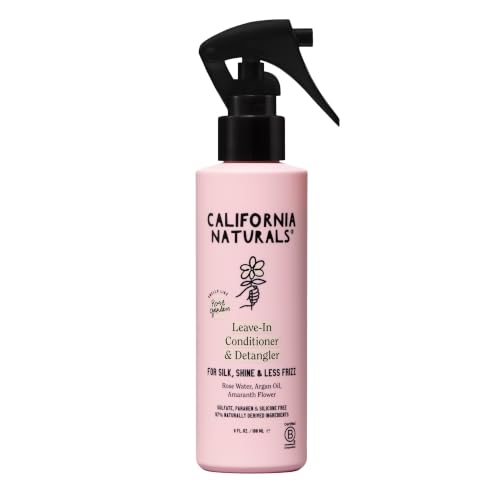
California Naturals is the pick here with rose water and argan oil in a lightweight, no-rinse formula. The 6-ounce spray is described as suitable for all hair types and color safe; meadowfoam seed oil, banana extract, hydrolyzed quinoa, and amaranth flower also feature in its blend. Brand says the product detangles, smooths, and primes damp hair for styling. It suits people who want a multi-ingredient formula with oils and extracts.
Bottom line: Choose this if rose water and argan oil suit your routine.
The Honest Company Hair Detangler

The Honest Company Hair Detangler is the only fragrance-free option among these sprays, making it the clearest match for shoppers avoiding added fragrance. Its 4-ounce bottle contains naturally derived botanicals, quinoa extract, and jojoba protein; the formula is described as lightweight and tear-free for daily detangling across hair types. Brand says it is hypoallergenic and suitable for sensitive skin. This smaller bottle works for a compact routine, but shoppers seeking a larger size should compare the 6- and 10-ounce options instead.
Bottom line: Choose this if fragrance-free daily detangling is your priority.
Acure Advanced Hydration Leave-In

Acure Advanced Hydration puts hydration and strand smoothing at the center of its formula, with marine algae, amino acids, hydrolyzed proteins, avocado oil, and kelp. The 4-ounce spray is intended for damp or towel-dried hair after shampoo and conditioner. Brand says the blend helps detangle and manage frizz without buildup. This option suits dry or damaged hair when hydration is the desired focus. Its bottle is smaller than the 6- and 10-ounce choices, so it may be less convenient for buyers who prefer a larger supply.
Bottom line: Choose this if hydration-focused ingredients matter more than bottle size.
How to choose a non toxic leave-in conditioner
Choose by the ingredient exclusions you personally need, then match the formula to your hair routine. “Non-toxic” is not a regulated blanket certification for cosmetics in the United States, so a marketing label cannot establish that a product is suitable for every person. Read the ingredient panel for specific concerns such as fragrance, silicones, or sulfates, and check the product’s own claims rather than inferring a broader guarantee. For a fragrance-free requirement, select a formula explicitly identified as fragrance-free; for a vegan requirement, look for a vegan claim and check ingredients such as honey. A spray designed for damp hair can fit a post-wash routine, while daily-use claims may suit between-wash detangling.
How much leave-in conditioner to apply
Start with a small amount on damp hair and add more only if the hair still feels difficult to comb; excess leave-in can make fine or low-density hair feel coated. A useful decision rule is to begin with one or two sprays per section on fine hair, then increase gradually for longer or denser hair. Apply from the mid-lengths toward the ends, where tangling and dryness are common, and keep heavier product away from roots if they flatten easily. Detangle gently from the ends upward with fingers or a wide-tooth comb. Leave-in conditioner is not a substitute for a rinse-out conditioner or a heat protectant unless its formula specifically claims heat protection.
Leave-in sprays and ingredient claims
Leave-in sprays are generally lighter and easier to distribute than creams, while creams can provide more concentrated conditioning for coarse or very dry hair. Both formats are applied after washing and remain in the hair, but the best amount depends on strand thickness, porosity, and styling preference. Ingredient names also describe different roles: oils such as argan or avocado can add conditioning, while hydrolyzed proteins and amino acids are commonly used in formulas aimed at improving manageability. These ingredients do not guarantee a particular result for every hair type. A fragrance-free claim addresses fragrance preference, not every possible sensitivity; patch-test a new cosmetic on a small area and stop use if irritation occurs.
Common mistakes with leave-in conditioner
Using too much product is a common cause of limp, sticky-feeling hair, particularly on fine strands; apply less first and distribute evenly. Spraying only the top layer can leave underneath sections tangled, so divide thick hair into sections and focus product through the lengths. Do not assume “natural,” “clean,” or “non-toxic” means allergy-proof: botanical extracts and oils can still be unsuitable for some people. Also do not rely on a leave-in spray for heat protection unless the product expressly claims that function. Keep sprays away from eyes, and follow the package directions for application and frequency.
Frequently Asked Questions
Is non-toxic a regulated label for hair conditioner?
No single U.S. cosmetic certification is implied by the words “non-toxic.” Check the full ingredient panel and look for specific claims that match your requirements, such as fragrance-free or vegan.
Can I use leave-in conditioner every day?
Some formulas are intended for daily detangling, while others are applied after washing. Start with a small amount and reduce use if hair feels coated or limp.
Should leave-in conditioner go on wet or dry hair?
Most spray leave-ins are easiest to distribute through damp hair after washing. If applying on dry hair, use a light amount on tangled lengths and avoid saturating the roots.
Does leave-in conditioner replace heat protectant?
Only when the specific formula claims heat protection. If heat styling, use a product labeled for that purpose and follow its directions before applying hot tools.
How do I choose fragrance-free conditioner?
Choose a formula explicitly labeled fragrance-free and check its ingredient panel for your own sensitivities. Fragrance-free does not mean allergen-free, so stop using a product if irritation develops.