
North Face Aconcagua 3 Jacket: Models Compared

Choose North Face Men’s Aconcagua 3 Jacket for the named men’s Aconcagua 3 Jacket if you want the standard style and a 50/50 blend of recycled 600-fill down and polyester insulation. The other options add a hood, offer a 4X big size, or switch to a women’s all-synthetic design.
We earn a commission if you buy through links on this page. As an Amazon Associate I earn from qualifying purchases. Products are compared on manufacturer specifications, not hands-on testing.
- Best overall: North Face Men’s Aconcagua 3 Jacket – The standard men’s Aconcagua 3 pairs a standard fit with a 50/50 600-fill down and recycled polyester blend.
- Best for hooded warmth: North Face Men’s Aconcagua 3 Hooded Jacket – The men’s hooded jacket adds an attached hood with sheet insulation in the hood and sides.
- Best for synthetic insulation: North Face Women’s Aconcagua Hooded Jacket – The women’s hooded option uses 200g synthetic insulation in the body.
- Best for big sizing: North Face Men’s Aconcagua 3 Jacket 4X Big – The men’s Aconcagua 3 Jacket comes in a 4X Big fit.
| Product | Best for | Style | Insulation | Fit | Shop |
|---|---|---|---|---|---|
| North Face Men’s Aconcagua 3 Jacket | Standard men’s fit | Standard jacket | 50/50 600-fill down/polyester | Large | Check Price on Amazon |
| North Face Women’s Aconcagua Hooded Jacket | Women’s synthetic fill | Hooded jacket | All-synthetic, 200g body | Large | Check Price on Amazon |
| North Face Men’s Aconcagua 3 Hooded Jacket | Men’s hooded style | Hooded jacket | 50/50 600-fill down/polyester | X-Large | Check Price on Amazon |
| North Face Men’s Aconcagua 3 Jacket 4X Big | Men’s 4X Big fit | Standard jacket | 50/50 600-fill down/polyester | 4X Big | Check Price on Amazon |
North Face Aconcagua 3 Jacket Options
Compare each option’s cut, insulation approach, and stated size before choosing.
North Face Men’s Aconcagua 3 Jacket

North Face Men’s Aconcagua 3 Jacket is the standard men’s Aconcagua 3, in size Large, with a non-hooded cut. Its 50/50 blend combines recycled 600-fill waterfowl down and recycled polyester, while zoned polyester sheet insulation is used in the arms. The shell is 100% recycled polyester WindWall with a non-PFC DWR finish; the maker says it resists wind and water. Choose this version if you want the standard jacket rather than an attached hood. Its limitation is the non-hooded design, which matters if you need head coverage built into the coat.
Bottom line: Pick this if you want the standard men’s jacket cut and a down-synthetic blend.
North Face Women’s Aconcagua Hooded Jacket

North Face Women’s Aconcagua Hooded Jacket differs from the men’s Aconcagua 3 models in both its women’s cut and all-synthetic fill. The maker specifies 200g of recycled polyester sheet insulation in the body, 180g in the hood and side panels, and 60g in the draft flap. Its recycled WINDWALL shell has a non-PFC DWR finish, and the hood and hem are part of the design. Choose it if you prefer synthetic insulation rather than the men’s 50/50 down blend. This is a women’s Aconcagua Hooded Jacket, not the men’s Aconcagua 3 Jacket, so check the cut you need before selecting it.
Bottom line: Choose this for a women’s cut and synthetic insulation.
North Face Men’s Aconcagua 3 Hooded Jacket
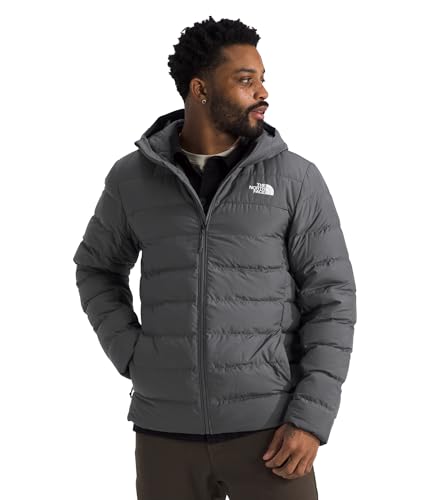
North Face Men’s Aconcagua 3 Hooded Jacket keeps the men’s Aconcagua 3 insulation blend but adds a durable attached hood. Recycled sheet insulation also appears in the hood and sides, alongside the 50/50 blend of recycled 600-fill down and recycled polyester in the body. The 100% recycled polyester WindWall shell has a non-PFC DWR finish; the maker says it resists wind and water. This X-Large option suits someone who wants built-in head coverage without switching away from the men’s hybrid insulation. The tradeoff is its hooded construction, which may not suit buyers seeking the simpler standard jacket silhouette.
Bottom line: Pick this when an attached hood matters more than the standard cut.
North Face Men’s Aconcagua 3 Jacket 4X Big

North Face Men’s Aconcagua 3 Jacket 4X Big is the men’s standard Aconcagua 3 in a 4X Big size, distinguishing it from the Large and X-Large choices here. It uses the same 50/50 recycled 600-fill down and recycled polyester insulation approach as the other standard men’s option, with zoned recycled polyester sheet insulation in the arms. The shell is recycled polyester WindWall with a non-PFC DWR finish; the maker says it resists wind and water. Choose it when 4X Big is the required fit. It remains a non-hooded standard jacket, so it does not provide built-in head coverage.
Bottom line: Choose this if 4X Big is the size you need in the standard jacket.
How to choose an Aconcagua 3 jacket
Start with cut and insulation: the men’s standard and hooded Aconcagua 3 jackets use a 50/50 blend of recycled 600-fill down and recycled polyester, while the women’s hooded Aconcagua uses synthetic sheet insulation. A hood changes coverage and bulk around the head; the standard jacket leaves that area uncovered. Down fill power measures loft per ounce, not the garment’s temperature rating, so 600-fill alone does not establish how cold a jacket is comfortable in. Choose a hooded design if you want head coverage attached, and choose the women’s model only if its intended cut is right for you. For extended wet exposure, a DWR finish is not a substitute for a waterproof shell.
Compare the Aconcagua jacket types
The product names distinguish three useful choices: standard men’s jacket, men’s hooded jacket, and women’s synthetic hooded jacket. The table summarizes the type and insulation approach; choose the row that matches your intended cut and fill preference.
| Type | Insulation | Choose when |
|---|---|---|
| Men’s standard | 50/50 600-fill down/polyester | You want a non-hooded cut |
| Men’s hooded | 50/50 600-fill down/polyester | You want an attached hood |
| Women’s hooded | Synthetic sheet fill | You want a women’s cut and synthetic fill |
These distinctions matter more than color if you are choosing between the options, since colors do not change the insulation type or hood configuration.
How to judge insulation and weather protection
Down fill power describes loft efficiency, while synthetic sheet insulation is measured here by weight in grams; those numbers are different measures and should not be compared as though they were equivalent warmth ratings. The women’s hooded option assigns 200g to the body, with separate amounts for the hood, sides, and draft flap. The men’s models combine down and polyester fill and use sheet insulation in selected zones. Wind-resistant fabric and a durable water-repellent finish can help with wind and light moisture, but neither claim means a jacket is waterproof. In sustained rain or snow, use a waterproof outer layer rather than relying on DWR alone.
Get the jacket fit and layering right
Fit should leave room for a base layer and midlayer without pulling across the shoulders or restricting arm movement. The men’s options shown include Large, X-Large, and 4X Big; size labels alone do not reveal garment measurements. Use your chest and sleeve measurements against the maker’s current size chart, especially when moving between standard and big sizing. A jacket that is too tight can compress insulation, while excess room can let warm air escape. Try the intended layering combination when judging fit, and confirm the size chart measurements before ordering if you are between sizes.
Frequently Asked Questions
Is the Aconcagua 3 Jacket waterproof?
No; the shell is described as wind-resistant and treated with a durable water-repellent finish, not as waterproof. DWR helps shed light moisture, but sustained rain calls for a waterproof outer layer.
What does 600-fill down mean in a jacket?
A 600-fill rating describes down loft per ounce, not a temperature limit. Overall warmth also depends on fill amount, construction, fit, and layering.
Can I wear a puffer jacket in wet weather?
A water-repellent finish can shed light moisture, but it does not make a jacket waterproof. For prolonged rain or wet snow, add a waterproof shell.
How should a winter jacket fit over layers?
A winter jacket should fit over the layers you plan to wear without restricting shoulder or arm movement. If you are between sizes, compare your measurements with the maker’s size chart and check the fit with those layers.
Does a hooded jacket keep you warmer?
An attached hood covers the head, but warmth still depends on overall insulation, fit, and conditions. Choose a hooded style when built-in head coverage is useful; it does not replace a hat in every situation.