
Silicone Feet for Cutting Boards: 5 Options Compared

For most people seeking silicone feet for cutting boards, NiHome Silicone Pads, 1.57-Inch is the closest match because its 1.57-inch silicone pads are adhesive, washable and reusable. Choose a screw-on option instead if you need mechanical attachment; the other adhesive options use polyurethane rather than silicone.
Feet lift a board slightly and add friction between the board and counter. Keep pads on the underside, away from food-contact surfaces, and choose a size that fits the board without protruding past its edges.
We earn a commission if you buy through links on this page. As an Amazon Associate I earn from qualifying purchases. Products are compared on manufacturer specifications, not hands-on testing.
- Best overall: NiHome Silicone Pads, 1.57-Inch – The 1.57-inch silicone pads are adhesive, washable and reusable.
- Best for screw-on mounting: Thermoplastic Rubber Feet, 3/8-Inch – Each thermoplastic rubber foot has a stainless washer and matching screw.
- Best for a low-profile adhesive pad: Clear Adhesive Pads, 1.2-Inch – The 1.2-inch polyurethane pads are only 0.12 inch thick.
| Product | Best for | Material | Attachment | Size and count | Shop |
|---|---|---|---|---|---|
| NiHome Silicone Pads, 1.57-Inch | Reusable adhesive pads | Silicone | Self-adhesive | 1.57 in; 16 pieces | Check Price on Amazon |
| Thermoplastic Rubber Feet, 3/8-Inch | Screw-on board feet | Thermoplastic rubber | Screw-on; stainless washer | 13/16 in top; 12 pieces | Check Price on Amazon |
| Clear Adhesive Pads, 1.2-Inch | Slim adhesive pads | Polyurethane | Self-adhesive | 1.2 in; 20 pieces | Check Price on Amazon |
| TOPINSTOCK Clear Screw-On Feet, 5/8-Inch | Small screw-on feet | Rubber | Screw-on; stainless screws | 5/8 in wide; 24 pieces | Check Price on Amazon |
| Clear Square Adhesive Bumpers, 0.78-Inch | Square adhesive bumpers | Polyurethane | Self-adhesive | 0.78 in; 20 pieces | Check Price on Amazon |
Silicone Feet for Cutting Boards and Alternatives
Compare material, mounting style and dimensions to find feet that fit your board and counter setup.
NiHome Silicone Pads, 1.57-Inch

These are the only feet in this group identified as silicone, and their 1.57-inch diameter gives them a larger contact area than the smaller adhesive alternatives. The 16 pads use self-adhesive backing rather than screws, so installation does not require drilling. The maker says they can be removed, rinsed and air-dried for reuse. This option suits boards or trays with enough underside area for broad pads. The 0.12-inch thickness gives less lift than screw-on feet measuring 7/32 or 3/8 inch, so choose another style when greater clearance matters.
Bottom line: Pick these when you want broad, washable silicone pads and modest lift.
Thermoplastic Rubber Feet, 3/8-Inch
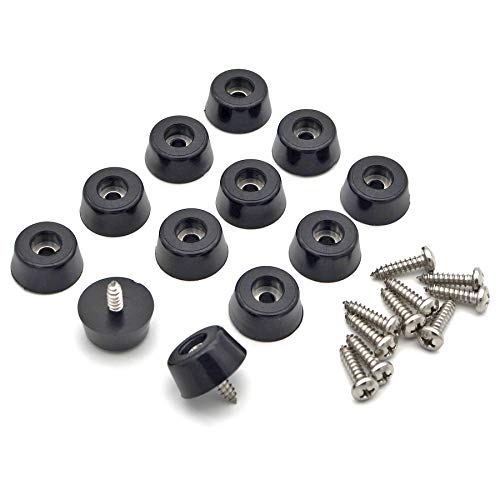
Unlike the adhesive pads, these thermoplastic rubber feet fasten mechanically with matching screws, and each foot has a built-in stainless washer. The pack has 12 round feet; each is 3/8 inch tall, with a 13/16-inch top and 11/16-inch bottom. The maker says the soft feet resist slipping and help absorb shock. They suit a board with enough underside thickness to accept a #8 screw and a buyer who wants a raised, fixed installation. Installation requires screw holes, so skip this style if drilling the board is unsuitable.
Bottom line: Choose these for a taller, screw-mounted rubber foot.
Clear Adhesive Pads, 1.2-Inch

These clear pads are thinner and smaller than the silicone option, measuring 1.2 inches across and 0.12 inch thick. Although the product name uses “silicone rubber,” its maker identifies the material as polyurethane, so it is a related alternative rather than a silicone match. The 20-piece pack uses peel-and-stick installation and is pitched for boards made from plastic, wood or glass. The maker says the pads are waterproof and reusable. Their smaller diameter offers less contact area than the 1.57-inch pads, which matters when a board needs broad support.
Bottom line: Pick these for a slim, clear adhesive alternative, not silicone.
TOPINSTOCK Clear Screw-On Feet, 5/8-Inch

These are the smallest screw-on feet here: each is 5/8 inch wide and 7/32 inch tall, with a center hole sized for a #4 screw. The 24-piece pack includes matching stainless screws, making it suited to smaller boards or other compact objects where a larger rubber foot would take up too much underside space. The maker says the feet help steady a cutting board and simplify cleanup by lifting it from the counter. They are clear rubber, not silicone, and their low profile provides less elevation than taller screw-on options.
Bottom line: Choose these when you need compact screw-on rubber feet.
Clear Square Adhesive Bumpers, 0.78-Inch

These square clear bumpers differ from the round pads: each measures 0.78 inch across and 0.38 inch high. The 20-piece pack is made from polyurethane and uses adhesive backing, so it avoids screw holes while providing more lift than the 0.12-inch adhesive pads. The maker says the soft bumpers help keep items in place and reduce vibration. They may suit a board needing a compact, raised contact point, but their applications focus broadly on household items and electronics rather than a dedicated silicone-board-foot design. Confirm that the square footprint fits the underside.
Bottom line: Pick these for compact adhesive bumpers with greater stated height.
How to Choose Cutting Board Feet
Choose mounting style first: adhesive pads avoid holes, while screw-on feet provide a mechanical attachment. Adhesive pads need a clean, dry underside and enough flat area; grease, moisture or textured surfaces can undermine adhesion. Screw-on feet require a suitable board thickness and careful pilot holes to reduce splitting. As a practical fit rule, measure the flat underside: leave at least 1/4 inch between a pad edge and the board edge so the pad does not overhang. Compare foot height with your desired clearance, not just diameter. For example, a 0.12-inch pad gives little lift, while taller feet create a larger gap but can raise the board’s working surface.
Silicone, Rubber and Polyurethane Feet
The silicone pads in this group are adhesive and 0.12 inch thick; the screw-mounted options are rubber and provide more lift. For a cutting board, feet should remain on the underside and should not intrude onto the surface where food is cut. Use this table to match the mounting approach to the installation you want.
| Need | Suitable style | Trade-off |
|---|---|---|
| No screw holes | Adhesive pads | Adhesion depends on a clean, suitable surface |
| Mechanical fastening | Screw-on feet | Requires drilling and adequate board thickness |
| More underside coverage | Large-diameter pads | Needs more flat space under the board |
Pad Size, Spacing and Board Stability
Pad diameter, thickness and placement all affect how a board sits. Larger pads spread contact across more area, but they need a wide, flat underside; small pads can fit narrow corners but offer less contact surface. Place feet near the board’s corners and distribute them evenly so the board does not rock. A board with four feet generally needs a flat counter and four level contact points; a warped board may still wobble. Measure both the board underside and the feet before installation, and keep every pad inside the board’s perimeter. If a board has under 1/4 inch of clear flat margin at its corners, select a smaller pad or reposition the feet.
Installing and Caring for Cutting Board Feet
Clean and dry the underside before applying adhesive feet, then press each pad firmly and allow the adhesive to settle before putting the board into service. Adhesive mounting is unsuitable for a surface coated in oil or loose finish because the bond can fail. For screw-on feet, mark positions evenly, drill pilot holes sized for the screw, and stop before breaking through the board’s top face. Washable adhesive pads should be removed and rinsed only as their maker allows; dry the pads and board fully before reattaching them. Check foot attachment regularly, especially after repeated washing, and replace a loose foot before it can shift during cutting.
Frequently Asked Questions
Can silicone feet go on a wooden cutting board?
Yes, silicone feet can be attached to the underside of a wooden board if the surface is flat, clean and dry. Leave about 1/4 inch of board edge outside each pad to avoid overhang.
How many feet should a cutting board have?
Four feet near the corners provide a stable starting layout for a rectangular board. Position them evenly and confirm the board rests without rocking on a flat counter.
Do adhesive cutting board feet need screws?
No, self-adhesive pads attach without screws when the underside is clean and compatible with the adhesive. Screw-on feet require pilot holes and enough board thickness to hold the screws.
Can cutting board feet touch food?
Feet belong on the underside and should not contact the cutting surface or food. Keep adhesives and foot materials away from knife-contact areas, and clean the board separately from removable feet.