
Best Shotgun Shell Bags and Pouches Compared by Use

Allen Company Triumph Double Compartment is the best shotgun shell bag for most shooters because it holds two boxes of 12-gauge shells and separates spent hulls in a dump compartment. Choose Allen Company Eliminator Basic Double instead if you want a removable divider and included adjustable belt, or a roll-top pouch if keeping gear shielded from splashes is the priority.
We earn a commission if you buy through links on this page. As an Amazon Associate I earn from qualifying purchases. Products are compared on manufacturer specifications, not hands-on testing.
- Best overall: Allen Company Triumph Double Compartment – Holds two boxes of 12-gauge shells and has a separate spent-hull compartment with zippered dump-out.
- Best for divided storage: Allen Company Eliminator Basic Double – Includes a removable divider, adjustable belt and zip-open bottom.
- Best for wet outings: Dead Bird Enterprises 2L Waterproof Shell Pouch – A 2-liter roll-top dry bag made from 500D PVC tarpaulin.
| Product | Best for | Capacity | Carry or closure | Extra storage | Shop |
|---|---|---|---|---|---|
| Allen Company Triumph Double Compartment | Range shooting | 2 boxes of 12-gauge shells | Adjustable waist belt | Front pocket, open pouches, D-rings | Check Price on Amazon |
| Allen Company Eliminator Basic Double | Divided storage | Two compartments; shell count — | Adjustable belt | Side pocket, elastic loops, D-ring | Check Price on Amazon |
| Allen Company Canvas Shell Pouch | Belt-clip carry | 1 standard box of 25 shells | Metal belt clip | Four loops per side | Check Price on Amazon |
| Dead Bird Enterprises 2L Waterproof Shell Pouch | Splash protection | 2 liters; two shell boxes | Roll-top buckle closure | Small essentials storage | Check Price on Amazon |
Best shotgun shell bags and pouches
Compare carrying style, shell capacity and access to extra storage before choosing a range or field bag.
Allen Company Triumph Double Compartment

Separate live shells from spent hulls with a dedicated dump compartment, a useful distinction for clay, trap and skeet sessions. The main compartment holds up to two boxes of 2-3/4-inch 12-gauge shells. The adjustable waist belt keeps the bag at hand, while a front zippered pocket, open pouches and D-rings provide places for small gear. Brand says the construction uses Endura material. The capacity is specifically given for 12-gauge shells, so shooters carrying another gauge should verify fit before choosing this bag.
Bottom line: Choose this for range sessions when you want a dedicated spent-hull compartment and capacity for two 12-gauge boxes.
Allen Company Eliminator Basic Double

A removable divider makes this bag adaptable when you want two separated compartments rather than one open shell pouch. The adjustable wide belt has a buckle and a D-ring for a towel or glasses, while the zip-open bottom helps empty contents. A side pocket measures 5 × 2.75 × 1.5 inches, and elastic loops hold extra shells or choke tubes. Its dimensions are 12 × 8 × 2 inches and weight is 0.75 pound. The shell capacity is not quantified, so this is less suited to buyers who need a box count.
Bottom line: Pick this if adjustable divided storage and a zip-open bottom matter more than a specified shell capacity.
Allen Company Canvas Shell Pouch
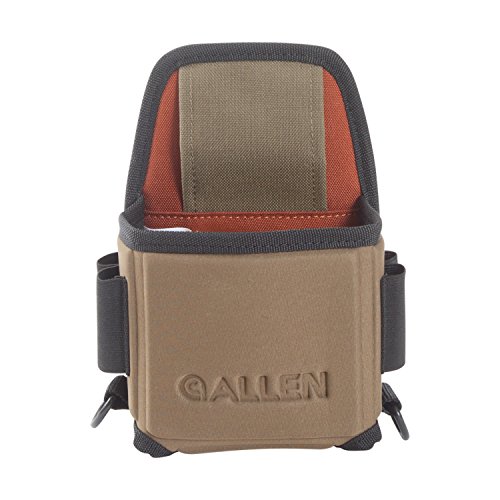
A metal clip, rather than an included waist belt, is the key distinction of this single-compartment canvas pouch. It holds a standard box of 25 shells and has four loops on each side for extra shells or choke tubes. The canvas design is intended for clay, trap and skeet shooting, as well as range practice or hunting. Its compact 8 × 5.375 × 3-inch dimensions suit someone who wants a box-sized carrier instead of a larger multi-compartment bag. The single compartment offers less separation than a divided bag.
Bottom line: Choose this for clip-on carry when one box of shells and side loops are enough.
Dead Bird Enterprises 2L Waterproof Shell Pouch

A roll-top buckle closure and 500D PVC tarpaulin distinguish this pouch from open-top belt carriers. Its 2-liter capacity is described as enough for two boxes of shotgun shells plus small essentials such as keys, a wallet or license. The dimensions are 4.75 inches in circumference by 7.5 inches high. The maker says the closure helps protect contents from splashes and light rain; that is not a claim of submersion protection.
Bottom line: Choose this for carrying shells and small essentials in a roll-top pouch around wet outdoor conditions.
How to choose a shotgun shell bag
Start with carry style and whether you need separate space for spent hulls. Belt bags keep ammunition accessible during clay, trap and skeet sessions, while roll-top pouches are more suited to packing shells with other field gear. A common shotgun shell box contains 25 shells, but capacity and fit depend on gauge and shell length; use a box count instead of estimating from a pouch’s outside dimensions. For station shooting, choose a bag with a dedicated hull compartment if you want fired cases kept apart from live rounds. For carrying under 25 shells, a compact clip-on pouch may be sufficient.
Shell length is a separate fit consideration from gauge: 12-gauge shells commonly measure 2¾ or 3 inches, and a compartment sized for one length may not accommodate another as intended. Confirm the shell length and gauge when a bag gives a specific fit, especially if you carry 3-inch shells.
| Need | Useful feature |
|---|---|
| Separate live rounds and empties | Dedicated spent-hull compartment |
| Carry one box at hand | Clip-on pouch with a 25-shell capacity |
| Pack shells with field essentials | Roll-top pouch with a capacity |
| Sort small gear | Multiple color-coded pouches |
Belt bags, clip-on pouches and roll-tops
Belt bags and clip-on pouches differ most in how they attach: an adjustable waist belt distributes the bag around the waist, while a rear metal clip attaches a pouch to a belt or waistband. Roll-top bags use a folded closure and buckle rather than a belt attachment, so they are better considered for packed storage than immediate access during a shooting station. A capacity of two boxes means 50 shells when the boxes contain the common 25 shells each, but gauge and shell length still matter. Choose a waist-worn carrier for frequent reloading; choose a roll-top when keeping shells and small essentials together is more important than fast access.
Keep live ammunition and fired hulls in separate compartments when the bag offers them. Never treat a roll-top described for splashes or light rain as suitable for submersion.
Shell capacity and safe range handling
Match capacity to the session rather than filling every available space: one 25-shell box suits a compact carrier, while a two-box bag carries 50 shells at the common box count. A dedicated spent-hull compartment helps keep fired cases separate from live ammunition and can reduce loose hulls around a station. Range rules govern when ammunition may be handled, so keep shells secured and follow the facility’s commands and handling procedures. Do not assume every pouch keeps ammunition dry; a roll-top can resist some exposure, but only a rating establishes a defined protection level. If rain or water exposure is expected, keep shells in a closed container and avoid submerging a pouch unless it is explicitly rated for immersion.
For clays or trap, avoid loose shells in pockets where they can mix with other gear. Choose capacity by box count and verify gauge and shell length before relying on a close-fitting compartment.
Frequently Asked Questions
How many shotgun shells fit in a typical box?
Use the bag’s capacity when available and check that its compartment suits the ammunition you carry.
What does a spent-hull compartment do?
A spent-hull compartment gives fired shells a separate place from live ammunition. At a clay or trap station, a zippered base can make it easier to empty the collected hulls after shooting.
Are roll-top shell pouches safe to submerge?
A roll-top closure alone does not establish a submersion rating. One pouch here is described as protecting against splashes and light rain, so keep ammunition secured in a dry, closed container if full immersion is possible.
How should shotgun shells be carried at a range?
Carry shells in a secured pouch and keep live ammunition separate from spent hulls. Follow the range’s handling rules, and do not handle ammunition while on the firing line unless range procedures allow it.