
Oil Absorbing Paper for Food: 4 Types Compared

For most kitchens, 300-Sheet 7.87-Inch Kitchen Paper is the versatile pick because its 300 sheets measure 7.87 inches across and are intended for soup and fried foods. Choose Epakh 7-Inch Round Sheets instead for 7-inch rounds sized for pots and bowls, or Japanese Tempura Paper, 100 Sheets if you mainly blot fried foods.
Food-contact oil-absorbing paper is placed against or on the surface of food to take up excess oil; it is different from reusable strainers that skim oil from a pot.
We earn a commission if you buy through links on this page. As an Amazon Associate I earn from qualifying purchases. Products are compared on manufacturer specifications, not hands-on testing.
- Best overall: 300-Sheet 7.87-Inch Kitchen Paper – Its 300 sheets and 7.87-inch size suit both soup and fried foods.
- Best for soup pots: Epakh 7-Inch Round Sheets – The 7-inch round sheets are sized for bowls and pots.
- Best for tempura: Japanese Tempura Paper, 100 Sheets – The 100-sheet pack is specifically intended for fried food.
| Product | Best for | Count | Sheet size | Intended use | Shop |
|---|---|---|---|---|---|
| 300-Sheet 7.87-Inch Kitchen Paper | Mixed cooking | 300 sheets | 7.87 × 7.87 in | Soup and fried foods | Check Price on Amazon |
| Epakh 7-Inch Round Sheets | Soup and hot pot | 100 sheets | 7 in round | Soup, broth and hot pot | Check Price on Amazon |
| 50-Sheet Kitchen Absorbing Paper | Small supply | 50 sheets | 8.58 × 7.75 in | Cooked and fried foods | Check Price on Amazon |
| Japanese Tempura Paper, 100 Sheets | Tempura and frying | 100 sheets | 7.625 × 8.5 in | Fried foods | Check Price on Amazon |
Oil absorbing paper for food compared
Compare sheet dimensions and intended uses to find a format that fits your cooking routine.
300-Sheet 7.87-Inch Kitchen Paper

The largest pack in this group, 300-Sheet 7.87-Inch Kitchen Paper contains 300 sheets measuring 7.87 × 7.87 inches. The maker says the food-grade paper is intended for direct food contact and can be used with soup, fried foods and cooking. Its larger square format can cover a broad food surface, making it a practical choice for kitchens that alternate between dishes rather than using paper only for frying. The trade-off is its square shape; cooks wanting a round sheet to match a pot or bowl may prefer another format.
Bottom line: Choose this if you want one pack for soup and fried dishes.
Epakh 7-Inch Round Sheets
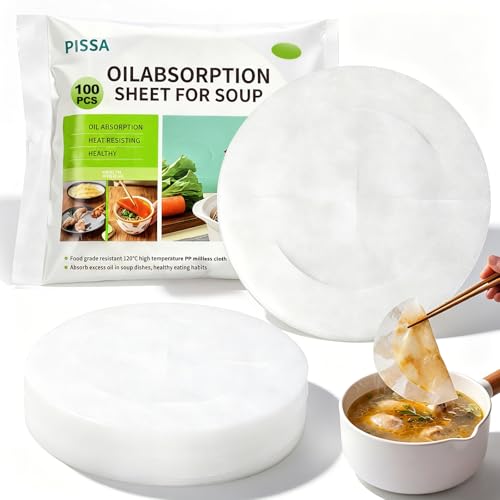
Unlike the square sheets in this group, Epakh 7-Inch Round Sheets is a 7-inch round format designed to sit on soup, broth and hot-pot surfaces. The maker says the edible paper absorbs excess grease without changing flavor, and the 100-sheet count provides a defined supply for regular use. Its round shape is the deciding feature for cooks who want sheets that fit bowls and pots. The limitation is the smaller diameter: for a wide pan or large food portion, a larger sheet may cover more area.
Bottom line: Pick this for round sheets used with bowls, broth or hot pot.
50-Sheet Kitchen Absorbing Paper

For a smaller pack, 50-Sheet Kitchen Absorbing Paper provides 50 sheets measuring 8.58 × 7.75 inches, the broadest width in this group. The maker says the papers absorb excess oil from cooked or fried food and are placed directly on the food for use. That straightforward format suits cooks who want sheets for fried dishes without buying a larger count. Its intended uses are less specific than a soup-focused round sheet, so buyers looking to skim grease from broth should choose a product explicitly designed for pots or soup.
Bottom line: Choose this if a 50-sheet pack suits your fried-food routine.
Japanese Tempura Paper, 100 Sheets

Made from paper and kenaf, Japanese Tempura Paper, 100 Sheets is the only product here with both materials named and a specific tempura focus. Each sheet measures 7.625 × 8.5 inches, and the pack contains 100 sheets. The maker says the paper absorbs excess oil from fried foods while helping keep them crisp and neatly presented. This format is a natural match for draining tempura and similar fried dishes, but it is not identified for soup or broth; cooks who need to skim a pot should select a soup-oriented sheet instead.
Bottom line: Pick this for draining tempura or other fried foods.
How to choose oil absorbing paper for food
Choose by the food surface you need to cover, then check the intended use and sheet count. Absorbent paper works through contact: oil transfers into the paper when it touches a greasy surface, so coverage matters more than a claim about speed. For soup, use a sheet intended for pots or bowls; for fried food, a flat sheet can rest against or under the food. Paper designed for direct food contact is the appropriate type to place on edible food. A simple decision rule is to choose round sheets at or below 7 inches for smaller bowls, and compare larger sheets when covering broad plates or pans. Keep paper away from an open flame and discard it after use.
Sheet size and fit for bowls or fried food
Sheet shape affects how easily paper covers a serving: a round sheet suits a circular bowl, while a rectangular or square sheet gives more corner-to-corner coverage on a plate. The products here range from 7-inch rounds to sheets measuring 8.58 × 7.75 inches, so measure the food surface rather than assuming one size fits every pan. A sheet that is too small leaves uncovered oil; an oversized sheet can fold or touch the container rim. For soup, place paper gently on the surface and lift it away once it has taken up oil. For fried food, lay pieces in a single layer so oil can contact the paper instead of trapping steam between stacked pieces.
Using oil absorbing paper safely
Hot oil can burn skin, and paper near a burner or flame can ignite, so handle hot dishes with utensils and keep used sheets away from heat sources. Let fried food drain briefly over a rack or plate before blotting; direct contact with very hot oil is unnecessary and can make paper fragile. For soup, avoid pressing a sheet down into the liquid, where it may tear or sink. Use only paper intended for food contact on food, and do not reuse a sheet once it is saturated or soiled. The maker identifies Japanese Tempura Paper, 100 Sheets as paper and kenaf, while other products describe food-grade or edible paper; follow each product’s cooking purpose and use care around hot surfaces.
Frequently Asked Questions
How does oil absorbing paper remove grease from food?
Oil transfers into the absorbent sheet where the two surfaces touch. For fried food, a single layer gives the paper better contact than stacking pieces.
Can oil absorbing paper be used in soup?
Use a sheet intended for soup, broth or pots, such as a round format sized for bowls. Place it lightly on the surface and remove it before it becomes saturated or breaks apart.
Should fried food go on paper while it is hot?
Let excess oil drain briefly on a rack or plate before blotting. Handle hot food with utensils and keep paper away from burners and open flames.
How do I choose the right sheet size?
Measure the surface you want to cover and compare it with the sheet dimensions. A 7-inch round is suited to smaller circular bowls, while sheets around 8 inches across offer more coverage for plates.
Can I reuse oil absorbing paper after cooking?
Discard a sheet after one use, especially if it is saturated or soiled. Reusing oily paper can transfer grease back onto food and creates a fire risk if it is left near heat.