
Singer 7285Q Patchwork Quilting Machine Compared

The Singer 7285Q suits quilters who want 100 built-in stitches and programmable needle positioning for quilting and appliqué. Choose a different machine if you need a specified extension or wide table, or want more stitch applications.
We earn a commission if you buy through links on this page. As an Amazon Associate I earn from qualifying purchases. Products are compared on manufacturer specifications, not hands-on testing.
- Best overall: Singer 7285Q Patchwork – Its 100 built-in stitches include 15 quilting stitches, and programmable needle positioning supports quilting and appliqué.
- Best for large quilts: Singer C5980Q Patchwork Plus – An included extension table adds work support for larger quilts and fabrics.
- Best for lettering: Brother XR9550 – Its 165 built-in stitches include 55 alphanumeric stitches.
| Product | Best for | Built-in stitches | Quilting workspace | Weight | Shop |
|---|---|---|---|---|---|
| Singer 7285Q Patchwork | Quilting and appliqué | 100 | — | 15.7 lb | Check Price on Amazon |
| Singer C5980Q Patchwork Plus | Large quilt support | 417 applications | Extension table included | 7.6 lb | Check Price on Amazon |
| Brother CS7000X | Wide-table projects | 70 | Wide table included | 14 lb | Check Price on Amazon |
| Singer C7290Q | Fast stitch control | 417 applications | — | 14 lb | Check Price on Amazon |
| Brother XR9550 | Lettering and quilts | 165 | Wide table included | 10.1 lb | Check Price on Amazon |
Singer 7285Q Patchwork Quilting Machines and Alternatives
Compare stitch selections, quilt-work support and machine weights to match your projects and workspace.
Singer 7285Q Patchwork
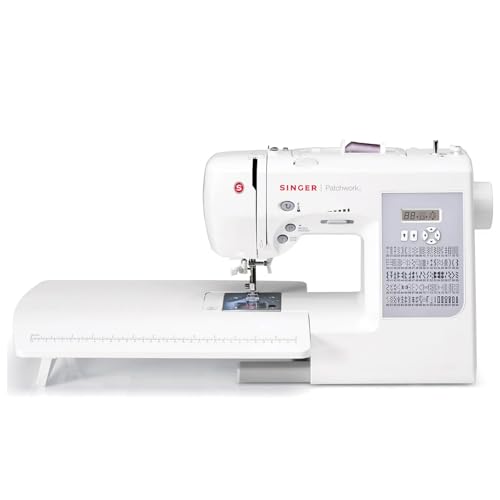
The 7285Q combines 100 built-in stitches with programmable needle up/down positioning, making it the most directly quilting-focused option here. Its stitch selection includes 15 quilting stitches, alongside essential, stretch, decorative and buttonhole stitches. Automatic stitch length and width handle settings, while the start/stop button and speed control let you sew without a foot control. It weighs 15.7 pounds. The product features do not identify an included extension table, so quilters who need extra support for a large quilt should verify table compatibility before choosing it.
Bottom line: Choose this machine for quilting and appliqué controls paired with a 100-stitch selection.
Singer C5980Q Patchwork Plus

The C5980Q stands apart with an extension table included and 417 stitch applications, giving large fabric pieces added workspace plus a broad menu of decorative, utility, stretch and letter stitches. Its programmable needle and speed control also suit detailed stitching and free-motion quilting. This is a computerized sewing and quilting machine, but its dimensions are unusually small for the weight and size class; confirm the machine’s actual footprint and table setup before planning a dedicated sewing space. Pick it when added support and stitch variety matter more than matching the 7285Q’s named Patchwork model.
Bottom line: Choose this option when an included extension table is a priority.
Brother CS7000X
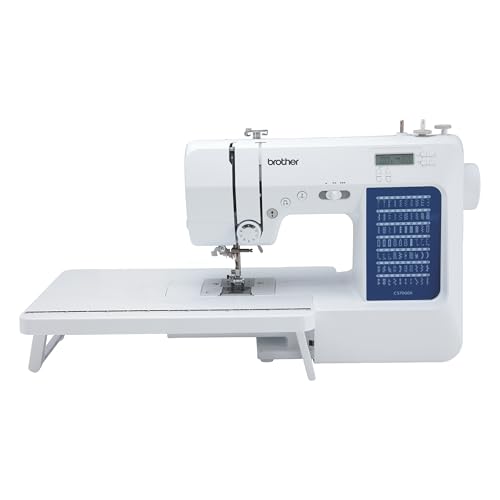
The CS7000X pairs a wide table with 70 built-in stitches, including quilting functions, making it a useful alternative for quilters who need more work surface without prioritizing a very large stitch library. It includes 10 sewing feet, a quilt guide and a hard case; automatic needle threading and a drop-in top bobbin address setup tasks. The fixed needle bar and metal frame are part of its construction. Its 70-stitch selection is smaller than the Singer 7285Q’s 100, so stitch variety is the tradeoff for buyers considering it.
Bottom line: Choose it for a wide table, quilt guide and included hard case.
Singer C7290Q

The C7290Q emphasizes workflow controls: it has a one-touch start/stop button, adjustable speed control and a thread-cut button, alongside 417 stitch applications. That makes it a reasonable alternative for quilters who value pace and quick thread trimming, as well as the 12 presser feet and LCD screen. Its stitch applications cover basic, stretch and decorative work. Unlike the 7285Q, the features do not call out programmable needle positioning or a quilting-stitch count, so buyers who specifically want those quilting controls should favor the 7285Q.
Bottom line: Choose this model for a thread-cut button and broad stitch applications.
Brother XR9550

The XR9550 brings 165 built-in stitches, including 55 alphanumeric options, and a wide table for sewing and quilting projects. Its package also includes a hard cover and eight sewing and quilting feet, while the automatic needle threader and drop-in bobbin simplify setup. The larger lettering selection makes this a better fit than the 7285Q for projects that call for stitched words.
Bottom line: Choose it when alphanumeric stitches and a wide table matter most.
How to choose a quilting sewing machine
Match the machine’s workspace and controls to the largest project you plan to sew, then compare stitch functions. A quilt top needs room to move; a wide or extension table supports fabric beside the needle, but does not replace the open space behind and to the left of the machine. For free-motion quilting, look for a way to lower or cover feed dogs and a compatible free-motion foot; the products here do not establish those details for every model, so verify before buying if that technique is essential. Stitch totals are not directly interchangeable: one manufacturer may count stitch applications, while another counts built-in stitches. Choose by the functions you will use, not the largest headline number.
Quilt workspace, table fit and machine placement
A table supports fabric weight, but your sewing surface also needs a level, stable base and clearance for the machine’s full footprint. Measure the machine area and leave room for fabric to pass without catching on a wall or lamp; bulky quilts need extra clearance behind and to the left of the needle. Extension tables increase the support area around the bed, while wide tables provide a broader work surface; check which style suits your setup. Before planning a cabinet cutout, confirm the machine’s actual dimensions and whether the table is included, since size labels alone do not establish compatibility. Keep cords clear of the needle area and avoid pulling a quilt through the machine, which can distort stitches.
Stitch counts and quilting controls compared
Stitch counts help only when the counted functions match your projects. Utility stitches handle seams and construction, stretch stitches accommodate knit fabrics, decorative stitches add surface detail, and alphanumeric stitches create lettering. A one-step buttonhole is a useful garment feature but does not add quilting workspace. For quilting, programmable needle up/down can help reposition fabric and pivot at corners; speed control can make slower, controlled stitching easier. The Singer 7285Q includes both features, while other models distinguish themselves through table support, broader applications or lettering. The comparison below shows the decision points rather than treating every stitch total as equivalent.
| Need | Look for |
|---|---|
| Quilting and appliqué | Quilting stitches and programmable needle positioning |
| Large fabric support | Included extension or wide table |
| Decorative lettering | Alphanumeric stitches |
Needles, thread and safe quilting setup
Use a fresh needle appropriate to the fabric and thread; a universal 80/12 needle is a common starting point for quilting cotton, while thicker layers may call for a larger needle. Change a needle when it is bent, burred or skipping stitches, and install it fully with the flat side oriented as the manual specifies. Keep fingers away from the needle while sewing, and switch the machine off before changing a needle or presser foot. For a quilt sandwich, baste the layers evenly before quilting to reduce shifting; bulky seams may require a longer stitch and slower speed. Match the foot, needle and thread to the method rather than assuming a high stitch count guarantees compatibility.
Frequently Asked Questions
What needle size works for quilting cotton?
A size 80/12 universal needle is a common starting point for quilting cotton and standard sewing thread. Try a larger needle for thicker batting or heavier thread, and replace a needle that bends or skips stitches.
Does a quilting machine need a wide table?
Measure the available sewing area and the machine footprint before settling on a setup.
What does programmable needle up and down do?
Programmable needle positioning lets the needle stop up or down when sewing stops. A down position can help hold fabric as you pivot at a corner or reposition an appliqué piece.
How often should I change a sewing machine needle?
Replace a needle when it is bent, dull, burred or causing skipped stitches, and begin a new project with a fresh needle when stitch quality matters. Heavy fabric, dense quilting and long sewing sessions wear needles faster than light sewing.
Can a regular sewing machine quilt a large blanket?
Many sewing machines can stitch quilt layers if the foot, needle and throat space accommodate the sandwich. A larger throat and supported work surface make handling easier, while tight clearance can bunch fabric and strain stitches.