
OSIAS Fuel Pump: GSS340 Models Compared

The OSIAS GSS340 is the direct match here because its name identifies it as an OSIAS 340 LPH fuel pump. Choose another option if you need a vehicle-specific replacement assembly or documented fitment for your fuel system.
Before choosing a pump, verify its dimensions, electrical connection, pressure needs, and fuel compatibility.
We earn a commission if you buy through links on this page. As an Amazon Associate I earn from qualifying purchases. Products are compared on manufacturer specifications, not hands-on testing.
- Best overall: OSIAS GSS340 340 LPH Fuel Pump – Its name directly identifies it as an OSIAS GSS340 340 LPH fuel pump.
- Best for E85: WYKMG OSIAS-Compatible 340 LPH Pump – The maker describes it as a 340 LPH E85-compatible high-flow pump.
- Best for logo-free option: GSS340 Fuel Pump, Without OSIAS Logo – It is identified as a GSS340 pump without an OSIAS logo.
- Best for documented output: KEMSO 340 LPH High-Performance Pump – The maker gives a 340 LPH rating and states support for gasoline or E85.
| Product | Best for | Pump designation | Size | Shop |
|---|---|---|---|---|
| OSIAS GSS340 340 LPH Fuel Pump | OSIAS GSS340 match | GSS340; 340 LPH | One size | Check Price on Amazon |
| WYKMG OSIAS-Compatible 340 LPH Pump | E85-focused replacement | 340 LPH E85 high-flow | One size | Check Price on Amazon |
| GSS340 Fuel Pump, Without OSIAS Logo | Logo-free GSS340 | GSS340 | One size | Check Price on Amazon |
| KEMSO 340 LPH High-Performance Pump | Gasoline or E85 | 340 LPH | 6.69 × 4.72 × 3.54 in | Check Price on Amazon |
OSIAS fuel pumps and alternatives
Match the pump to your fuel system’s fit, fuel type, and required operating pressure before relying on a flow rating.
OSIAS GSS340 340 LPH Fuel Pump
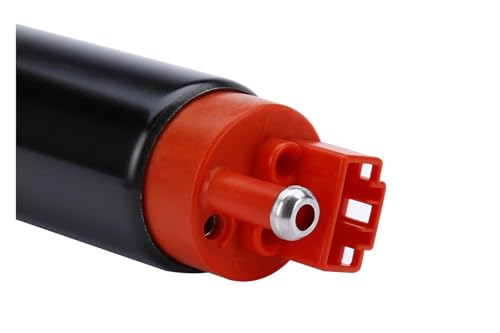
The OSIAS GSS340 is the direct match for a buyer specifically seeking an OSIAS fuel pump. Its name gives a 340 LPH rating, but the specifications do not establish vehicle fit or fuel compatibility, so those are decisive checks before choosing it.
A flow rating does not tell you the delivered flow at your engine’s operating pressure; pump output generally falls as pressure rises. Compare the pump’s required pressure and electrical connector with the vehicle’s specifications, especially for a modified engine or a return-style fuel system.
Bottom line: Pick this when OSIAS branding and the GSS340 designation are the priority, after verifying fit and fuel compatibility.
WYKMG OSIAS-Compatible 340 LPH Pump

Unlike the bare GSS340 options, this WYKMG pump is described as a 340 LPH E85 high-flow replacement, and its name references Chevrolet and Dodge. The maker says it is designed for direct OEM installation and claims its construction resists degradation from modern fuel blends.
Those claims do not establish fit for a particular model, year, or engine, and the vehicle naming is broad. Check the original pump’s part number, connector, dimensions, and required pressure before ordering; an E85-compatible pump still needs compatible hoses and seals throughout the fuel system.
Bottom line: Choose it only if the exact vehicle and fuel-system fit checks out and E85 compatibility matters.
GSS340 Fuel Pump, Without OSIAS Logo

This GSS340 pump is distinguished by being identified as without an OSIAS logo, making it a related option rather than a clearly branded OSIAS choice.
Do not assume a shared model code means identical performance or compatibility. Before installing any in-tank pump, compare its physical dimensions, inlet and outlet arrangement, connector, and pressure requirements with the original assembly. A mismatch can cause poor fit or inadequate fuel delivery even when the nominal pump type seems familiar.
Bottom line: Consider it if the logo-free version suits your needs and you can verify its exact specifications.
KEMSO 340 LPH High-Performance Pump
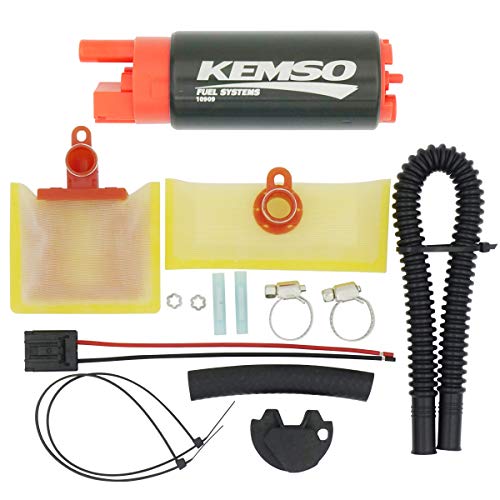
KEMSO is the alternative here with the most performance-related specifications: the maker says the pump supports up to 600 BHP in naturally aspirated, turbocharged, or supercharged applications and is designed for gasoline or E85. The maker also gives a 125.8 psi bypass-valve setting and claims a lifetime warranty.
Those figures do not guarantee 340 LPH at your engine’s operating pressure or establish fit for a specific vehicle. Confirm the required pressure, wiring, dimensions, and installation arrangement, and size the full fuel system—not just the pump—for the engine’s demand.
Bottom line: Choose it when its fuel compatibility and stated performance specifications fit a verified setup.
How to choose an OSIAS fuel pump
Start with the exact pump application, then compare operating pressure, fuel type, fit, and flow at that pressure. A 340 LPH figure is a flow rating, not a promise of that flow under every engine condition; pump flow declines as pressure rises. For a useful comparison, obtain the required rail pressure and fuel demand for the engine, then check that the pump can meet both at the voltage it will receive.
Gasoline and E85 compatibility must apply to the whole fuel path, including hoses, seals, filters, and injectors. E85 generally requires more fuel volume than gasoline for the same power, so a pump’s compatibility label alone does not size the system. Confirm connector style, pump dimensions, inlet arrangement, and whether the vehicle uses a return or returnless system before selecting a replacement.
Fuel pump fit and pressure checks
Match the pump to the vehicle’s exact year, model, engine, and original part number; make and model alone can cover multiple tank and connector designs. If replacing an in-tank pump, compare its length and diameter with the original and check how the strainer, sender, and seal attach. A complete module assembly and a pump-only replacement are different parts, even when both serve the same fuel system.
Pressure is as important as advertised flow. A bypass or relief setting is not the same as the engine’s required rail pressure, and a pump may deliver less volume at higher pressure. Before installation, verify wiring capacity, fuse sizing, connector condition, and the manufacturer’s required operating pressure. Fuel system work involves flammable liquid and vapor: disconnect the battery, relieve system pressure, and work away from sparks or open flames.
GSS340 pumps and higher-output alternatives
GSS340 refers to the pump designation used by several products here, while product names and stated specs distinguish their branding and stated capabilities. A model code by itself does not establish that two pumps share identical construction, fuel compatibility, or output. Compare the specific product’s verified details rather than relying on the code alone.
The KEMSO option gives a 340 LPH rating, a bypass setting, and maker-stated gasoline and E85 compatibility; the WYKMG option is described as an E85-compatible 340 LPH replacement. The unbranded GSS340 entry provides less performance data, while the named OSIAS GSS340 directly matches the search. Use the table to focus checks before purchase:
| Need | Compare |
|---|---|
| Exact OSIAS designation | OSIAS GSS340 identity |
| E85 use | Maker-stated compatibility and complete fuel-system materials |
| Vehicle replacement | Exact year, engine, part number, connector, and dimensions |
| Modified engine | Flow at operating pressure and system-wide fuel capacity |
Fuel pump replacement mistakes to avoid
The most common selection error is treating a maximum flow number as guaranteed delivery at the engine. Confirm the required pressure and compare flow at that pressure; also account for voltage drop, since insufficient voltage can reduce pump output. Another mistake is assuming that a pump-only unit includes the sender, strainer, seal, or module housing. Identify which parts the replacement actually contains and reuse only components that are compatible and in good condition.
Cleanliness and safe handling matter during installation. Dirt introduced into an open fuel line can damage the pump or injectors, so cap exposed lines and replace a contaminated strainer. Relieve pressure before opening the system, ventilate the work area, and keep ignition sources away. If the vehicle’s exact fit or fuel-system configuration is uncertain, verify it against the original part number before installation.
Frequently Asked Questions
Does a 340 LPH fuel pump deliver 340 LPH at the rail?
Not necessarily; advertised pump flow is typically measured under defined conditions, and output decreases as operating pressure rises. Compare the flow curve at your required pressure and voltage rather than relying on the maximum figure alone.
Can an E85-compatible pump run on regular gasoline?
A pump specified for gasoline or E85 is intended to handle those fuels, but fuel compatibility must include the hoses, seals, filter, and injectors too. Check the fuel-system components before switching fuel types.
How do I confirm an in-tank pump will fit?
Match the vehicle’s exact year, engine, original part number, connector, and pump dimensions. In-tank pumps can differ in length, diameter, outlet orientation, and strainer attachment even when the application seems similar.
Why does fuel pressure affect pump flow?
A pump generally moves less fuel as it works against higher pressure, so the same model can deliver different volume at different rail pressures. Use the pump’s flow data at the system’s actual pressure when sizing for an engine.
What safety steps matter when replacing a fuel pump?
Relieve fuel-system pressure, disconnect the battery, and work in a ventilated area without sparks or open flames. Gasoline vapor ignites easily, so keep ignition sources away from the tank and open fuel lines.