
Peppermint Spray for Cats: 5 Options Compared

Peppermint & Citronella Cat Repellent, 32 oz is the closest match for a peppermint cat repellent because its formula names peppermint and citronella oils and is intended for indoor and outdoor areas. However, do not spray peppermint oil on a cat or where a cat can lick it: peppermint essential oil can be toxic to cats.
For a specific indoor urine-marking spot, consider Nature’s Miracle No More Spraying, 24 oz instead; it is formulated for training, but its essential oils are not identified as peppermint.
We earn a commission if you buy through links on this page. As an Amazon Associate I earn from qualifying purchases. Products are compared on manufacturer specifications, not hands-on testing.
- Best overall: Peppermint & Citronella Cat Repellent, 32 oz – Its purpose is indoor and outdoor cat deterrence, and its ingredients include peppermint and citronella oils.
- Best for indoor marking: Nature’s Miracle No More Spraying, 24 oz – It is formulated to discourage cats from spraying the same indoor spot again.
- Best for broad area coverage: Nature’s Mace Cat Mace, 40 oz – The maker gives a coverage figure of up to 1,000 square feet and a repeat-application schedule.
| Product | Best for | Volume | Intended use | Named oils | Shop |
|---|---|---|---|---|---|
| Peppermint & Citronella Cat Repellent, 32 oz | Area deterrence | 32 oz | Indoor and outdoor cat deterrent | Peppermint, citronella | Check Price on Amazon |
| Nature’s Miracle No More Spraying, 24 oz | Indoor spot training | 24 oz | Indoor urine-marking training | Essential oils | Check Price on Amazon |
| Nature’s Mace Cat Mace, 40 oz | Broad area treatment | 40 oz | Indoor and outdoor deterrence | — | Check Price on Amazon |
| Nature’s Truth Peppermint Oil Spray, 2.4 oz | Aromatic use | 2.4 oz | Topical aromatherapy | Peppermint | Check Price on Amazon |
| Peppermint Essential Oil, 4 oz | Dilution projects | 4 oz | Aromatherapy and care uses | Peppermint | Check Price on Amazon |
Peppermint Spray for Cats and Related Repellents
Compare these by whether you need an area deterrent, a training spray, or peppermint oil for another purpose.
Peppermint & Citronella Cat Repellent, 32 oz
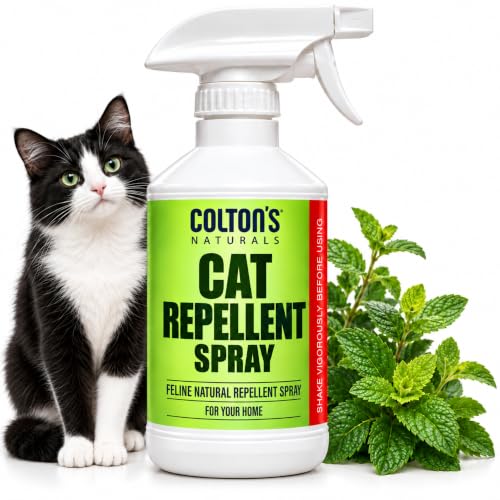
Peppermint & Citronella Cat Repellent, 32 oz is the only option here that combines named peppermint oil with a cat-repellent purpose. The 32-ounce spray is intended for areas such as yards, garages, gardens, and trash areas, rather than for application to an animal. The maker calls it pet-safe, but that claim does not make peppermint oil safe to apply to a cat or safe for licking; keep the spray off cats and food or water surfaces.
Bottom line: Choose this for an area deterrent, not a coat spray.
Nature’s Miracle No More Spraying, 24 oz

Nature’s Miracle No More Spraying, 24 oz is aimed at a narrower problem than a general peppermint repellent: discouraging repeat spraying at an indoor spot. The maker says it is safe for pets and home when used as directed; do not interpret that as permission to spray a cat. This makes sense when the issue is repeat marking indoors, but it does not match a request for a clearly named peppermint ingredient.
Bottom line: Pick this for indoor repeat-marking training when peppermint is not essential.
Nature’s Mace Cat Mace, 40 oz
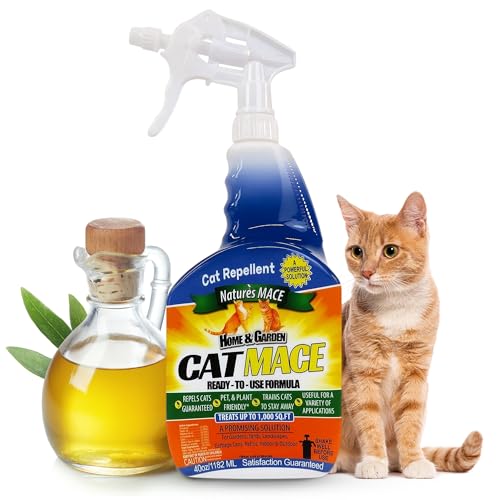
Nature’s Mace Cat Mace, 40 oz separates itself with a coverage area and a step-down application schedule: the maker says the ready-to-use spray covers up to 1,000 square feet, with daily applications for 7–10 days, then less frequent use. It is intended for indoor and outdoor deterrence around areas such as beds, furniture, yards, and flowerbeds. Anyone choosing by ingredient should select a product that names its oils; anyone choosing by coverage has a concrete area figure to compare.
Bottom line: Choose this when the coverage and application schedule matter more than peppermint.
Nature’s Truth Peppermint Oil Spray, 2.4 oz

Nature’s Truth Peppermint Oil Spray, 2.4 oz is a small topical peppermint aromatherapy spray, not a cat repellent. Its features describe use as a topical spray, in a bath, or during yoga, and the 2.4-ounce size is much smaller than the area deterrents here. The maker also says each botanical component is lab tested. Peppermint essential oil can be toxic to cats, so this product is not appropriate for spraying on a cat, bedding the cat uses, or surfaces the cat may lick.
Bottom line: Choose this only for its aromatherapy purpose, away from cats.
Peppermint Essential Oil, 4 oz

Peppermint Essential Oil, 4 oz is peppermint essential oil rather than a ready-to-use cat-area deterrent. It is steam distilled from the herb and comes with a glass dropper and sprayer; its uses include adding drops to carrier oil or a water-filled diffuser. Those suggested uses do not establish safety around cats. Concentrated peppermint essential oil can be toxic to cats, including through contact or grooming after residue gets on fur, so do not apply it to a cat or make a cat-accessible spray from it. The 4-ounce bottle suits buyers seeking oil for non-cat projects, not a cat spray.
Bottom line: Choose this for non-cat essential-oil projects, not feline deterrence.
How to Choose a Peppermint Cat Repellent
Choose by application target first: area repellents are meant for boundaries, while training sprays address a specific behavior or spot. Among these options, only Peppermint & Citronella Cat Repellent, 32 oz names both peppermint and a cat-repellent purpose; Nature’s Miracle No More Spraying, 24 oz is for indoor repeat marking, and Nature’s Mace Cat Mace, 40 oz is an area deterrent without a named peppermint ingredient. A label that says pet-safe is not proof that concentrated essential oil is safe on a cat. Peppermint essential oil can be toxic to cats, so keep it off their skin, fur, food, water, and reachable surfaces. Use a product only for the location and purpose its maker specifies, and keep the animal away until treated surfaces are dry if its label requires that.
Where to Apply a Cat Deterrent
Apply an area deterrent to the boundary or object you want a cat to avoid, not to the animal. Before treating furniture, garden beds, or flooring, check whether the surface can tolerate the formula and whether the product label allows that location. Outdoor sprays may need reapplication after rain or irrigation, so a repeat schedule on the product label matters more than assuming one treatment lasts indefinitely. For urine marking, clean the spot with an enzymatic pet-urine cleaner before using a deterrent; residual odor can encourage repeat visits. Never cover a litter box, food bowl, or water bowl with a repellent, and avoid blocking a cat’s access to essential resources.
Peppermint Oil Safety Around Cats
Peppermint essential oil is not a safe cat treatment: cats can be exposed by skin contact, inhaling concentrated vapors, or grooming residue from their coat. Do not put peppermint oil in a cat’s bath, apply it to fur, or use a DIY spray on a cat-accessible surface. A diffuser can also release oil into the room and leave residue, so avoid diffusing peppermint in spaces cats occupy. If a cat contacts or ingests peppermint oil, prevent further grooming and contact a veterinarian or animal poison-control service promptly; do not induce vomiting unless a professional directs you. Keep the original container available when seeking guidance.
Compare Spray Types by Intended Use
Product purpose is the clearest way to separate a peppermint deterrent from a training formula or essential oil. The table distinguishes intended function, not a promise that a scent will work for every cat; scent sensitivity and the location of the problem both affect a practical choice. A measured coverage figure helps plan area treatment, while a spot-training formula addresses a different need.
| Type | What it targets | Selection rule |
|---|---|---|
| Peppermint area repellent | Outdoor or indoor boundaries | Use only for a location its label permits; never on the cat |
| Indoor training spray | Repeat urine marking at a spot | Pair with thorough urine-odor cleanup |
| Essential oil | Aromatherapy or other non-cat projects | Keep away from cats and cat-accessible surfaces |
Common Mistakes With Cat Repellent
The most important mistake is treating a deterrent as a coat spray: no peppermint essential oil should be applied to a cat. Another is relying on scent alone to solve marking; clean urine residue with an enzymatic cleaner and address litter-box access or stress-related changes as well. Do not spray near food, water, or litter resources, because a deterrent that makes those essential areas unpleasant can disrupt normal routines. For an outdoor application, keep neighboring animals and children away according to the product label, and reapply only on its schedule. If marking starts suddenly or continues despite cleaning and access changes, ask a veterinarian to assess possible medical causes.
Frequently Asked Questions
Can I spray peppermint oil directly on my cat?
No. Peppermint essential oil can be toxic to cats, and applying it to fur also creates a grooming exposure as the cat cleans itself.
Is peppermint spray safe around cats indoors?
Not automatically; keep concentrated peppermint oil away from cat-accessible surfaces, food, and water. Ventilation does not make direct contact or licking safe.
What should I do if my cat licks peppermint oil?
Contact a veterinarian or animal poison-control service promptly and keep the container available. Do not induce vomiting unless a veterinary professional directs you.
How often should an outdoor cat deterrent be reapplied?
Use the product’s own schedule because weather and formula affect persistence; Nature’s Mace Cat Mace, 40 oz gives a daily schedule for the first 7–10 days, then less often.
Will a cat repellent stop urine marking by itself?
A repellent alone may not resolve marking; clean the spot with an enzymatic urine cleaner and keep litter-box access clear. Sudden or persistent marking warrants veterinary advice.