
PetArmor Flea Treatments for Cats Compared by Formula

For most cats over 1.5 pounds, PetArmor Plus Cats, 6 Count is the stronger fit because its fipronil and (S)-methoprene formula targets fleas at multiple life stages; PetArmor Cats, Fipronil, 6 Count is the simpler fipronil-only option. Choose Pet Defender Plus Cats, 1 Count if you want a one-count alternative from another brand, rather than a PetArmor product.
Cat flea topicals are liquids applied to the skin, where their active ingredients spread through the coat. Check the product label and your cat’s current weight and age before applying any flea treatment.
We earn a commission if you buy through links on this page. As an Amazon Associate I earn from qualifying purchases. Products are compared on manufacturer specifications, not hands-on testing.
- Best overall: PetArmor Plus Cats, 6 Count – Its formula combines fipronil and (S)-methoprene and targets fleas, eggs, and larvae.
- Best for fipronil-only formula: PetArmor Cats, Fipronil, 6 Count – It uses fipronil without the added flea-egg and larva ingredient.
- Best for a one-count alternative: Pet Defender Plus Cats, 1 Count – It is a one-count monthly topical from a different brand.
| Product | Best for | Active ingredients | Supply | Shop |
|---|---|---|---|---|
| PetArmor Plus Cats, 6 Count | Multiple flea stages | Fipronil, (S)-methoprene | 6 months | Check Price on Amazon |
| PetArmor Cats, Fipronil, 6 Count | Fipronil-only formula | Fipronil | 6 months | Check Price on Amazon |
| Pet Defender Plus Cats, 1 Count | Single-dose alternative | — | 1 count | Check Price on Amazon |
PetArmor Flea Treatments for Cats
Compare the active ingredients, coverage, and package size before choosing a monthly topical.
PetArmor Plus Cats, 6 Count
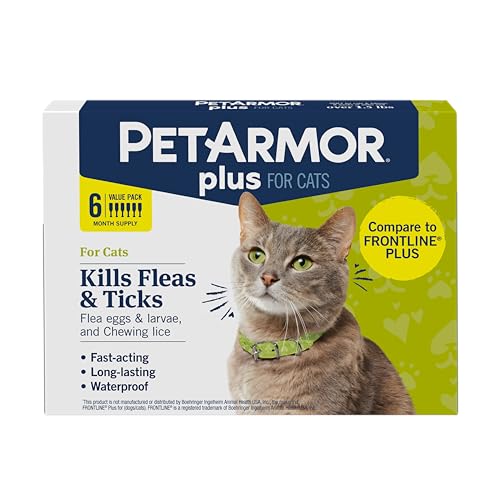
Unlike the fipronil-only option, this PetArmor Plus formula combines fipronil with (S)-methoprene. The maker says it kills fleas, eggs, larvae, ticks, and chewing lice, starts killing fleas within 24 hours, and remains waterproof for up to 30 days after application. The six-count package provides a monthly dose for six months, for cats weighing at least 1.5 pounds. This is the better fit when targeting immature flea stages matters. Its weight threshold still matters: confirm your cat meets the minimum before use.
Bottom line: Choose this if you want a two-ingredient formula aimed at fleas at multiple life stages.
PetArmor Cats, Fipronil, 6 Count

This PetArmor topical uses fipronil alone, unlike the Plus formula’s added (S)-methoprene. The maker says it controls fleas, ticks, and chewing lice for up to 30 days, is waterproof, and is suitable for cats and kittens 8 weeks and older weighing more than 1.5 pounds. A six-count package covers six monthly applications. Choose it when a fipronil-only product matches your preference; buyers seeking a formula that also targets flea eggs and larvae should compare the Plus version instead. Check both age and weight eligibility before applying.
Bottom line: Choose this when you want a six-month fipronil-only topical and your cat meets its age and weight limits.
Pet Defender Plus Cats, 1 Count

This is a one-count alternative from Pet Defender, not PetArmor, and its package differs from the two six-count PetArmor options. The maker says it is a monthly topical for cats and kittens 8 weeks and older weighing at least 1.5 pounds, and that it targets fleas, flea eggs, larvae, several tick types, and chewing lice. The active ingredients are not identified in the specifications, so this option is less straightforward to compare ingredient-for-ingredient with the PetArmor formulas. Confirm the exact product label and your cat’s eligibility before choosing it.
Bottom line: Choose this if you want a one-count topical alternative and can verify its active ingredients on the package.
How to choose a cat flea topical
Choose by active ingredient, target pests, and your cat’s age and weight—not by package count alone. Monthly cat topicals commonly use fipronil; some combine it with an insect growth regulator such as (S)-methoprene, which targets flea eggs and larvae. A six-dose package represents six monthly applications, not six doses to apply at once. For cats under 1.5 pounds or younger than 8 weeks, do not assume these formulas are suitable; the minimums in the specifications differ, so verify the package label before treating. Never apply a dog flea product to a cat: some dog products contain permethrin, which is highly toxic to cats.
How topical flea treatments work
Topical flea products are applied to the skin, usually at the base of the skull or between the shoulder blades so a cat is less able to lick the site. Fipronil acts on adult fleas and ticks; an ingredient such as (S)-methoprene interrupts flea development by affecting eggs and larvae. Flea eggs and immature stages can remain in bedding, rugs, and floor cracks, so treating the cat may not clear an established household infestation by itself. Wash pet bedding and vacuum areas where the cat rests, then empty the vacuum outdoors. Keep cats from grooming one another at the application site until the product has dried, and follow the package’s handling directions.
Match the formula to your cat
Formula choice changes which flea life stages are targeted, while age and weight determine whether the product is an appropriate match. Use this quick comparison to narrow the options, then check the label for exact dosing and application instructions.
| Need | Formula direction |
|---|---|
| Target fleas, eggs, and larvae | Fipronil plus (S)-methoprene |
| Prefer fipronil alone | Fipronil-only topical |
| Want one application in the package | One-count monthly topical |
A cat’s weight can change, especially for kittens, so recheck it before each application rather than relying on an old measurement. Never split a dose made for a different weight range unless the product label explicitly directs it.
Apply cat flea treatments safely
Apply only the amount and product labeled for that cat’s species, age, and weight. Part the fur so the liquid reaches the skin, and avoid placing it where the cat can lick it; application sites and instructions differ by product, so use the label. Do not combine two flea products unless a veterinarian advises it, because overlapping ingredients can increase exposure. If multiple pets groom each other, separate them until the application site is dry. After treating, wash your hands and store the remaining doses away from children and pets. If a cat shows unusual signs after treatment, contact a veterinarian or animal poison-control service promptly.
Frequently Asked Questions
How often do cat flea topicals need to be applied?
The monthly products described here are intended to provide coverage for up to 30 days per application. Apply only at the interval on the package label; do not shorten the interval to address fleas in the home.
Can an 8-week-old kitten use these formulas?
The PetArmor fipronil-only formula and Pet Defender product specify use from 8 weeks of age, with a minimum weight of more than or at least 1.5 pounds, respectively. Check both age and weight on the exact package before treating.
Can I use dog flea medicine on my cat?
No; use a product labeled for cats. Some dog flea products contain permethrin, which can cause severe poisoning in cats, even through close contact with a recently treated dog.
Why are fleas still appearing after treatment?
Flea eggs and immature stages can remain in carpets, cracks, and pet bedding after adult fleas on the cat are treated. Vacuum resting areas and wash bedding regularly while using the product at its labeled monthly interval.
Should I bathe my cat after a topical dose?
These PetArmor formulas are described as waterproof, but that does not establish a safe bathing interval around application. Follow the package directions on bathing and avoid bathing immediately after dosing unless the label permits it.