
OMAC Roof Rack Cross Bars Compared by Vehicle Fit

Choose OMAC roof rack cross bars by matching your vehicle and roof-rail style first; the 47-inch raised-rail model carries up to 198 pounds, but it is not a universal fit. Buyers with a Chevrolet Bolt EV, Spark or Accord Sedan should choose the vehicle-specific version instead.
Cross bars span the roof to support compatible carriers, but the vehicle’s roof-load limit still governs the total load, including the bars.
We earn a commission if you buy through links on this page. As an Amazon Associate I earn from qualifying purchases. Products are compared on manufacturer specifications, not hands-on testing.
- For Chevrolet Bolt EV 2017–2023: OMAC Bolt EV Cross Bars – Vehicle-specific steel bars with a 110-pound maximum load and keyed locks.
- For raised roof rails: OMAC 47-Inch Raised-Rail Cross Bars – 47-inch bars fit raised rails and have a 198-pound maximum load.
- For integrated roof rails: OMAC 44-Inch Universal Aluminum Cross Bars – 44-inch aluminum bars are designed for integrated rails and have a 220-pound maximum load.
- For Chevrolet Spark 2013–2015: OMAC Chevrolet Spark Cross Bars – Vehicle-specific aluminum bars fit standard roof rails and carry up to 198 pounds.
| Product | Best for | Fit | Maximum load | Material | Shop |
|---|---|---|---|---|---|
| OMAC Bolt EV Cross Bars | Bolt EV fit | Bolt EV 2017–2023 | 110 lb | Steel | Check Price on Amazon |
| OMAC 47-Inch Raised-Rail Cross Bars | Raised rails | Raised roof rails; 47 in | 198 lb | — | Check Price on Amazon |
| OMAC 44-Inch Universal Aluminum Cross Bars | Integrated rails | Integrated roof rails; 44 in | 220 lb | Aluminum | Check Price on Amazon |
| OMAC Chevrolet Spark Cross Bars | Spark fit | Chevrolet Spark 2013–2015; standard rails | 198 lb | Aluminum | Check Price on Amazon |
| OMAC Honda Accord Sedan Cross Bars | Accord Sedan fit | Accord Sedan 2013–2017 | 110 lb | Steel | Check Price on Amazon |
OMAC roof rack cross bars by vehicle fit
Start with the vehicle and rail style, then compare load rating and bar construction.
OMAC Bolt EV Cross Bars

For the Chevrolet Bolt EV, these vehicle-specific steel cross bars differ from the broader raised-rail and integrated-rail options. They have a 110-pound maximum load, keyed locks and a T-slot channel for compatible roof accessories. The maker says the bars are City Crash tested and aligned with DIN 75302:2019 and ISO/PAS 11154:2006. This fit suits Bolt EV owners who need the named model-year range; buyers with another vehicle should choose a matching version instead. The vehicle roof’s load limit may be lower than the bar rating, so use the lower limit.
Bottom line: Choose these for a Bolt EV from the model years that has the matching roof setup.
OMAC 47-Inch Raised-Rail Cross Bars

These 47-inch cross bars target vehicles with raised roof rails, unlike the vehicle-specific Bolt EV, Spark and Accord sets. The maker says they are TÜV-certified to DIN 75302/06.19 and ISO 11154:2023 and homologated for a maximum load of 198 pounds. The bars have keyed anti-theft locks and a T-slot rail; the package includes pre-assembled bars and installation tools. They suit buyers whose vehicle has raised rails and compatible accessories. Their fit is not universal: check that the rail shape and bar length suit the vehicle before ordering.
Bottom line: Pick these when your vehicle has raised rails and the 47-inch span fits.
OMAC 44-Inch Universal Aluminum Cross Bars

These aluminum bars are the option for integrated roof rails, with a 44-inch size and a 220-pound maximum load. The maker says they are TÜV-certified to DIN 75302/06.19 and ISO 11154:2023. A T-slot rail and two keyed locks support compatible accessories and help deter removal; pre-assembled bars and installation tools are included. They suit buyers looking for integrated-rail bars with the highest capacity among these options. “Universal” does not remove the need to confirm rail compatibility and usable span for the vehicle, and the vehicle roof limit can be lower than 220 pounds.
Bottom line: Choose these for compatible integrated rails when their 44-inch span works.
OMAC Chevrolet Spark Cross Bars
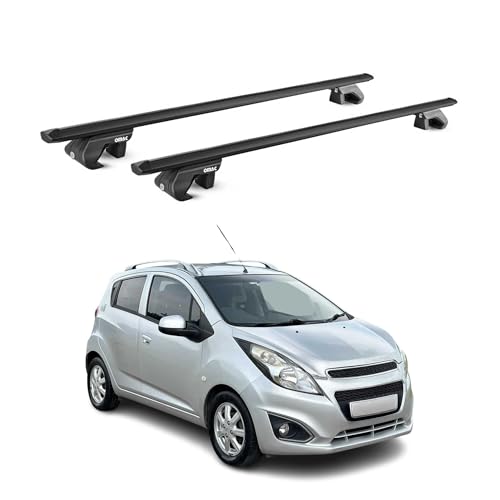
For a Chevrolet Spark from 2013 through 2015 with standard roof rails, these aluminum cross bars provide a vehicle-specific alternative to the 47-inch raised-rail set. The maker says they are TÜV-certified to DIN 75302/06.19 and ISO 11154:2023, with a maximum load of 198 pounds. They include a T-slot channel and two keyed locks for compatible accessories and added removal deterrence. The Spark-specific fit is the deciding factor; this is not a substitute for raised-rail bars on another vehicle. Confirm the vehicle’s roof-load limit, since it caps the complete setup.
Bottom line: Choose these for the specified Spark years with standard roof rails.
OMAC Honda Accord Sedan Cross Bars
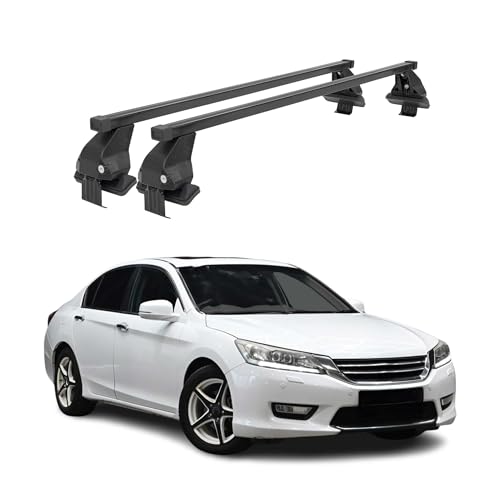
These steel cross bars are tailored to the Honda Accord Sedan from 2013 through 2017, rather than to raised or integrated roof rails generally. Their 110-pound maximum load, keyed locking system and T-slot channel distinguish them from the higher-capacity aluminum options. The maker says they are City Crash tested and aligned with DIN 75302:2019 and ISO/PAS 11154:2006. They suit owners of the specified sedan who want compatible carrier mounting; buyers with a different Accord body style or model year should verify fit before ordering. The vehicle’s roof rating remains the limit for bars and cargo together.
Bottom line: Pick these for the Accord Sedan years and matching roof configuration.
How to choose OMAC roof rack cross bars
Match the vehicle and rail style before comparing capacity. Raised rails sit above the roof with a visible gap; integrated rails sit close against the roof, while standard rails are a distinct fit type. Cross bars attach to the rails and provide mounting points for compatible carriers, but accessory clamps and T-slot hardware are not interchangeable by default. A bar capacity is a ceiling, not a target: the vehicle roof rating includes the bars, carrier and cargo, so use whichever limit is lower. For example, if the roof permits 165 pounds and the bars are rated to 198 pounds, the full setup remains limited to 165 pounds. Measure usable rail span and verify the specific model-year fit before selecting a set.
How roof-rack load limits work
Count the bars, carrier and cargo together against the vehicle’s roof-load limit. A crossbar rating such as 110 or 220 pounds does not increase the roof’s own capacity, and a dynamic roof rating for driving should not be treated as a parked-load rating. Keep cargo distributed across the bars and secured against shifting; concentrated or loose loads can stress mounting points even when their total weight is below the limit. Many vehicle roof limits are lower than aftermarket bar ratings, so the vehicle manual is the number to check. For tall loads, account for extra clearance at garages and branches, and recheck straps after a short drive.
Rail types and crossbar fit
Raised, integrated and standard rails require different mounting interfaces, so rail appearance matters as much as bar length. Raised rails have open space below them; integrated rails run close to the roof; standard rails may use a different attachment arrangement. A 44- or 47-inch bar length alone does not establish fit because vehicle width, rail spacing and foot placement determine whether the bars clamp securely. Measure the distance between usable mounting areas and compare the vehicle year and body style. The word “universal” should not replace a fit check: a bar may span several vehicle categories yet still require a particular rail profile.
Use this fit guide to narrow the choices before checking exact vehicle compatibility:
| Roof or vehicle fit | Matching choice | Stated maximum load |
|---|---|---|
| Bolt EV, 2017–2023 | Vehicle-specific steel bars | 110 lb |
| Raised roof rails | 47-inch bars | 198 lb |
| Integrated roof rails | 44-inch aluminum bars | 220 lb |
| Spark, 2013–2015, standard rails | Vehicle-specific aluminum bars | 198 lb |
| Accord Sedan, 2013–2017 | Vehicle-specific steel bars | 110 lb |
Using T-slots and securing roof cargo
A T-slot is a channel in the cross bar that can accept compatible accessory hardware, often giving a lower-profile mount than a clamp around the bar. Check that the accessory’s bolt size and channel dimensions match; the presence of a T-slot alone does not establish compatibility. Position paired bars according to the carrier maker’s required spacing, since roof boxes and bike carriers can have different minimum and maximum distances. Tighten all mounts evenly and secure the load at more than one point where the carrier design calls for it. Loose cargo can shift during braking or cornering. Recheck attachment tension after the first few miles and before longer trips.
Frequently Asked Questions
Do roof rack bars increase my vehicle’s roof capacity?
No; the vehicle’s roof-load rating still controls the bars, carrier and cargo together. If the bars are rated for 198 pounds but the vehicle roof allows 150 pounds, the complete setup is limited to 150 pounds.
How do I tell raised rails from integrated rails?
Raised rails have a visible gap between the rail and roof, while integrated rails sit close against the roof. Measure the rail profile and check the vehicle-specific fit before choosing cross bars.
Can any T-slot accessory fit these cross bars?
No; a T-slot only works with hardware that matches its channel dimensions and attachment design. Verify accessory fit and the required bar spacing, which can differ between roof boxes and bike carriers.
How far apart should roof cross bars be?
Use the carrier maker’s required spacing rather than a universal distance, because roof boxes and bike carriers can require different bar separation. Confirm that the vehicle rails provide enough usable span for that spacing.
Should I remove roof bars when they are not in use?
Removing bars when they are unused reduces the time they remain exposed to road grime and wind; follow the bar maker’s care guidance for cleaning and storage. Before each trip, check that the mounts remain tight and locks are engaged.