
Pinch Pots Salt and Pepper: 5 Sets Compared

For pinch pots salt and pepper, the wide 4-inch marble bowls in Cork & Mill Marble Bowls suit cooks who want room to pinch or scoop, with wood lids and spoons included. Choose Thirstystone Etched Marble Pots instead for clearly etched salt and pepper labels in compact pots; the other options are salt cellars rather than open pinch pots.
A pinch pot is a small vessel kept within reach for taking seasoning by hand. Keep salt pots dry, and use a dedicated spoon when moisture or cross-seasoning is a concern.
We earn a commission if you buy through links on this page. As an Amazon Associate I earn from qualifying purchases. Products are compared on manufacturer specifications, not hands-on testing.
- Best overall: Cork & Mill Marble Bowls – Four-inch-wide marble bowls provide room for pinching or scooping, and each has a lid and spoon.
- Best for compact labeled pots: Thirstystone Etched Marble Pots – The 2-ounce marble pots have separate etched Salt and Pepper labels.
- Best for built-in spoons: Timtopno Acacia Salt Cellars – Each 6-ounce acacia wood cellar has an integrated spoon and swivel lid.
| Product | Best for | Material | Capacity | Lid and spoon | Shop |
|---|---|---|---|---|---|
| Cork & Mill Marble Bowls | Wide marble bowls | Marble | — | Acacia lids; spoons | Check Price on Amazon |
| Thirstystone Etched Marble Pots | Labeled small pots | Marble | About 2 oz | Etched lids; no spoon mentioned | Check Price on Amazon |
| Timtopno Acacia Salt Cellars | Built-in spoon access | Acacia wood | 6 oz each | Swivel lids; built-in spoons | Check Price on Amazon |
| DAYYET Stacked Ceramic Cellars | Stackable capacity | Ceramic | 10 oz each | Acacia lids; no spoon mentioned | Check Price on Amazon |
| Lawei Bamboo Swivel Cellars | Bamboo swivel lids | Bamboo | — | Magnetic swivel lids; spoons | Check Price on Amazon |
Pinch Pots Salt and Pepper Compared
Compare open pinch-pot styles with covered salt cellars by size, material and how each keeps seasonings accessible.
Cork & Mill Marble Bowls

For a wider pinch surface, Cork & Mill Marble Bowls has 4-inch bowls made from solid marble, plus an acacia wood lid and spoon for each bowl. The broad opening suits cooks who prefer pinching or scooping over using a shaker, while the weight and non-skid bottoms help keep the bowls steady on a counter or table. The set is white and grey. Each bowl is 2.12 inches high. A limitation is its substantial combined weight: the set weighs about 2.96 pounds, so it is less suited to frequent carrying between cooking areas.
Bottom line: Choose these if you want wide, stable marble bowls with a lid and spoon for each seasoning.
Thirstystone Etched Marble Pots

For compact, clearly identified seasonings, Thirstystone Etched Marble Pots pairs a white marble pot etched “Salt” with a black one etched “Pepper.” Each holds approximately 2 ounces, making the set a smaller-capacity choice than the larger cellars. The etched lids make the intended contents easy to distinguish when the pots sit together near a prep area or dining table. Marble veining varies naturally, so the pair may not have identical patterns. Choose another style if you want a spoon included or need to keep a larger quantity at hand.
Bottom line: Pick these for small, separately labeled marble pots rather than larger storage.
Timtopno Acacia Salt Cellars

Unlike the marble pinch-pot styles, Timtopno Acacia Salt Cellars is a pair of acacia wood salt cellars with a 6-ounce capacity per container and a built-in spoon. Each lid swivels 360 degrees, and engraved SALT and PEPPER labels distinguish the contents. A slot holds each spoon when not in use, keeping it with its matching cellar. At 3.54 inches long and wide, these are compact covered containers, but they are designed around scooping rather than taking seasoning directly by hand. They suit cooks who want labeled, covered storage and a dedicated scoop.
Bottom line: Choose these if a built-in spoon and labeled swivel lid matter more than an open pinch surface.
DAYYET Stacked Ceramic Cellars
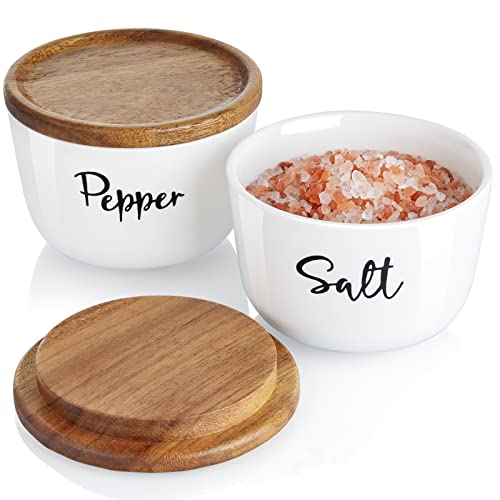
For higher-capacity countertop storage, DAYYET Stacked Ceramic Cellars holds up to 10 ounces in each white ceramic cellar, substantially more than compact pinch pots. The two containers stack, which can help save counter space when the set is stored together, and each has an acacia wood lid. Their 4-inch length and width make them broader than a small seasoning pot, while the 2.95-inch height gives them a more substantial profile. They are a better match for cooks who refill less often than for anyone seeking a tiny open bowl for a pinch of seasoning.
Bottom line: Pick these for larger covered portions and a stackable countertop arrangement.
Lawei Bamboo Swivel Cellars

Lawei Bamboo Swivel Cellars uses natural bamboo and a magnetic swivel lid, distinguishing it from the marble bowls and ceramic cellars. The two round containers measure about 3.5 inches across and 2.8 inches high; spoons are included. The lid swivels open for access and closes over the contents, making this a covered storage style rather than an open pinch pot. Its suggested uses include salt, pepper, herbs and other seasonings.
Bottom line: Choose these for bamboo construction, included spoons and a magnetic swivel closure.
How to choose salt and pepper pinch pots
Choose by the way you take seasoning: open pots support a direct pinch, while lidded cellars protect contents and usually pair better with a spoon. A useful countertop pot has an opening large enough for your fingers or a small scoop; a 4-inch-wide bowl offers more access than a compact 2-ounce pot. Capacity matters too: small vessels need replenishing sooner, while larger ones occupy more counter space. For seasoning used at the table, paired containers with clear labels reduce mix-ups. For cooking, place the salt pot away from steam and splatter, since damp salt can clump and moisture can affect dry spices.
Use this distinction to narrow the styles:
| Need | Style to consider | Trade-off |
|---|---|---|
| Take seasoning by hand | Open pinch pot | Contents are exposed between uses |
| Keep a larger amount covered | Lidded cellar | Usually accessed with a spoon |
| Identify paired seasonings | Etched or engraved pair | Labels suit the designated contents |
Capacity and countertop fit
Match container capacity to how quickly you use a seasoning, not just the space available. A 2-ounce pot is compact and easy to keep near a prep zone, while a 10-ounce cellar means more storage in one vessel but takes up more room. Measure the intended spot before choosing a pair: a set of two 4-inch-wide bowls needs a wider footprint than a single small pot, and stacked cellars require vertical clearance. Leave room to open lids fully and lift out a spoon without bumping nearby containers. If the pots will sit beside a stove, place them beyond direct steam and splashes; a lid helps cover the contents but does not make a vessel airtight.
Marble, wood and ceramic seasoning pots
Material affects weight, care and counter feel. Marble is heavy and stable, but natural veining differs from piece to piece; avoid sudden temperature changes that can stress stone. Wood is lighter and should be kept dry rather than soaked, since prolonged moisture can warp or damage it. Ceramic is nonporous and easy to wipe, but it can chip or break if dropped. A covered cellar limits exposure between uses, whereas an open pot is faster to pinch from. For salt near a wet cooking area, use a clean, dry spoon and return it to its holder so damp hands do not transfer moisture into the stored seasoning.
Keeping salt and pepper dry and separate
Salt absorbs moisture readily, so locate salt pots away from boiling pans, sinks and dishwashers. A lid reduces direct exposure but does not prevent clumping if wet utensils are used. Keep separate utensils for salt and pepper, and avoid returning a spoon that has touched food to either container. Wipe stone, wood and ceramic exteriors with a lightly damp cloth, then dry them; do not leave wooden lids or bamboo containers soaking in water. For a shared table, use clearly marked vessels or keep each seasoning in its matching container. These simple habits preserve dry, distinct seasonings and reduce accidental flavor transfer.
Frequently Asked Questions
Should salt and pepper pinch pots have lids?
A lid is useful when pots sit near cooking steam or remain on the counter between meals. Lids reduce direct exposure, but dry hands and utensils still matter because moisture can make salt clump.
How much salt fits in a small pinch pot?
Compact pots can hold around 2 ounces, while larger salt cellars may hold 6 to 10 ounces. Choose a smaller capacity for occasional table use and more capacity if you cook often and want fewer refills.
Can marble salt pots go in the dishwasher?
Hand-washing marble is the safer general approach because dishwasher detergents and repeated temperature changes can dull or stress natural stone. Wipe the surface with a damp cloth and dry it promptly.
Where should a salt cellar sit while cooking?
Keep a salt cellar at least a few feet from active steam, splattering oil and the sink when counter space permits. Even a covered pot can admit moisture when opened beside a boiling pan.
How do I keep pepper separate from salt?
Use paired vessels with clear labels or distinct colors, and keep a dedicated dry spoon with each one. Avoid swapping utensils, which can transfer seasoning and food moisture between containers.