
Plaid Automotive Upholstery Fabric: 5 Options Compared

For plaid automotive upholstery fabric, Red Plaid Polyester Foam-Backed Fabric is the direct match: its red plaid polyester cloth comes pre-laminated to foam and measures 39 by 59 inches. Choose it for a plaid accent or smaller repair; pick a different option if your project needs a larger cut or a vinyl surface instead.
We earn a commission if you buy through links on this page. As an Amazon Associate I earn from qualifying purchases. Products are compared on manufacturer specifications, not hands-on testing.
- Best overall: Red Plaid Polyester Foam-Backed Fabric – The only plaid option, with foam backing and a 39 by 59-inch cut.
- Best for diamond quilting: SmoothNovelty Black Diamond Quilted Vinyl – Black PVC faux leather has stitched 2-by-3-inch diamonds and a 2.1-yard cut.
- Best for brown stitching: MAYJOYDIY Brown-Stitch Quilted Faux Leather – Brown diamond stitching distinguishes this 61-inch-wide faux leather material.
| Product | Best for | Cut size | Surface | Backing | Shop |
|---|---|---|---|---|---|
| Red Plaid Polyester Foam-Backed Fabric | Plaid repairs | 39 × 59 in | Polyester plaid | Scrim foam | Check Price on Amazon |
| SmoothNovelty Black Diamond Quilted Vinyl | Diamond quilting | 75.6 × 55.12 in | PVC faux leather | Foam padding | Check Price on Amazon |
| MAYJOYDIY Brown-Stitch Quilted Faux Leather | Brown accents | 75.6 × 61 in | PVC faux leather | Foam padding | Check Price on Amazon |
| Black Marine-Grade Vinyl, 36 × 61 in | Water-resistant vinyl | 36 × 61 in | Marine-grade vinyl | None specified | Check Price on Amazon |
| Cocoa Distressed Faux Leather, 36 × 54 in | Distressed accents | 36 × 54 in | Distressed faux leather | None specified | Check Price on Amazon |
Plaid Automotive Upholstery Fabric and Alternatives
Compare the pattern, material, and cut dimensions before choosing fabric for a seat, panel, or headliner project.
Red Plaid Polyester Foam-Backed Fabric

For a plaid automotive interior, Red Plaid Polyester Foam-Backed Fabric is the only option here with a plaid pattern. The red polyester piece measures 39 by 59 inches and is pre-laminated to scrim foam, so it can suit a smaller seat section, door panel, armrest, or headliner project. The maker says it can be cut to shape and wiped with warm water and a rag. Its fixed cut size is the main limitation: measure the panel and allow extra material for wrapping edges, seams, and pattern alignment before starting.
Bottom line: Choose this if matching plaid matters more than getting a large continuous cut.
SmoothNovelty Black Diamond Quilted Vinyl

Unlike plaid cloth, SmoothNovelty Black Diamond Quilted Vinyl has black PVC faux leather with stitched diamonds measuring 2 by 3 inches. The cut is 2.1 yards long and 55.12 inches wide, with foam padding, making it a candidate for projects that call for a quilted surface rather than a plaid match. The maker describes it for automotive and furniture upholstery. Its repeating diamond design will not blend into a plaid interior, and the stitched pattern may constrain where you place seams or trim; plan cuts around the diamonds.
Bottom line: Pick this for a black quilted look, not for a plaid match.
MAYJOYDIY Brown-Stitch Quilted Faux Leather
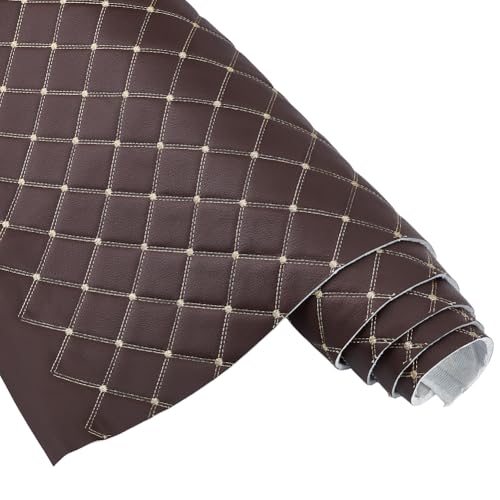
MAYJOYDIY Brown-Stitch Quilted Faux Leather stands apart with brown stitching across its diamond quilting, rather than the red plaid appearance of Red Plaid Polyester Foam-Backed Fabric. This PVC, cotton, and polyester material is sold in a 2.1-yard cut that is 61 inches wide, with foam padding. It can be cut into different shapes for automotive or furniture upholstery projects. The brown thread and quilted geometry will remain visually prominent, so it suits an interior where those details are intentional. It is not a pattern match for a plaid seat or trim panel.
Bottom line: Choose this when brown diamond stitching suits the rest of the interior.
Black Marine-Grade Vinyl, 36 × 61 in

Black Marine-Grade Vinyl, 36 × 61 in is a plain black marine-grade vinyl, not a patterned automotive cloth. Its pre-cut piece is 36 by 61 inches, with 59 inches of usable width and 1.0 mm thickness. The maker says the vinyl is waterproof and scratch-resistant, and describes it for cars, boats, and home furniture. This option makes more sense where a wipeable vinyl surface is the goal; it cannot provide a plaid appearance. Its shorter 36-inch dimension also matters when covering broad seat sections or panels.
Bottom line: Pick this for a plain vinyl surface when plaid is not required.
Cocoa Distressed Faux Leather, 36 × 54 in

Cocoa Distressed Faux Leather, 36 × 54 in offers a cocoa-colored distressed faux leather surface in a single 36-by-54-inch cut. Unlike plaid polyester or quilted vinyl, its visual character comes from the distressed finish; the maker describes it for upholstery and craft projects. The cut can work for a small panel, trim piece, or another project that does not need a full-width continuous roll. It is a poor choice for a plaid restoration, and its smaller dimensions make careful pattern placement especially important when seams or wrapped edges consume material.
Bottom line: Choose this for a small cocoa-toned accent rather than a plaid repair.
How to Choose Plaid Automotive Upholstery Fabric
Start with the required pattern and surface, then verify the cut dimensions against the part being covered. Plaid requires attention to alignment at seams; solid or quilted faux leather offers a different look and will not match a plaid interior. Measure the finished panel in both directions, then add material for seam allowances, edge wrapping, and any pattern matching. As a practical rule, if the finished piece needs more than 39 by 59 inches in one continuous cut, Red Plaid Polyester Foam-Backed Fabric is too small unless the design can be pieced. Also identify whether the project needs a soft cloth surface or vinyl; those materials differ in feel and finishing approach. Keep seam placement away from seat-mounted airbag deployment zones unless the upholstery design is intended for that application.
Measure Seat Panels and Headliners Before Cutting
Measure the widest and longest points of the part, not just the flat center section; curved seats and wrapped edges consume extra fabric. A 1-inch allowance on each edge adds 2 inches to both the length and width needed for a simple rectangular wrap, and larger allowances may be needed for tucking or sewing. For plaid, mark a centerline and align visible checks across adjoining panels before cutting; otherwise, seams can make a clear mismatch. Foam-backed materials add thickness and can affect how tightly a cover wraps around corners. For headliners, account for the entire board and openings rather than estimating from the roof area alone. Confirm the dimensions and intended use of the specific vehicle panel before ordering.
Compare Plaid Cloth, Quilted Vinyl, and Plain Vinyl
Choose by the surface you want, not by the general label “automotive upholstery.” Plaid polyester gives a patterned cloth look; quilted faux leather adds raised stitched geometry; plain vinyl has a smooth surface without a textile pattern. Foam-backed pieces include a cushioning layer, while the plain marine-grade vinyl option is specified by its 1.0 mm thickness and does not identify a foam layer. That distinction affects how the material feels and how it may wrap around contours. The table summarizes the practical difference among the available types.
| Type | Surface | Useful distinction |
|---|---|---|
| Plaid polyester | Red plaid cloth | Patterned and foam-backed |
| Quilted faux leather | Diamond stitching | Foam-backed, non-plaid surface |
| Plain marine vinyl | Smooth black vinyl | 1.0 mm thick, no plaid pattern |
| Distressed faux leather | Cocoa distressed finish | Small cut for accent projects |
Cut and Install Automotive Upholstery Safely
Lay the material flat and mark the cut on the backing side, leaving the allowance required to turn edges or sew seams. Use sharp fabric shears for cloth and a sharp utility knife with a protected cutting surface for vinyl; cut gradually around curves to avoid notches that can start tears. Upholstery work near seat-mounted side airbags requires particular care: a cover or seam that blocks deployment can interfere with the restraint system. Do not cover or alter an airbag seam unless the replacement upholstery is designed for that vehicle and airbag application. For headliners and seats, remove trim or upholstery only if you can reinstall it securely and preserve original safety components.
Frequently Asked Questions
How much fabric should I allow for a seat panel?
Add material beyond the panel’s finished dimensions for seams, wrapped edges, and tucking; a basic 1-inch allowance on every side adds 2 inches to both measurements. Curved cushions and plaid alignment can require more, so make a template before cutting.
Can I use foam-backed fabric on a headliner?
Foam-backed upholstery material can be used for headliner projects when its dimensions and construction suit the headliner board. Measure the full board, including openings and edges, because a 39-by-59-inch cut may not cover a larger panel.
How do I align plaid across upholstery seams?
Mark the plaid’s centerline and match a visible check at each adjoining seam before cutting. Allow extra material for matching; cutting each panel to its exact finished size can leave no room to shift the pattern.
Is vinyl upholstery suitable for car seats?
Vinyl is used for automotive upholstery, but seat covers must preserve the vehicle’s restraint features. Never cover or modify a side-airbag seam unless the upholstery is specifically designed for that vehicle and airbag application.
What tools cut foam-backed upholstery fabric?
Sharp fabric shears work for many cloth-backed pieces, while a sharp utility knife can make controlled cuts through vinyl on a protected surface. Test the approach on a small scrap first so the face material and foam remain cleanly cut.