
Poly Coating for Sublimation: Fabric Sprays Compared

For most fabric projects, NGOODIEZ Sublimation Spray, 250ml is the practical starting point because its 250ml bottle holds more spray than the 100ml options. Choose NGOODIEZ Sublimation Spray Kit, 100ml if an extra nozzle matters, or Two-Bottle Sublimation Spray, 2 x 100ml if you want two bottles; these sprays are surface coatings intended to prepare fabric for sublimation.
Polyester content is the key fit: sublimation dye bonds with polyester, so untreated cotton may not retain the same transfer as a polyester-rich surface. A spray coating can be an option for cotton, but confirm the intended fabric and heat-press settings before starting.
We earn a commission if you buy through links on this page. As an Amazon Associate I earn from qualifying purchases. Products are compared on manufacturer specifications, not hands-on testing.
- Best overall: NGOODIEZ Sublimation Spray, 250ml – The 250ml bottle provides the largest quantity among the fabric sprays.
- Best for nozzle backup: NGOODIEZ Sublimation Spray Kit, 100ml – The 100ml kit includes an extra replacement nozzle.
- Best for two bottles: Two-Bottle Sublimation Spray, 2 x 100ml – The package contains two 100ml bottles for a combined 200ml.
| Product | Best for | Bottle quantity | Fabric use | Included extras | Shop |
|---|---|---|---|---|---|
| NGOODIEZ Sublimation Spray, 250ml | Larger projects | 250ml | Cotton, polyester, blends | Step-by-step guide | Check Price on Amazon |
| NGOODIEZ Sublimation Spray Kit, 100ml | Backup nozzle | 100ml | Cotton, polyester | Replacement nozzle, guide | Check Price on Amazon |
| Two-Bottle Sublimation Spray, 2 x 100ml | Separate projects | 2 x 100ml | Cotton, canvas, polyester | Two bottles | Check Price on Amazon |
Poly Coating for Sublimation Fabric Sprays
Compare these fabric coatings by quantity, surface claims and included accessories before selecting a spray.
NGOODIEZ Sublimation Spray, 250ml
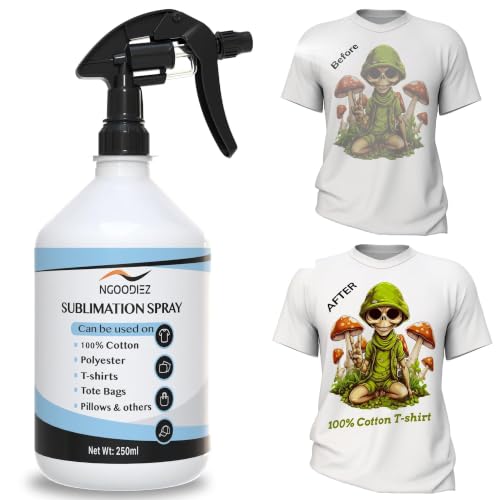
NGOODIEZ Sublimation Spray, 250ml stands apart with a 250ml bottle, more than either of the 100ml choices. The ready-to-use spray is marketed for cotton, polyester, blends and cardboard, and its package includes a step-by-step guide. The maker says it dries quickly and recommends waiting 24 hours before washing treated fabric. That larger quantity suits repeated projects or several garments. Its tradeoff is straightforward: buyers who only need a small amount may prefer a 100ml bottle, while cardboard users should confirm the coating is appropriate for their specific transfer setup.
Bottom line: Choose this for a larger supply and a guide to the application process.
NGOODIEZ Sublimation Spray Kit, 100ml

NGOODIEZ Sublimation Spray Kit, 100ml differs from the larger NGOODIEZ option by pairing a 100ml bottle with a replacement nozzle and pro guide. The maker describes the formula as concentrated and ready to use, intended for cotton shirts and polyester fabric. A spare nozzle is useful if a spray head clogs during a project, but the smaller bottle is a limitation for anyone coating many garments. The maker’s claim that a light mist is sufficient should not replace a small test on the actual fabric; coating amount and transfer results can vary with the material and press setup.
Bottom line: Pick this if a spare spray nozzle is more useful than a larger bottle.
Two-Bottle Sublimation Spray, 2 x 100ml
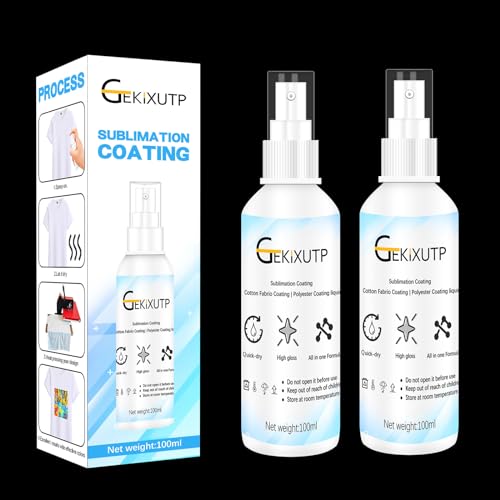
Two-Bottle Sublimation Spray, 2 x 100ml is the only fabric option supplied as two separate 100ml bottles, for 200ml total. Its surfaces include cotton, canvas and polyester, and the maker says the coating dries quickly and improves adhesion between ink and print surface. Two containers can be convenient when separating projects or keeping a second bottle in reserve. The limitation is that the material range also mentions surfaces beyond fabric, so a buyer focused on a particular textile should verify compatibility with a small sample before coating a full piece.
Bottom line: Choose this when two separate bottles suit how you organize projects.
How to Choose Poly Coating for Sublimation
Start with the substrate: sublimation dye bonds most reliably with polyester fibers or a polymer-coated surface. Polyester garments commonly use 100% polyester, while blends have less polymer available for the dye; expect a less saturated transfer as polyester content falls. A spray coating marketed for cotton is meant to add a receptive layer, but its results depend on even coverage and a compatible heat-press process. Compare bottle quantity and accessories only after confirming the surface. For occasional tests, a 100ml bottle limits leftover material; for repeated work, the 250ml option reduces interruptions. Always trial a small offcut first, especially on a blend, because coating concentration, fabric texture and press pressure can change the result.
Fabric Fit and Polyester Content
Polyester percentage is a useful first filter: 100% polyester is the straightforward choice for sublimation, while cotton needs a receptive coating if the transfer process is to work. A typical polyester-cotton blend has less dye-receptive fiber than pure polyester, so colors may appear less vivid; there is no universal blend threshold that guarantees a particular result. Also check the fabric’s heat tolerance, since sublimation presses operate at high temperatures and some garments can shrink or scorch. Pre-press the fabric briefly to remove moisture and wrinkles, then test the coated material before a full run. If a shirt has under 50% polyester, expect a less saturated result than with a higher-polyester fabric, even when using a coating.
Applying a Sublimation Fabric Coating
Even coverage matters more than soaking: an overly wet coating can dry unevenly and leave visible marks, while missed areas may accept ink differently. Spray in a ventilated area and keep the nozzle at a consistent distance; a test swatch helps establish how much product the particular fabric needs. Let the coating dry completely before pressing, and use the transfer paper and press settings appropriate to the ink, fabric and equipment. Typical sublimation transfers use roughly 380°F to 400°F for about 45 to 60 seconds, but these are starting ranges, not universal settings; follow the ink and press maker’s guidance. Keep coated textiles away from children and pets while wet, and avoid breathing mist.
Common Mistakes With Poly Coating
The most common mistake is treating a coating claim as a guarantee for every fabric: texture, fiber mix and application all affect the transfer. Another mistake is pressing before the coating is dry, which can cause inconsistent results. Use a small swatch, measure coating coverage consistently and record the press temperature and time that work for that material. Avoid assuming that a coated surface is washable or durable without following the maker’s curing or washing interval; one product here recommends a 24-hour wait before washing. For repeat work, change one variable at a time rather than adjusting coating amount, temperature and time together. This makes it easier to identify whether a weak transfer came from the fabric, coating or press settings.
Frequently Asked Questions
Does sublimation coating work on cotton shirts?
A coating marketed for cotton can make a cotton surface more receptive to sublimation, but the result depends on even application and pressing. Polyester remains the more direct match because sublimation dye bonds with polyester fibers.
What polyester percentage is best for sublimation?
A 100% polyester surface is the straightforward choice for vibrant sublimation transfers. With less than 50% polyester in a blend, expect less saturation than on a higher-polyester fabric.
How long should sublimation spray dry before pressing?
The coating should be fully dry before heat pressing; drying time depends on application amount, airflow and humidity. These options are marketed as quick-drying, but test a swatch rather than pressing while damp.
What temperature is typical for sublimation on fabric?
A common starting range is about 380°F to 400°F for roughly 45 to 60 seconds. Use the settings recommended for the ink, fabric and press, since excess heat can damage some textiles.
How long should coated fabric wait before washing?
One of these sprays recommends waiting 24 hours before washing. For other coatings, verify the maker’s wash guidance and test a sample before laundering a finished garment.