
Pond’s Dark Spot Correcting Cream: 4 Options Compared

POND’S Clarant B3 Dark Spot Correcting Cream is the direct match, and the two-jar 7-ounce pack suits normal-to-dry skin. Choose another option if you want a travel moisturizer set, a different dark-spot cream, or hydration without a correcting claim.
We earn a commission if you buy through links on this page. As an Amazon Associate I earn from qualifying purchases. Products are compared on manufacturer specifications, not hands-on testing.
- Best overall: POND’S Clarant B3, 7 oz, 2-pack – Clarant B3 is made for normal-to-dry skin and comes as two 7-ounce jars.
- Best for travel: POND’S Clarant B3 + Crema S Set – The set pairs a 7-ounce Clarant B3 jar with a 1.75-ounce Crema S moisturizer.
- Best for an alternative formula: Palmer’s Anti Dark Spot Face Cream – Palmer’s is a separate dark-spot cream formulated for all skin types.
| Product | Best for | Size | Skin type | Key ingredients | Shop |
|---|---|---|---|---|---|
| POND’S Clarant B3, 7 oz, 2-pack | Normal-to-dry skin | 7 oz × 2 | Normal to dry | Vitamins B3 and C | Check Price on Amazon |
| POND’S Clarant B3 + Crema S Set | Travel moisturizer | 7 oz + 1.75 oz | Balanced to oily | Niacinamide, vitamin C | Check Price on Amazon |
| Palmer’s Anti Dark Spot Face Cream | All skin types | 2.7 oz | All skin types | Vitamin E, niacinamide | Check Price on Amazon |
| POND’S Crema S, 14.1 oz | Dry-skin hydration | 14.1 oz | Dry to very dry | Glycerin, botanical extracts | Check Price on Amazon |
Pond’s dark spot correcting cream and alternatives
Compare each cream by its intended use, skin type, and the size or ingredients that distinguish it.
POND’S Clarant B3, 7 oz, 2-pack

The two-jar Clarant B3 pack is the direct fit for shoppers seeking Pond’s dark-spot correcting cream for normal-to-dry skin. Each jar is 7 ounces, and the formula contains vitamins B3 and C. The maker says it moisturizes while helping reduce the appearance of uneven skin tone, with visible evening in 2 to 4 weeks. Its rich, creamy texture is positioned for skin that benefits from a moisturizing cream. This pack is less tailored to balanced-to-oily skin than the Clarant B3 set in this comparison.
Bottom line: Choose this pack for the Clarant B3 formula in two full-size jars and normal-to-dry skin.
POND’S Clarant B3 + Crema S Set

The Clarant B3 set differs by pairing a 7-ounce correcting cream with a 1.75-ounce Crema S moisturizer, making it the travel-oriented choice. Clarant B3 contains niacinamide, a form of vitamin B3, and sodium ascorbyl phosphate, a stable form of vitamin C. The maker says the Clarant B3 formula is intended for balanced-to-oily skin and helps reduce the appearance of uneven tone over 2 to 4 weeks. The smaller jar is Crema S, not a second Clarant B3 jar, so this bundle is not the pick for two matching correcting creams.
Bottom line: Choose this set if you want Clarant B3 for balanced-to-oily skin plus a smaller Crema S moisturizer.
Palmer’s Anti Dark Spot Face Cream
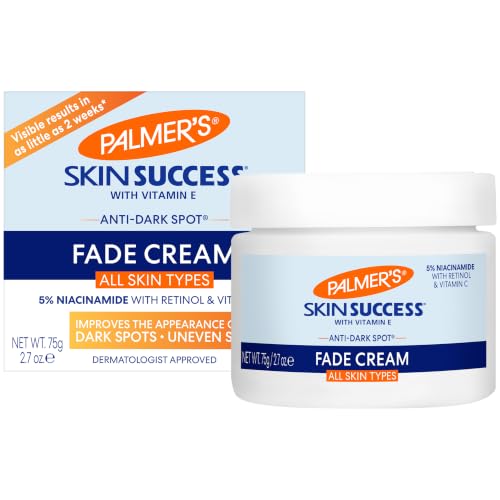
Palmer’s is the alternative dark-spot cream here rather than a Pond’s Clarant B3 product. Its 2.7-ounce formula includes vitamin E and niacinamide and is described as suitable for all skin types. The maker says it targets the appearance of dark spots, age spots, uneven tone, and discoloration; it also states the formula has no hydroquinone. That makes it a fit for shoppers comparing a different brand and ingredient profile. The pack contains one 2.7-ounce container, not the larger multi-jar format available in the Pond’s options.
Bottom line: Choose this cream if you want a non-Pond’s dark-spot formula intended for all skin types.
POND’S Crema S, 14.1 oz

Crema S is the hydration-focused option, not a dark-spot correcting cream. Its 14.1-ounce jar is intended for dry-to-very-dry skin, and its ingredients include glycerin plus apple, grapefruit, and seaweed extracts. The maker says it provides hydration for up to 24 hours and calls the formula non-comedogenic. This is the largest single moisturizer container among these options, but shoppers seeking a formula specifically marketed to reduce the appearance of discoloration should choose one of the Clarant B3 or Palmer’s creams instead.
Bottom line: Choose Crema S for a larger moisturizer when dark-spot correction is not the goal.
How to choose a dark-spot cream
Choose by the skin concern and skin type the formula is intended to address, then compare ingredients and routine fit. Niacinamide is vitamin B3, an ingredient used in many skincare formulas; vitamin C derivatives include sodium ascorbyl phosphate, which appears in the Clarant B3 set. A cream’s marketing claim does not guarantee the same result for every person. For a Pond’s formula, pick Clarant B3 rather than Crema S when the goal is to address the appearance of uneven tone. If the goal is moisture alone, a correcting claim may not be necessary. Use a broad-spectrum SPF 30 or higher sunscreen during daytime; UV exposure can deepen the appearance of some dark spots and undermine a tone-evening routine.
Skin type and texture determine the fit
Match the cream’s intended skin type to your usual comfort level: richer creams often feel more suitable to dry skin, while balanced-to-oily skin may prefer a less heavy-feeling routine. The 7-ounce Clarant B3 two-pack is aimed at normal-to-dry skin, while the Clarant B3 and Crema S set positions its correcting cream for balanced-to-oily skin. Palmer’s states it is suitable for all skin types, and Crema S is aimed at dry to very dry skin. If your skin is sensitive, introduce one new leave-on product at a time and patch test on a small area for several days before applying it broadly. Stop use if irritation develops.
What dark spots need beyond a cream
Dark spots can have different causes, including sun exposure and post-inflammatory pigmentation, so a cosmetic cream may not address every kind of mark. Daily sun protection is a practical decision rule: use broad-spectrum SPF 30 or higher, and reapply about every two hours outdoors or after swimming or sweating. Apply sunscreen as the final morning skincare step unless its label directs otherwise. Avoid adding multiple new active products at once; changing one product at a time makes it easier to identify irritation. A spot that changes rapidly, bleeds, or has an irregular appearance should be assessed by a dermatologist rather than treated as an ordinary cosmetic discoloration.
How to compare jar size and routine use
Compare total container size only after checking which product is inside each jar: the Clarant B3 two-pack contains two 7-ounce jars, while its companion set contains one 7-ounce correcting cream and a 1.75-ounce Crema S moisturizer. Palmer’s is a single 2.7-ounce cream, and the 14.1-ounce Crema S is a moisturizer without a dark-spot correcting claim. Larger size does not mean a cream is more effective, and product amounts are not interchangeable when formulas serve different purposes. Follow the package directions for how much and how often to apply, and keep the container closed between uses to limit contamination.
Frequently Asked Questions
Can dark-spot cream replace sunscreen?
No, a dark-spot cream does not replace sunscreen. Use broad-spectrum SPF 30 or higher during the day, and reapply about every two hours outdoors or after swimming or sweating.
How long can a dark spot take to fade?
Visible change can take weeks or longer, depending on the cause and depth of pigmentation. The Clarant B3 maker gives a 2-to-4-week claim, but that timeline is not a guarantee for every person or every spot.
Should I patch test a face cream first?
Yes, patch test a new leave-on cream on a small area for several days before wider use, especially if your skin is sensitive. Stop applying it if irritation develops.
Can I use more than one dark-spot product?
Introduce products one at a time rather than starting several at once. That makes irritation easier to trace, and daytime sunscreen remains important when addressing the appearance of dark spots.
When should a changing dark spot be checked?
Have a dermatologist assess a spot that changes rapidly, bleeds, or has an irregular appearance. A cosmetic cream is not a substitute for evaluating a changing skin mark.