
Popcorn Ceiling Removal Tool: 4 Types Compared

For popcorn ceiling removal, the 14-Inch Scraper Kit with 1-Gallon Sprayer is the named tool type that softens texture with a sprayer before scraping; the powered sanders and vacuum attachment suit different methods. Choose another option if you need powered sanding or want to capture debris during scraping.
We earn a commission if you buy through links on this page. As an Amazon Associate I earn from qualifying purchases. Products are compared on manufacturer specifications, not hands-on testing.
- Best overall: 14-Inch Scraper Kit with 1-Gallon Sprayer – Its 14-inch scraper and included 1-gallon pump sprayer pair softening with manual removal.
- Best for adjustable reach: 8-Amp Telescoping Drywall Sander – The telescoping sander extends from 3.9 to 5.5 feet and has seven speed settings.
- Best for vacuum-assisted scraping: POP EEZE Vacuum Scraper Attachment – It attaches to a shop vacuum and pole to collect debris while scraping.
| Product | Best for | Removal method | Reach or size | Dust or water handling | Shop |
|---|---|---|---|---|---|
| 14-Inch Scraper Kit with 1-Gallon Sprayer | Manual scraping | Scraper and sprayer | 14 in scraper | 1-gal pump sprayer | Check Price on Amazon |
| 8-Amp Telescoping Drywall Sander | Longer reach | Powered sanding | 3.9–5.5 ft handle | Dust collector | Check Price on Amazon |
| POP EEZE Vacuum Scraper Attachment | Vacuum-assisted scraping | Vacuum-assisted scraping | Pole-mounted | Shop vacuum | Check Price on Amazon |
| KUPERIA 8.5-Amp Drywall Sander | Variable-speed sanding | Powered sanding | Extendable handle | Built-in vacuum | Check Price on Amazon |
Popcorn ceiling removal tools compared
Choose by whether you plan to soften and scrape, sand, or scrape with a shop vacuum attached.
14-Inch Scraper Kit with 1-Gallon Sprayer

Unlike the powered sanders, this kit uses a 14-inch scraper and a 1-gallon pump sprayer to soften texture before manual removal. Its stainless-steel scraper has an adjustable sprayer nozzle for misting the ceiling. That method suits someone who wants to scrape rather than sand, and the kit includes both tools for the sequence. The scraper is 14 inches wide, so it covers more width per pass than a narrow hand scraper; however, the fields give no handle reach, which matters if you need to work from the floor instead of a ladder.
Bottom line: Pick this if you want a sprayer-and-scraper approach and can work safely at the ceiling.
8-Amp Telescoping Drywall Sander
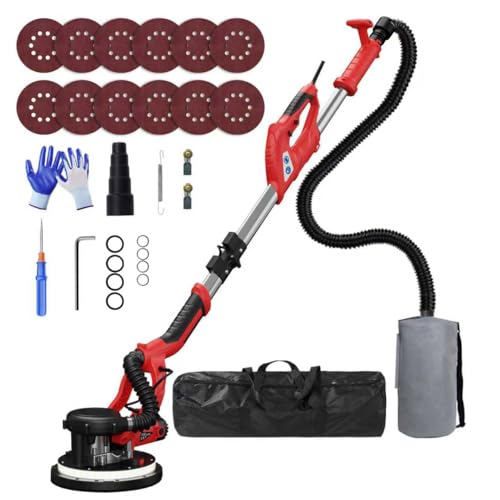
The telescoping handle distinguishes this powered sander: it adjusts from 3.9 to 5.5 feet, unlike the other powered sander here. It has an 8-amp motor, seven speed settings from 800 to 1,800 rpm, an LED light and 12 sanding discs. The maker says its built-in vacuum system uses a 10-hole disc for dust collection. This is suited to a sanding-based approach where adjustable reach helps; it is not a scraper kit, and buyers seeking to soften and lift texture should choose a scraping tool instead.
Bottom line: Choose this for variable-speed sanding when the 3.9-to-5.5-foot reach fits your work.
POP EEZE Vacuum Scraper Attachment

This attachment differs from the powered sanders by working with a shop vacuum and pole while scraping ceiling texture. Its design is intended to keep debris from falling freely, rather than sanding the surface. The maker cautions that it is not recommended for ceilings with painted-over popcorn texture, so check the ceiling finish before choosing it. It suits a buyer who already has a compatible shop vacuum and pole; unlike the scraper kit, it does not include a sprayer for wetting the texture.
Bottom line: Pick this for vacuum-assisted scraping only if the texture has not been painted over.
KUPERIA 8.5-Amp Drywall Sander

The KUPERIA sander has the higher stated motor rating of the two powered sanders at 8.5 amps, with seven speed settings from 800 to 1,800 rpm. Its features include an extendable handle, LED light, and six basic plus six grid sanding sheets. The maker says its dual-channel vacuum can capture 97%–99% of dust when operated properly. This suits buyers who want powered sanding and included abrasive sheets; it does not soften or scrape texture, and the exact handle extension range is important if reach is a deciding factor.
Bottom line: Choose this for a powered sanding approach and included grid and basic abrasives.
How to choose a popcorn ceiling removal method
Choose between wet scraping and powered sanding based on the texture and finish you have. Wet scraping uses a pump sprayer to dampen texture before lifting it with a scraper; sanding abrades the surface with a motorized disc and can generate fine dust. A vacuum-assisted scraper instead collects debris as you work, but the POP EEZE maker says not to use it on painted-over texture. For small areas or a manual approach, a scraper kit is direct; for sanding, compare handle reach, speed control and dust collection. Do not assume these methods are interchangeable: the scraper attachment is not a powered sander, and the sanders do not include a sprayer.
Check ceiling safety before starting
Before disturbing a popcorn ceiling, have suspect older material checked for asbestos; scraping or sanding asbestos-containing texture can release hazardous fibers. Do not dry-sand a ceiling of unknown composition. Keep people out of the work area and use suitable respiratory and eye protection for dust, following local rules for suspected asbestos; ordinary dust masks are not a substitute for professional handling. Wetting texture reduces loose dust but does not make asbestos safe to disturb. Also protect floors and furnishings: wet texture can become paste-like debris, while sanding creates airborne dust even when a tool has a collector.
What reach and dust control mean
Handle reach determines whether a ceiling tool can reach the work area from a stable position; the telescoping model here ranges from 3.9 to 5.5 feet. A longer pole can reduce ladder repositioning, but it does not remove the need for stable footing or control overhead. Sanding dust systems depend on a close, flat contact between disc and ceiling; the KUPERIA maker specifically says keeping its disc parallel helps limit dust escaping. Vacuum collection is not the same as dust-free work, so contain the room and wear protection. For scraping, a shop-vac attachment can keep debris near the scraper, while a sprayer kit wets texture before scraping rather than collecting it.
Scraping versus sanding tools
Use this comparison to match the tool to the removal process rather than choosing by motor rating alone.
| Tool type | What it does | Best fit |
|---|---|---|
| Sprayer and scraper kit | Wets, then manually scrapes | Manual texture removal |
| Vacuum scraper attachment | Scrapes with a shop vacuum attached | Debris collection while scraping |
| Powered drywall sander | Abrasive disc sands the ceiling | Sanding-based work |
Painted texture can resist wet scraping and makes the vacuum attachment a poor match according to its maker. Confirm the ceiling finish and material before choosing a method, and avoid disturbing any ceiling that may contain asbestos.
Frequently Asked Questions
Should popcorn ceilings be wet before scraping?
Wet scraping generally starts by dampening a small area so texture softens before removal. Avoid soaking drywall, which can damage its paper facing, and do not disturb material that may contain asbestos.
Can I use a vacuum scraper on painted popcorn?
The POP EEZE maker does not recommend its attachment for painted-over popcorn ceilings. Painted texture may not soften or release like unpainted texture, so verify the finish before selecting that approach.
How long should a sander handle be?
One telescoping ceiling sander in this group adjusts from 3.9 to 5.5 feet. Measure your working position and ceiling height; reach that forces you to overextend or lean from a ladder is unsuitable.
Is sanding popcorn ceiling dust-free?
No ceiling sanding should be treated as dust-free, even with an onboard vacuum. Maintain close, parallel disc contact where the tool calls for it, contain the room, and use appropriate eye and respiratory protection.
What should I check before removing popcorn texture?
Check whether the ceiling could contain asbestos before scraping or sanding, particularly if its age or composition is unknown. Suspected asbestos should be assessed and handled by qualified professionals rather than disturbed as a DIY project.