
Products to Stop Bleeding: 4 First-Aid Options Compared

For a compact powder option, BleedStop First Aid Powder, 4 Pouches suits buyers who want single-use pouches; choose gauze instead when a wound needs packing or dressing. These products are not a substitute for emergency care: for life-threatening bleeding, call 911 and apply firm, continuous pressure.
We earn a commission if you buy through links on this page. As an Amazon Associate I earn from qualifying purchases. Products are compared on manufacturer specifications, not hands-on testing.
- Best overall: BleedStop First Aid Powder, 4 Pouches – Four 15 g pouches make it a portable powder option for a first-aid kit.
- Best for packable gauze: QuikClot Kaolin Gauze, 3 in × 2 ft – The 3-inch-wide, 2-foot gauze is pliable and made with kaolin.
- Best for minor cuts: Rapid-Seal Wound Gel, 10 Packets – Ten single-use gel packets are intended for minor cuts, scrapes and razor nicks.
| Product | Best for | Form | Pack size | Wound focus | Shop |
|---|---|---|---|---|---|
| BleedStop First Aid Powder, 4 Pouches | Portable powder | Powder | 4 × 15 g pouches | Moderate to severe wounds; nosebleeds | Check Price on Amazon |
| QuikClot Kaolin Gauze, 3 in × 2 ft | Packable gauze | Kaolin gauze | 3 in × 2 ft | Wound dressing | Check Price on Amazon |
| Rapid-Seal Wound Gel, 10 Packets | Minor cuts | Gel packets | 10 packets | Minor cuts and scrapes | Check Price on Amazon |
| BloodSTOP Hemostatic Dressing, 10 Count | Plant-based dressing | Plant-based dressing | 10 count | Cuts, scrapes, abrasions, nosebleeds | Check Price on Amazon |
Products to Stop Bleeding
Match the product form to the wound and keep emergency bleeding-control steps in mind.
BleedStop First Aid Powder, 4 Pouches
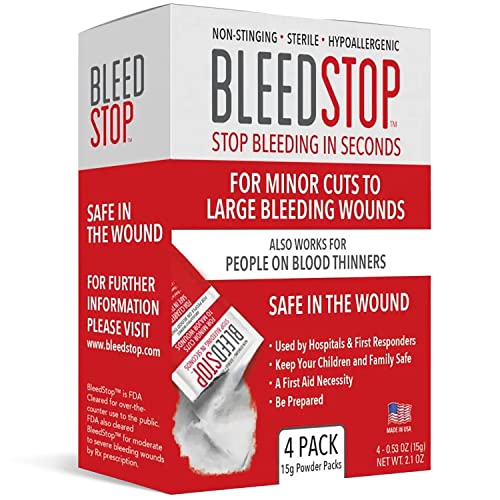
Unlike the gauze and gel options, BleedStop comes as powder in four 15 g pouches, suited to a compact kit. The maker says it is intended for moderate to severe wounds, including cuts and nosebleeds, and for people taking blood thinners. Its powdered form differs from a dressing that can be packed into a wound, so buyers who need a conforming material should consider gauze instead. Keep emergency response in mind: serious bleeding needs firm, continuous pressure and urgent medical help.
Bottom line: Choose this if a pouch-format powder suits your kit and intended wound use.
QuikClot Kaolin Gauze, 3 in × 2 ft

QuikClot is the only gauze option here, with a 3-inch width and 2-foot length that can conform to a wound. Its kaolin-impregnated gauze is described by the maker as accelerating natural clotting; the maker also claims bleeding stops up to five times faster than with standard gauze. The pliable, non-stick dressing is intended for trauma and emergency kits. This is a different format from powder or gel packets, and the 2-foot length may not suit buyers seeking a larger dressing supply.
Bottom line: Pick this when wound-conforming gauze is the priority.
Rapid-Seal Wound Gel, 10 Packets
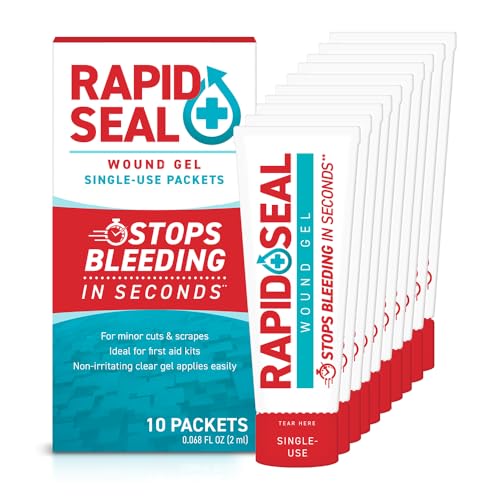
Rapid-Seal is the only gel format among these choices, packaged as ten single-use packets for minor bleeding. The maker says the clear gel is intended to control minor bleeding and seal minor cuts and scrapes, including razor nicks. That narrow use makes it a poor match for shoppers seeking a product specifically for moderate or severe bleeding; the other options are presented for broader wound types. For a small-cut kit, the packet format gives a ready-to-use portion without choosing a powder or gauze dressing.
Bottom line: Choose this for a kit focused on minor cuts, scrapes and razor nicks.
BloodSTOP Hemostatic Dressing, 10 Count

BloodSTOP is the plant-based dressing option, supplied in a 10-count pack rather than as loose powder or gel packets. The maker says it gels on contact with blood or body fluids, forms a protective seal and dissolves in water for removal. Its wound range includes cuts, scrapes, abrasions and nosebleeds. The form may be a better fit for buyers seeking a dressing that conforms to wound shapes; those who specifically want packable gauze or individual gel portions should choose a different format.
Bottom line: Pick this if a plant-based dressing format matches your first-aid needs.
How to choose a bleeding-control product
Choose by wound severity and product form, not by a speed claim alone. Powder, gauze and gel are not interchangeable: a dressing can conform to a wound, while these powder and gel options are packaged in different forms. For a minor cut, first rinse away visible dirt with clean running water once bleeding is controlled; for a deep or gaping wound, seek medical care. For life-threatening bleeding, call 911, apply firm continuous pressure, and use a commercial tourniquet on a life-threatening arm or leg wound if available and you know how. Do not delay emergency help to compare products. A product label’s intended wound type should guide kit selection, not imply that it replaces emergency care.
When gauze or powder may fit better
Gauze and powder serve different practical roles. Gauze can be placed against a wound and held with pressure; this comparison’s gauze measures 3 inches by 2 feet, while the powder option is divided into four 15 g pouches. For a wound that is deep enough to pack, use hemostatic gauze only if its package directions support that use, and maintain firm pressure. Do not pack chest or abdominal wounds, or wounds with an object embedded. Powder is not a length of dressing that can be wrapped or packed. If the wound is severe, spurting, or will not stop bleeding with pressure, call 911 rather than relying on a first-aid product alone.
Using pressure safely for serious bleeding
Direct pressure is the immediate step for serious external bleeding: press firmly with gauze or a clean cloth and keep pressure steady. If blood soaks through, add material on top rather than repeatedly lifting the first layer to check; disturbing the clot can restart bleeding. For a life-threatening limb wound, a commercial tourniquet placed above the wound may be appropriate; do not place it over a joint, and note the time applied for responders. Call 911 for severe bleeding, deep wounds, or bleeding that does not stop. Do not remove an embedded object; apply pressure around it and wait for emergency personnel.
Choosing by wound and form
The best fit depends on whether the buyer wants powder, gauze, or gel and on the wound type named by the maker. This table compares the formats and stated uses.
| Need | Form to consider | Fit note |
|---|---|---|
| Portable powder portions | Powder | Four 15 g pouches |
| Wound-conforming material | Kaolin gauze | 3 in × 2 ft |
| Minor cuts and scrapes | Gel packets | 10 single-use packets |
| Plant-based dressing | Dressing | 10-count pack |
For any wound with uncontrolled bleeding, emergency response takes precedence over selecting a format. Verify the package’s application and removal directions before use.
Frequently Asked Questions
When should I call 911 for bleeding?
Call 911 for life-threatening bleeding, spurting blood, a deep wound, or bleeding that does not stop with firm pressure. Keep pressure on the wound while help is coming.
Should I remove gauze to check the wound?
Avoid lifting the first layer to check while bleeding continues, because disturbing a forming clot can restart bleeding. If blood comes through, add another layer on top and maintain pressure.
Can I put hemostatic gauze into any wound?
No; do not pack chest or abdominal wounds or wounds with an embedded object. Use wound-packing gauze only when the product directions support that use, and seek emergency help for severe bleeding.
What should I do if an object is embedded?
Do not remove the object; press around it rather than directly on it and call 911 for a serious wound. Removing an embedded object can worsen bleeding.
What is the difference between gauze and powder?
Gauze is a physical dressing that can be held against a wound, while powder is a loose product applied in a different form. The gauze option here measures 3 inches by 2 feet; follow the chosen product’s directions.