
Proline Range Hoods: 4 Models Compared by Fit

PROLINE PLJW 185.30V2 suits most buyers looking for a Proline range hood because its 30-inch under-cabinet format and 600 CFM output fit a common kitchen layout. Choose an island or wall-mount model instead when the cooktop location requires that installation style.
Range hoods capture cooking fumes and exhaust them outdoors through ductwork; the mounting style and duct route should match the kitchen before airflow becomes the deciding factor.
We earn a commission if you buy through links on this page. As an Amazon Associate I earn from qualifying purchases. Products are compared on manufacturer specifications, not hands-on testing.
- Best overall: PROLINE PLJW 185.30V2 – Its 30-inch under-cabinet design and 3-by-10-inch duct connection suit a common cabinet installation.
- Best for island kitchens: PROLINE PLFI 755.36 – It pairs a 36-inch island format with a 1,100 CFM dual blower and LCD touch control.
- Best for high airflow: PROLINE PLJW 104.36 – Its 1,200 CFM dual blower and 8-inch round duct suit a wall-mount installation.
| Product | Best for | Mounting style and width | Airflow | Duct connection | Shop |
|---|---|---|---|---|---|
| PROLINE PLJW 185.30V2 | Under-cabinet kitchens | Under cabinet, 30 in. | 600 CFM | 3 x 10 in. square | Check Price on Amazon |
| PROLINE PLFI 544.36 | Island cooking | Island, 36 in. | 600 CFM | — | Check Price on Amazon |
| PROLINE PLFI 755.36 | Island, higher airflow | Island, 36 in. | 1,100 CFM | — | Check Price on Amazon |
| PROLINE PLJW 104.36 | Wall-mount cooking | Wall mount, 36 in. | 1,200 CFM | 8 in. round | Check Price on Amazon |
Proline Range Hoods Compared
Match each model’s mounting style and duct connection to the kitchen before comparing airflow or controls.
PROLINE PLJW 185.30V2
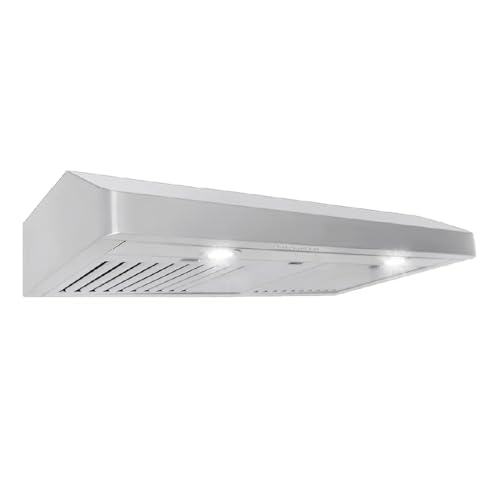
The PLJW 185.30V2 is the under-cabinet choice in this group, with a 30-inch width and a 3-by-10-inch square duct. Its stainless-steel body, LED lights, four speeds, and dishwasher-safe filters cover everyday cooking and cleanup. Choose it when the cooktop sits below cabinets and the existing vent route can accept its rectangular duct; buyers planning a different mounting style should compare the island or wall-mount models instead.
Bottom line: Choose this model for a 30-inch under-cabinet installation with a compatible rectangular duct route.
PROLINE PLFI 544.36

The PLFI 544.36 brings a 36-inch island layout with 600 CFM, making it the lower-airflow island option in this group. It has a stainless-steel finish, LED lights, six speeds, dishwasher-safe filters, and a three-year warranty. The product name identifies a ducted design, but the features do not give a duct dimension, so confirm the required duct connection before planning the run. This model suits a kitchen with an island cooktop and a route for exterior exhaust; a cabinet or wall installation calls for a different mounting style.
Bottom line: Pick this for an island cooktop when 600 CFM meets your ventilation plan.
PROLINE PLFI 755.36

The PLFI 755.36 stands out as the higher-output island option, with a 1,100 CFM dual blower and four speeds. This 36-inch ducted hood adds LED lighting, LCD touch control, stainless steel, dishwasher-safe filters, and a three-year warranty. The higher CFM figure may call for greater duct capacity and makeup air provisions, so plan those requirements rather than assuming the existing vent can handle it. Its island format is the key limitation: choose it only when the cooktop is island-mounted and the vent route supports the installation.
Bottom line: Choose it for an island layout where the duct plan can accommodate its higher output.
PROLINE PLJW 104.36

The PLJW 104.36 is the wall-mount option with the highest airflow here: 1,200 CFM from a dual blower, routed through an 8-inch round duct. It is 36 inches wide and includes halogen lighting, four speeds, stainless steel construction, and dishwasher-safe filters. Its round duct requirement is a meaningful installation constraint; confirm that the planned route and cabinet or ceiling space can accommodate an 8-inch duct. This model fits a wall-backed cooktop, while an island or under-cabinet layout needs a hood designed for that mounting position.
Bottom line: Select it for a wall-mount layout with room for the 8-inch round duct.
How to Choose a Proline Range Hood
Start with the mounting position and duct route; airflow is useful only when the hood can be installed and vented correctly. A common sizing guideline for wall-mounted hoods is about 100 CFM per linear foot of cooking surface, while island layouts often call for about 150 CFM per linear foot because fumes can escape from more sides. These are planning rules, not guarantees of capture performance. For example, a 30-inch range corresponds to roughly 250 CFM by the wall guideline or 375 CFM by the island guideline. Choose a larger output when cooking style and installation call for it, but verify duct capacity and local requirements before selecting a high-CFM unit.
Range Hood Width and Cooktop Fit
Match hood width to the cooktop at minimum, and consider extra width when the layout allows it. A hood that is narrower than the cooking surface can miss fumes rising from the outer burners, especially during high-heat cooking. Island hoods have exposure on more sides than wall hoods, so placement and capture area matter as much as the nominal CFM. Measure the actual cooktop and the available cabinet or wall span rather than relying on a nominal appliance size. Keep the hood’s installation height within the manufacturer’s permitted range: placing it too high weakens capture, while placing it too low can interfere with cooking or violate clearance requirements.
Duct Size, Airflow, and Makeup Air
Duct dimensions are a compatibility requirement, not a cosmetic detail. A 3-by-10-inch rectangular duct and an 8-inch round duct need different transitions and routing space; avoid reducing duct size unless the manufacturer permits it, since smaller or restrictive runs can reduce airflow and increase noise. Long runs, multiple elbows, and narrow ducts add resistance, so a high CFM number alone does not guarantee effective exhaust at the hood. In many U.S. residential codes, exhaust systems rated above 400 CFM require makeup air; verify the local code and installation plan before choosing a model above that threshold. A makeup-air system supplies replacement air as exhaust leaves the home.
Range Hood Cleaning and Safe Installation
Clean grease filters regularly because accumulated grease restricts airflow and can increase fire risk. Dishwasher-safe metal filters simplify cleaning, but check that the dishwasher cycle and detergent are suitable for the filter material. Hood ductwork should exhaust outdoors rather than into an attic or wall cavity, and the duct path should be as short and direct as the kitchen permits. Electrical connections and clearances must follow the hood’s installation instructions and applicable local code. Before purchase, measure the route from hood to exterior, identify existing duct shape and diameter, and confirm that the hood’s mounting style fits the cooktop location.
Frequently Asked Questions
How many CFM does a range hood need?
A common planning estimate is 100 CFM per linear foot for a wall hood and 150 CFM per linear foot for an island hood. Cooking intensity, hood placement, duct restrictions, and local code can change the appropriate choice.
Does a range hood need makeup air?
Many U.S. residential codes require makeup air for exhaust systems rated above 400 CFM. Local rules and system design vary, so confirm requirements before installing a hood rated above that threshold.
How wide should a range hood be?
A range hood should be at least as wide as its cooking surface so it can capture fumes from the outer burners. A wider hood can improve coverage when space and installation clearances allow it.
Can range hood ductwork be reduced in size?
Reducing duct size can restrict airflow and increase noise, particularly with long runs or several elbows. Use the duct dimension required by the hood and keep the route as short and direct as practical.
How often should range hood filters be cleaned?
Clean grease filters about once a month with regular cooking, and more often if frying or heavy cooking leaves visible buildup. Grease accumulation can restrict ventilation and raises fire risk.