
Pumice Stone for Pool Tile: 3 Pool-Specific Picks

For cleaning pool tile, Pool Blok Extra Large Pool Tile Pumice Stone is the closest fit because it is made for pool-waterline buildup and floats for spot cleaning. Choose 6 Pack Pool Pumice Stones with Handle instead if you want a reusable handle and replaceable blocks; general-purpose toilet stones are less pool-specific.
Pumice stones are abrasive mineral blocks used to scrub deposits from compatible hard surfaces, so test a hidden area first and stop if the finish dulls or scratches.
We earn a commission if you buy through links on this page. As an Amazon Associate I earn from qualifying purchases. Products are compared on manufacturer specifications, not hands-on testing.
- Best overall: Pool Blok Extra Large Pool Tile Pumice Stone – Designed for pool tile deposits and floats for spot cleaning.
- Best for handled scrubbing: 6 Pack Pool Pumice Stones with Handle – Includes a reusable handle and six replaceable pumice blocks.
- Best for bulk quantity: Norme 20 Pack Pumice Stone – Includes 20 general-purpose pumice sticks for repeated cleaning.
| Product | Best for | Pack size | Length | Handling | Shop |
|---|---|---|---|---|---|
| Pool Blok Extra Large Pool Tile Pumice Stone | Pool waterlines | 2 stones | 6 in | Floating block | Check Price on Amazon |
| 6 Pack Pool Pumice Stones with Handle | Handled cleaning | 6 blocks + handle | — | Reusable handle | Check Price on Amazon |
| Norme 20 Pack Pumice Stone | Bulk general cleaning | 20 sticks | 5.91 in | Handheld stick | Check Price on Amazon |
| Riuja 14 Pack Pumice Stone | Multi-surface cleaning | 14 stones | 5.9 in | Handheld stick | Check Price on Amazon |
| Riuja 6 Pack Pumice Stone | Small multipurpose pack | 6 stones | 5.9 in | Handheld stick | Check Price on Amazon |
Pumice Stones for Pool Tile
These options range from a pool-focused floating stone to general-purpose blocks and a handled replacement system.
Pool Blok Extra Large Pool Tile Pumice Stone

Unlike the general-purpose sticks here, this two-pack is specifically presented for pool tile and plaster mineral deposits, and its pumice stick floats for spot cleaning without draining the pool. The maker says it breaks up lime, rust and mineral buildup without added cleaning chemicals. At 6 inches long, it suits waterline patches where a block can be controlled by hand. The product calls for testing first, which matters because pumice is abrasive; avoid using it on a surface that scratches or loses its finish during the test.
Bottom line: Choose this for pool-oriented waterline spot cleaning.
6 Pack Pool Pumice Stones with Handle

The reusable handle sets this kit apart from loose stones: it keeps hands farther from the surface and accepts detachable replacement blocks. The set includes six pumice blocks and one plastic handle, making it suited to repeated scrubbing across pool tile, spa grout and concrete stains. The maker says the high-density stones resist breakage, but the dimensions are not reliable enough to compare block coverage with other choices. A handle also does not remove the need for a small-area test; use light pressure and stop if the tile finish changes.
Bottom line: Pick this for a reusable grip and replaceable blocks.
Norme 20 Pack Pumice Stone
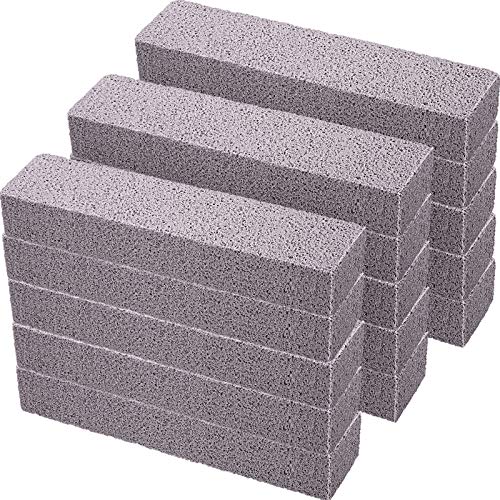
With 20 sticks in the pack, this is the largest quantity among the options, but it is a general-purpose cleaner rather than a pool-focused floating block or handled kit. Each stick is 5.91 inches long and is promoted for lime, calcium and rust buildup on pool tile as well as kitchen and bathroom cleaning. It may suit someone who wants a supply of handheld stones for multiple cleaning jobs. Its broad use claims do not establish compatibility with every pool finish, so test one inconspicuous spot before scrubbing a larger area.
Bottom line: Choose it if quantity matters more than pool-specific handling.
Riuja 14 Pack Pumice Stone

Compared with the pool-focused floating option, this pack offers 14 handheld stones intended for several cleaning tasks, including pools, tubs, grills and ceramic surfaces. Each stick measures about 5.9 inches long and 1.4 inches wide, a palm-sized format for narrow corners and edges. The maker says the natural pumice can be shaped for tighter spots. That versatility does not make it a dedicated pool tool, and the pack’s toilet-cleaning emphasis may be a drawback for buyers who want a floatable stone or a handle for pool work.
Bottom line: Pick this for a multipurpose supply of shaped handheld stones.
Riuja 6 Pack Pumice Stone

This six-pack is a smaller multipurpose alternative to the larger general-purpose packs, with 5.9-inch handheld stones for ceramic surfaces, tubs, grills and pools. The maker says the stones can be shaped to reach narrow corners and edges. That can help with localized scrubbing, but the product is also framed as a toilet-bowl cleaner and does not offer the pool-specific floating design of Pool Blok Extra Large Pool Tile Pumice Stone or the reusable handle included with 6 Pack Pool Pumice Stones with Handle. Check a hidden tile area before use, especially where a decorative glaze or softer surface could be marked by abrasion.
Bottom line: Choose it for a modest pack of handheld, shapeable stones.
How to Choose a Pumice Stone for Pool Tile
For routine waterline deposits, choose a block you can control with one hand and test before scaling up; a floating design helps retrieve it during spot cleaning. Pool deposits commonly include calcium carbonate, which can form when water balance favors scale, and metal stains such as rust may need different treatment than ordinary dirt. Pumice works by abrasion, not by dissolving deposits, so use light pressure on a wet surface and inspect the area often. A practical decision rule is to start with a test patch about 1 inch across; if the tile glaze dulls, scratches or changes color, stop and use a non-abrasive cleaner appropriate to that finish instead.
Pool Tile Surface Compatibility
Glazed ceramic tile and pool plaster are not interchangeable surfaces: a hard glaze can still be scratched, while softer or decorative finishes can be damaged by abrasive rubbing. Test a hidden 1-inch patch first, then check it after rinsing and drying under good light. Avoid assuming that a tool described as safe for ceramic or concrete is suitable for glass tile, polished stone, vinyl liners or painted surfaces. Keep the stone wet, use short strokes, and do not press hard enough to grind the tile beneath the deposit. For a large scale line, identify the surface and stain type before choosing a more aggressive method.
Pool Pumice Stone Types Compared
Pool-specific blocks prioritize pool use or floatability, while general-purpose sticks emphasize quantity or household versatility; a handle changes grip and reach rather than the stone’s abrasiveness. Use this guide to match the tool style to the job.
| Need | Tool style | Tradeoff |
|---|---|---|
| Waterline spot cleaning | Floating pool block | Pool-oriented, but still requires a surface test |
| Repeated scrubbing with a grip | Handle with replaceable blocks | More controlled reach, with extra parts |
| Several cleaning tasks | Loose multipurpose sticks | Flexible use, but not necessarily pool-specific |
A loose stone is simplest for small patches and edges; a handle can be more comfortable when keeping hands away from grime is useful. Neither style makes an abrasive stone safe for every finish.
Using and Maintaining a Pool Pumice Stone
Wet both the pumice and tile before scrubbing; dry rubbing raises the risk of uncontrolled abrasion and can wear the stone unevenly. Work a small patch with light, brief strokes, rinse away loosened grit, and inspect the surface before continuing. Keep cleaning strokes away from grout joints where possible, since worn or damaged grout can trap debris and complicate later cleaning. Rinse the stone after use and let it dry between sessions; discard it if it cracks, sheds large pieces or becomes too worn to hold securely. Never combine pool cleaning with unapproved chemicals in the water.
Frequently Asked Questions
Can pumice scratch glazed pool tile?
Yes, an abrasive pumice stone can scratch or dull some finishes even when a product is intended for tile. Test a hidden patch about 1 inch across with the stone wet and light pressure, then stop if the glaze changes.
Should a pumice stone be wet before scrubbing pool tile?
Yes, wet the stone and the tile before use to reduce harsh, uncontrolled rubbing. Work a small patch with light strokes and rinse away grit before inspecting the surface.
Can pumice remove calcium deposits from pool tile?
Pumice can abrade mineral buildup such as calcium deposits from compatible hard surfaces, but it does not dissolve scale. Test the tile finish first and use a different approach if rubbing marks the surface.
How can I tell calcium scale from a metal stain?
Calcium scale often feels rough or crusty at the waterline, while metal stains can appear as colored marks such as rust. The difference matters because abrasion may not address the cause; identify the stain before applying any pool chemical.
Is pumice safe to use on pool grout?
Use caution around grout because abrasive rubbing can wear or damage joints, especially if they are already cracked or loose. Keep strokes on the tile face and avoid scrubbing grout seams.