
Pure Monk Fruit Without Erythritol: 4 Options Compared

For pure monk fruit without erythritol, Morning Pep Pure Monk Fruit Extract Powder is the closest match for most shoppers because it is a 5-ounce powdered extract with no fillers or sugar alcohols.
We earn a commission if you buy through links on this page. As an Amazon Associate I earn from qualifying purchases. Products are compared on manufacturer specifications, not hands-on testing.
- Best overall: Morning Pep Pure Monk Fruit Extract Powder – A 5-ounce pure extract powder with over 450 servings and no erythritol or sugar alcohols.
- Best for organic certification: DureLife Organic Monk Fruit Extract – The specifications identify USDA Organic and Non-GMO Project Verified certifications.
| Product | Best for | Package size | Servings | Shop |
|---|---|---|---|---|
| Morning Pep Pure Monk Fruit Extract Powder | Powdered extract | 5 oz | Over 450 | Check Price on Amazon |
| DureLife Organic Monk Fruit Extract | Organic-certified powder | 5 oz | — | Check Price on Amazon |
| Organic Monk Fruit Extract Powder, 4.4 oz | Smaller powder jar | 4.4 oz | 403 | Check Price on Amazon |
| Pure Monk Fruit Sweetener Powder, 5 oz | Concentrated powder | 5 oz | 450+ | Check Price on Amazon |
Pure monk fruit without erythritol options
Compare the extract format, package size, and serving guidance before choosing how you plan to sweeten.
Morning Pep Pure Monk Fruit Extract Powder
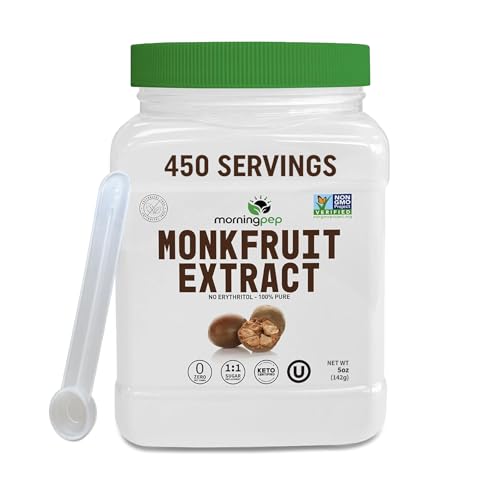
Morning Pep Pure Monk Fruit Extract Powder is a 5-ounce powdered extract with over 450 servings, making it a clear fit for shoppers who want a pure powder rather than a sugar-blend substitute. The specifications identify it as free of erythritol and other sugar alcohols, and note Non-GMO Project Verified, Keto Certified, and OU kosher status. The maker also describes it as zero calorie. This concentrated extract suits small additions to drinks or recipes, but shoppers seeking a spoon-for-spoon replacement should compare the product’s serving measure with their recipe’s sugar amount before substituting.
Bottom line: Pick this if you want a 5-ounce pure powdered extract and value the certifications.
DureLife Organic Monk Fruit Extract

DureLife Organic Monk Fruit Extract stands out for its USDA Organic certification alongside Non-GMO Project Verified status. The 5-ounce powder is described as 100% pure monk fruit extract with no erythritol, sugar alcohols, or fillers, and the maker says it blends into beverages and batters. That combination suits shoppers prioritizing an organic-certified extract for both drinks and cooking. A limitation is that its serving count is not given, so it is harder to compare expected use per container against options with a count; this matters most when planning frequent use.
Bottom line: Choose this if USDA Organic certification is a deciding factor.
Organic Monk Fruit Extract Powder, 4.4 oz

Organic Monk Fruit Extract Powder, 4.4 oz is the smallest powder package among the extract powders at 4.4 ounces, with 403 servings stated. Its ingredient claims exclude erythritol, allulose, added sugar, and other sugar alcohols, and the maker identifies it as organic, non-GMO, vegan, keto, and paleo friendly. The serving count gives shoppers a usable comparison point when estimating how long a jar may last. The smaller package is a limitation for buyers seeking the largest quantity in one container, and concentrated extract still requires a careful hand when sweetening recipes.
Bottom line: Pick this if you want an organic powder in a smaller jar with a serving count.
Pure Monk Fruit Sweetener Powder, 5 oz

Pure Monk Fruit Sweetener Powder, 5 oz gives specific concentration guidance that sets it apart: the maker says the extract is 200–300 times sweeter than sugar and that 1/8 teaspoon equals 1 tablespoon of sugar sweetness. It is a 5-ounce single-ingredient powder with 450 or more servings, according to its specifications, and excludes erythritol and other fillers. This guidance may help when adapting recipes that need strong sweetness in small quantities. Its sweetness ratio is the key limitation for routine baking: a tiny amount will not provide the bulk or texture of the sugar it replaces.
Bottom line: Choose this if you want a powder with an explicit concentration ratio for recipe adjustments.
How to choose a concentrated monk fruit sweetener
Pure monk fruit extracts are concentrated sweeteners, not automatically one-for-one sugar substitutes. A product’s sweetness ratio or serving equivalence is more useful than the container’s weight when adapting a recipe. For example, one option here says 1/8 teaspoon equals 1 tablespoon of sugar, while the liquid option gives a drops-to-teaspoon equivalence. In baking, sugar also contributes bulk, browning, and moisture, so replacing its sweetness alone may change texture. Use a concentrated extract for drinks or recipes where a small amount can be adjusted, and use a suitable bulk ingredient separately when the recipe depends on sugar’s volume. Start with less than the target sweetness and add gradually.
Powder or liquid drops for drinks and baking
Powder is easier to portion into dry ingredients, while drops are convenient for a cup of coffee or tea. Liquid sweeteners can disperse readily in beverages, but they do not add dry bulk to batters. Powdered pure extracts likewise add very little volume compared with granulated sugar, even when they provide equivalent sweetness. The choices below match format to a common use; their serving guidance is not interchangeable unless the product gives a direct equivalence.
| Need | Format to consider | Reason |
|---|---|---|
| Sweeten coffee or tea | Powder or drops | Use the serving guidance to control sweetness. |
| Measure into dry recipe ingredients | Powder | Dry format is easier to incorporate before liquids. |
| Replace sugar’s bulk in baking | Neither alone | Concentrated extracts add sweetness, not sugar-like volume. |
How to measure pure monk fruit extract
Begin with a fraction of the amount you expect to need, especially when the product gives a high sugar-equivalence ratio. Sweetness can be increased in small increments, but excess extract is difficult to remove once mixed into a drink or batter. Teaspoons and tablespoons measure volume, not sweetness, so a pinch of one extract may not match a pinch of another. For baking, scale the bulk and moisture separately rather than adding more extract to mimic the physical amount of sugar. Keep the container dry when using powder, since moisture can affect how it pours and measures.
Check ingredients and certifications before choosing
“Pure” products can differ in format, ingredient claims, and certification labels. Read the ingredient panel to confirm that the product meets your preference for no erythritol, no other sugar alcohols, and no fillers; these terms are not interchangeable. Certification claims such as USDA Organic, Non-GMO Project Verified, Keto Certified, and kosher apply only where the specifications identify them. People managing a medical diet should not assume that a zero-calorie claim means every serving or recipe has the same nutritional profile; verify the serving label and consult a qualified clinician for individual dietary advice.
Frequently Asked Questions
Can pure monk fruit powder replace sugar cup for cup?
One option gives a ratio of 1/8 teaspoon to 1 tablespoon of sugar sweetness, so check the chosen product’s serving guidance and replace recipe volume separately.
How much monk fruit extract should I add to coffee?
Start with a small fraction of the product’s serving and adjust to taste. A liquid option here says six drops equal the sweetness of 1 teaspoon of sugar, while powder servings differ by product.
Is monk fruit sweetener suitable for baking?
Powder can be mixed into batters, but concentrated extract contributes sweetness rather than sugar’s bulk and browning. In recipes where sugar makes up a substantial portion of the mixture, use a separate ingredient to replace volume and moisture.
What should I check to avoid erythritol?
Check the ingredient panel for erythritol and other sugar alcohols, since “monk fruit sweetener” can refer to either a pure extract or a blend. Confirm the whole ingredient list if avoiding all fillers as well.
Are liquid monk fruit drops interchangeable with powder?
No, liquid drops and powder use different serving measures and are not interchangeable by volume. The drops option gives a six-drop equivalence for 1 teaspoon of sugar sweetness; use the powder’s own guidance for dry recipes.