
Quick Effect Coating Agent: 5 Car Sprays Compared

FreeSinger Quick Effect Coating Agent is the closest match for shoppers seeking a quick effect coating agent because its maker describes a waterless spray for cleaning, gloss, and surface protection. Choose another option if you prefer a rinse-and-wipe method or want a package size to guide your selection.
We earn a commission if you buy through links on this page. As an Amazon Associate I earn from qualifying purchases. Products are compared on manufacturer specifications, not hands-on testing.
- Best overall: FreeSinger Quick Effect Coating Agent – The maker describes a waterless spray for cleaning, gloss, and protection across several vehicle types.
- Best for larger volume: 500 mL Quick Effect Coating Agent – The product name specifies a 500 mL bottle.
- Best for a twin pack: Quick Effect Coating Agent, 2-Pack – The package contains two 1 fl oz bottles for quick touch-ups.
| Product | Best for | Package | Application | Surface claims | Shop |
|---|---|---|---|---|---|
| FreeSinger Quick Effect Coating Agent | Waterless touch-ups | 1 pack | Waterless spray | Paint, plastic, glass, more | Check Price on Amazon |
| 500 mL Quick Effect Coating Agent | Stated volume | 500 mL | Spray, then wipe | Car surfaces | Check Price on Amazon |
| Quick Effect Coating Agent, 2-Pack | Small touch-ups | 2 × 1 fl oz | Spray, then wipe | Vehicle exterior | Check Price on Amazon |
| 2PCS Car Coating Spray | Rinse-and-wipe use | 2 pieces | Apply, rinse, dry | Glass and car body | Check Price on Amazon |
| TABOUNTS Quick Effect Coating Agent | Brand preference | — | — | Car | Check Price on Amazon |
Quick Effect Coating Agent Car Sprays
Compare the package and application approach before choosing a car coating spray.
FreeSinger Quick Effect Coating Agent

FreeSinger Quick Effect Coating Agent stands out for its range of uses: the maker says the spray is suitable for cars, boats, motorcycles, ATVs, and surfaces including paint, plastic, and glass. Its claims also combine waterless cleaning, gloss, light-scratch concealment, and a protective layer, making it a fit for quick exterior touch-ups across different vehicles. The package is one pack. The maker’s no-wipe cleaning claim should not replace careful paint-safe wiping when loosened grit is present; dragging grit across paint can leave marks, so remove loose debris before wiping.
Bottom line: Choose this if you want a waterless spray with claims covering several vehicle types and surfaces.
500 mL Quick Effect Coating Agent

500 mL Quick Effect Coating Agent is the option with a 500 mL volume, useful if you want a defined bottle size rather than a count-only package. The maker describes a combined waterless wash, coating, and gloss spray, and its directions begin with a clean, dust-free surface followed by spraying from 6 to 12 inches away and gentle wiping. That prep step makes this a better match for planned touch-ups than for wiping a visibly gritty car.
Bottom line: Pick this when a 500 mL volume matters and you can prep the surface before spraying.
Quick Effect Coating Agent, 2-Pack
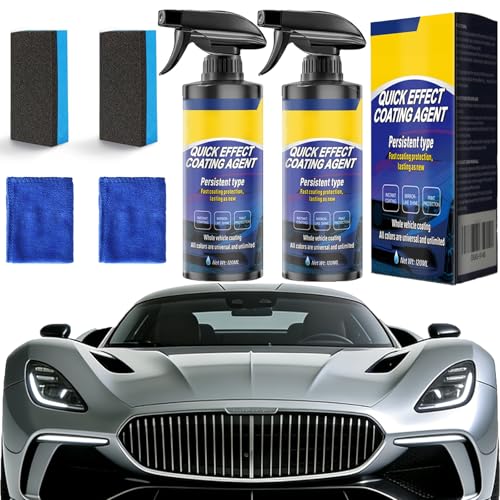
Quick Effect Coating Agent, 2-Pack is packaged as two 1 fl oz bottles, unlike the single-package options. The maker presents it as a water-free cleaning and gloss touch-up spray that loosens dust, road grime, and residue for wiping, while helping reduce the appearance of light scratches and swirls. The small bottles may suit occasional spot care better than repeated whole-vehicle cleaning. Because the product is intended to loosen surface debris, first check that the panel is not gritty and use a clean microfiber towel; a dry or dirty towel can mar automotive clear coat.
Bottom line: Choose this for small, occasional touch-ups in a two-bottle package.
2PCS Car Coating Spray

2PCS Car Coating Spray uses a different routine from the waterless sprays: its directions call for rinsing first, applying the product with a sponge, then rinsing and drying with a clean towel. That makes it the option to consider if you prefer a water-based wash sequence rather than a spray-and-wipe touch-up. The maker claims a protective layer and help with the appearance of scratches and swirls. Its directions include glass and car body, but do not assume every coating is suitable for every surface; test an inconspicuous area and avoid using a coating on visibility-critical glass unless its directions explicitly allow it.
Bottom line: Pick this if you want an apply-and-rinse routine rather than a waterless wipe-off.
TABOUNTS Quick Effect Coating Agent

TABOUNTS Quick Effect Coating Agent is identifiable by the TABOUNTS name and a car coating agent designation, but its specifications do not provide a package size or application method to compare. It may suit shoppers specifically looking for that named product, but there is not enough to distinguish its intended routine from the other sprays. For any coating product, do not apply over dust or road grit: wash or otherwise remove loose contamination first, then use a clean applicator. Confirm the package size and complete application directions before ordering so you can tell whether it fits your intended use.
Bottom line: Consider this only if you specifically want the TABOUNTS-named option and can verify its package and directions.
How to choose a quick effect coating agent
Choose first by the cleaning routine: a waterless spray is for light, loose contamination, while a rinse-and-wipe formula requires access to water. A coating spray does not replace paint decontamination or polishing; embedded grit and oxidation need different preparation. Most automotive clear coats are only a few mils thick, so avoid abrasive rubbing to address a scratch. Light swirls may be visually masked, but a spray cannot be assumed to remove a scratch through clear coat. For routine care, use a clean microfiber towel with a short, gentle wipe pattern and refold it as each side collects soil. If a panel has visible sand or mud, rinse or wash it before wiping rather than using a waterless product on top of grit.
Waterless spray versus rinse-and-wipe coating
Waterless and rinse-and-wipe products differ mainly in how they handle surface soil. A waterless cleaner relies on lubrication and a towel to lift light dust; it is not a safe shortcut for heavy mud or gritty road film. A rinse-first method can carry loose particles away before the sponge contacts paint. Use this decision rule: if you can see grit or a film of dried mud, choose a full rinse and wash rather than a waterless wipe. Neither method should be treated as paint correction, and neither implies a particular protection lifespan unless the maker provides one. The product-specific distinction is summarized here.
| Need | Routine to choose | Key limit |
|---|---|---|
| Light dust or quick refresh | Waterless spray and clean microfiber | Not for gritty panels |
| Visible soil or mud | Rinse, wash, then dry | Avoid rubbing grit into paint |
| Scratch correction | Use a purpose-made paint correction process | Coating claims do not establish scratch removal |
Preparing paint and applying a coating spray
Clean, cool paint is a safer starting point than a hot or dusty panel; heat can make product residue flash or streak before it is evenly removed. Work one small section at a time, use separate clean towels for application and buffing when the directions call for wiping, and turn the towel to a fresh side as it collects residue. Do not apply a coating over loose dust, because the applicator can drag particles across the clear coat. A coating spray is also not a substitute for curing or protection directions specific to the formula. When a product’s full directions are unavailable, verify the recommended surface preparation and application sequence before putting it on paint or glass.
Using coating sprays on glass and other surfaces
Glass needs a streak-free finish and unobstructed visibility, so only use a product on windows when its directions specifically allow glass. Keep coatings away from windshield wiper blades and sensor areas unless the maker permits that use; residue can interfere with wiping or visibility. Plastics and trim can react differently from clear-coated paint, so test a hidden spot first and check for discoloration or haze before treating a large area. Never apply a product where it could reach brake rotors, tires, pedals, or other surfaces that need grip. For any exterior surface, keep the applicator clean and remove excess promptly as directed rather than leaving a wet layer to dry unevenly.
Frequently Asked Questions
Can a quick coating spray remove deep car scratches?
No coating claim alone establishes deep-scratch removal. If a scratch catches a fingernail, it may extend beyond the clear coat and require professional assessment rather than a gloss spray.
Can I use a waterless coating spray on a muddy car?
No; rinse or wash a car with visible mud before wiping. Waterless sprays are better suited to light dust or loose surface soil because rubbing grit can scratch clear coat.
How far away should I spray a car coating agent?
The 500 mL product’s directions say 6 to 12 inches from the surface. Follow the chosen formula’s own distance and use a small panel so you can remove residue evenly.
Should I apply coating spray to a hot car?
No, start with a cool panel in shade when possible. Heat can cause residue to dry or streak before you can wipe it evenly.
Can a car coating spray go on the windshield?
Only use it on a windshield if its directions explicitly permit glass use. Keep the treated area clear of wiper contact unless the product is approved for that use, since residue can impair visibility.