
Rechargeable AA 1.5V Batteries: 3 Types Compared

For most people, imuto 3000mWh AA Lithium, 8-Pack is the best starting point because it combines 1.5V output, an 8-cell pack and a matching 8-slot charger. Choose HW 3600mWh AA Lithium, 4-Pack instead if USB-C charging for four cells suits your setup; RayHom 3700mWh AA Lithium, 12-Pack is the larger 12-cell choice.
Rechargeable AA batteries with 1.5V output are often lithium cells with voltage-regulating electronics, unlike common 1.2V NiMH rechargeables. Match the cell and charger type to your device rather than relying on AA size alone.
We earn a commission if you buy through links on this page. As an Amazon Associate I earn from qualifying purchases. Products are compared on manufacturer specifications, not hands-on testing.
- Best overall: imuto 3000mWh AA Lithium, 8-Pack – An 8-cell pack and 8-slot charger pair with 3000mWh capacity per cell.
- Best for USB-C charging: HW 3600mWh AA Lithium, 4-Pack – Charges four cells simultaneously by USB-C in a maker-claimed two hours.
- Best for larger packs: RayHom 3700mWh AA Lithium, 12-Pack – Includes 12 batteries and a 12-slot charger, with 3700mWh per cell.
| Product | Best for | Capacity per cell | Pack size | Charging setup | Shop |
|---|---|---|---|---|---|
| imuto 3000mWh AA Lithium, 8-Pack | Everyday bundle | 3000mWh | 8 cells | 8-slot charger | Check Price on Amazon |
| HW 3600mWh AA Lithium, 4-Pack | USB-C charging | 3600mWh | 4 cells | USB-C | Check Price on Amazon |
| RayHom 3700mWh AA Lithium, 12-Pack | Many devices | 3700mWh | 12 cells | 12-slot charger | Check Price on Amazon |
Rechargeable AA 1.5V Batteries Compared
Compare capacity, cell count and charging setup to match a rechargeable AA set to your devices and routine.
imuto 3000mWh AA Lithium, 8-Pack

imuto 3000mWh AA Lithium, 8-Pack pairs an 8-cell pack with an 8-slot charger, making it the only set here with enough cells to charge the full pack in the included charger. Each lithium AA cell has a 3000mWh capacity and 1.5V constant output. The maker claims a cycle life of 2500 or more charges and a 2.5-hour fast charge. This set suits households that want a matched battery-and-charger package for several devices. The capacity is lower than the per-cell ratings of HW 3600mWh AA Lithium, 4-Pack and RayHom 3700mWh AA Lithium, 12-Pack, so buyers prioritizing the largest capacity per cell may prefer those options.
Bottom line: Pick this if you want an 8-cell set and a charger sized for all eight.
HW 3600mWh AA Lithium, 4-Pack
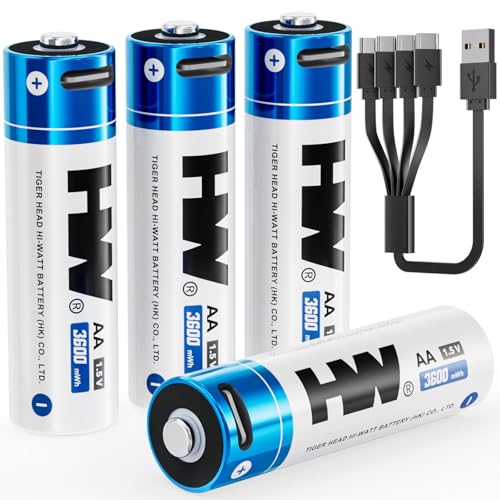
USB-C charging sets HW 3600mWh AA Lithium, 4-Pack apart: its charger can charge all four included cells simultaneously through a USB port. Each lithium AA cell is rated at 3600mWh, with the maker claiming more than 1000 recharge cycles and a two-hour charge time. The maker also says the output declines gradually from 1.5V rather than staying constant throughout discharge. This compact pack suits someone who prefers a USB-C charging connection and needs four cells at a time. The four-cell count is smaller than the packs from imuto 3000mWh AA Lithium, 8-Pack and RayHom 3700mWh AA Lithium, 12-Pack, which matters when several devices need fresh batteries together.
Bottom line: Choose this if USB-C charging and a four-cell pack fit your routine.
RayHom 3700mWh AA Lithium, 12-Pack
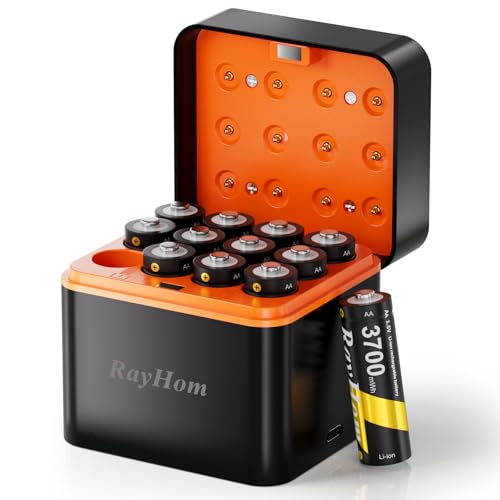
RayHom 3700mWh AA Lithium, 12-Pack has the largest per-cell capacity and pack count among these options: 3700mWh per cell and 12 batteries. Its charger has 12 slots, so the package is suited to replacing batteries across several devices without splitting a smaller pack between charging sessions. The maker claims a constant 1.5V output and operation from -20°F to 131°F. That temperature range may help buyers whose equipment faces cold or hot conditions. The 12-cell bundle is more than needed for a single device or a small rotation; HW 3600mWh AA Lithium, 4-Pack is the more compact four-cell alternative.
Bottom line: Pick this for a larger battery rotation and a 12-slot charger.
How to Choose Rechargeable AA 1.5V Batteries
Start with the device’s required voltage and the battery chemistry it accepts: AA size alone does not establish compatibility. Common NiMH rechargeable AAs have a nominal 1.2V, while alkaline AAs are nominally 1.5V; regulated lithium AA products aim to maintain 1.5V output. If a device requires 1.5V or behaves poorly as voltage falls, choose a 1.5V rechargeable design rather than assuming a 1.2V cell will work. Then compare capacity in mWh, pack count and charging method. Capacity is energy, not a guarantee of runtime: actual runtime changes with device draw and cutoff voltage. For four or fewer cells, a four-cell set may suffice; for a rotation of more than eight, consider a larger pack.
Charger Compatibility and Safe Charging
Use a charger designed for the exact rechargeable battery type, not just one with AA-sized slots. Lithium AA rechargeables can use internal electronics and charging arrangements that differ from NiMH cells, so do not assume a NiMH charger is suitable. Follow the battery maker’s charging instructions and use the intended charger or charging connection. Keep cells of different chemistries, capacities or charge states out of the same device when possible; mixing can cause uneven discharge. For a four-cell rotation, check whether the charger can charge four cells at once; for a larger rotation, compare its slot count with the number of cells you need ready. Stop using a cell that becomes unusually hot, swells or leaks.
Understanding Capacity and Runtime
Compare energy ratings in mWh when products use lithium cells and mAh when they use a different voltage; mWh accounts for both capacity and voltage. A 3000mWh cell and a 3700mWh cell cannot be treated as identical, but the larger rating does not promise a fixed runtime advantage in every device. Current draw, temperature, battery age and the device’s low-voltage cutoff all affect operating time. High-drain equipment such as cameras or motorized toys can use energy faster than a remote control. If the device shuts off while a rechargeable cell still has charge, its voltage cutoff may be the limiting factor. Select capacity and pack size based on how many cells the device uses and how often you can recharge them.
AA Rechargeable Types Compared
AA identifies a physical battery size, not a single voltage or chemistry. Alkaline AA batteries are typically 1.5V and disposable; NiMH rechargeables are typically 1.2V; some lithium rechargeable AAs regulate output to 1.5V. That distinction matters most when a device is voltage-sensitive or has a battery-level indicator calibrated for alkaline cells. A larger capacity rating can extend runtime under comparable conditions, but type, device draw and cutoff behavior also matter. Use this quick comparison to identify which specification deserves attention first.
| Battery type | Typical voltage | Decision point |
|---|---|---|
| Alkaline AA | 1.5V nominal | Disposable; not rechargeable |
| NiMH rechargeable AA | 1.2V nominal | Confirm device accepts 1.2V rechargeables |
| Regulated lithium rechargeable AA | 1.5V output | Use a compatible charging system |
Frequently Asked Questions
Will 1.5V rechargeable AAs work in every AA device?
No; check the device manual for supported battery chemistry and voltage. Some devices accept only alkaline or NiMH cells, and an electronic cutoff can affect runtime even when the cells fit.
Can I charge lithium AA batteries in a NiMH charger?
Use only a charger specified for the battery type. AA shape does not mean charging systems are interchangeable; follow the battery maker’s charging instructions.
Do 1.5V rechargeable AA batteries keep voltage constant?
Some lithium rechargeable AAs regulate output near 1.5V, while other designs allow output to decline. Check whether the product claims constant output or a gradual voltage decline.
How many rechargeable AA batteries should I keep?
Count the cells used by your devices and add a spare set if devices need to remain available while batteries charge. For example, a device using four cells needs at least four ready cells at a time.
Can I mix rechargeable and alkaline AA batteries?
Avoid mixing chemistries, brands, ages or charge levels in one device. Differences in discharge behavior can lead to uneven operation; replace cells as a matched set.