
Rivet Gun for 1/4 Rivets: 3/16-Inch Options Compared

For 1/4-inch pop rivets, choose BEETRO 10.5-Inch Hand Riveter or GIANTISAN Pop Rivet Gun Kit because both include a 3/16-inch nosepiece, the closest size to 1/4 inch. Buyers specifically needing a rivet nut setter should choose a pneumatic rivet nut model instead; rivet nuts are threaded inserts, not pop rivets.
In pop-rivet sizing, 1/4 inch usually refers to the rivet body diameter, while the included tools top out at 3/16 inch, so verify compatibility with the rivet maker before buying.
We earn a commission if you buy through links on this page. As an Amazon Associate I earn from qualifying purchases. Products are compared on manufacturer specifications, not hands-on testing.
- Best overall: GIANTISAN Pop Rivet Gun Kit – Includes a 3/16-inch nosepiece, 200 pop rivets, four drill bits and a carrying case.
- Best for all-steel construction: ValueMax 4-in-1 Hand Riveter – Uses a steel body and includes 200 rivets across four nosepiece sizes.
- Best for a compact kit: BEETRO 10.5-Inch Hand Riveter – Includes four nosepiece sizes and 100 rivets in a 10.5-inch hand tool.
| Product | Best for | Included rivets | Shop |
|---|---|---|---|
| GIANTISAN Pop Rivet Gun Kit | Accessory bundle | 200 aluminum | Check Price on Amazon |
| ValueMax 4-in-1 Hand Riveter | Steel construction | 200 mixed sizes | Check Price on Amazon |
| BEETRO 10.5-Inch Hand Riveter | Simple hand kit | 100 mixed sizes | Check Price on Amazon |
Rivet Guns for 1/4-Inch Pop Rivets
Compare the pop-rivet kits by their largest nosepiece and included accessories, and distinguish them from rivet nut setters.
GIANTISAN Pop Rivet Gun Kit

GIANTISAN Pop Rivet Gun Kit is the most complete hand riveter bundle here, pairing a 3/16-inch nosepiece with 200 aluminum pop rivets, four drill bits, and a carrying case. Its four marked, color-coded heads cover 3/32, 1/8, 5/32, and 3/16 inch, and the heads store on the handle for tool-free changes. The maker describes an aluminum-alloy and carbon-steel construction. This suits someone starting a sheet-metal or general fastening job who wants the common accessories together. Its largest head is still 3/16 inch, so confirm that it matches the specific 1/4-inch rivet rather than assuming the sizes are interchangeable.
Bottom line: Choose this kit if you want drill bits and a case alongside the four-size hand riveter.
ValueMax 4-in-1 Hand Riveter
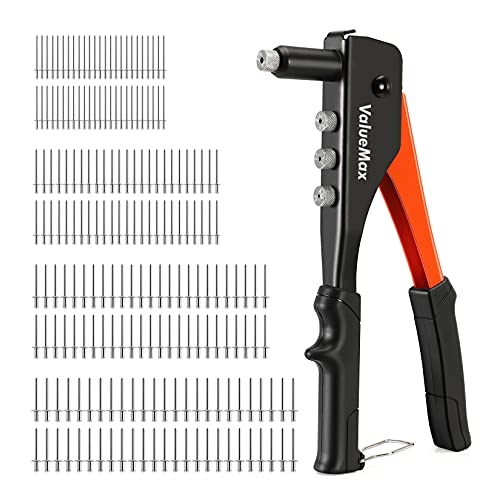
ValueMax 4-in-1 Hand Riveter stands apart with a 100% steel construction and plastic-covered grips, while its kit includes 200 pop rivets split evenly across four sizes. The four interchangeable nosepieces range from 3/32 to 3/16 inch and are designed to change without a separate tool. A handle lock is also part of the product’s design. This hand riveter fits buyers who prioritize a steel-bodied tool and a larger included rivet count. The largest head is 3/16 inch, not 1/4 inch; anyone working with 1/4-inch body-diameter rivets should verify the required nosepiece and rivet compatibility first.
Bottom line: Pick this when the steel body and 200-rivet assortment matter most.
BEETRO 10.5-Inch Hand Riveter

BEETRO 10.5-Inch Hand Riveter is the 10.5-inch hand-tool option, with four interchangeable nosepieces and 100 rivets covering 3/32, 1/8, 5/32, and 3/16 inch. A head wrench is included for changing nozzles, and the maker says the tool can join metal, plastic, and leather. Its smaller rivet assortment distinguishes it from the 200-rivet kits, while still covering four pop-rivet diameters. This is suited to occasional work where a straightforward manual tool is enough. It does not include drill bits or a carrying case in the specifications, and its largest nosepiece remains below 1/4 inch.
Bottom line: Choose this for a basic hand kit with four nosepiece sizes and 100 rivets.
How to choose a rivet gun for 1/4-inch rivets
First determine whether “1/4 inch” means a pop-rivet body diameter or a rivet-nut thread size; those fasteners need different tools. Pop riveters pull a stem through a blind rivet to clamp material from one side, while rivet-nut setters deform a threaded insert in a drilled hole. The pop-rivet kits here list heads only up to 3/16 inch, so do not treat that as proven 1/4-inch capacity. A 1/4-20 rivet nut, by contrast, has a 1/4-inch nominal thread diameter and requires a compatible mandrel. Choose a hand tool for occasional work without an air line; choose a pneumatic setter only when your job uses threaded inserts and you have suitable compressed air.
Pop rivet size and hole fit
A pop rivet’s body diameter and grip range both matter: the drilled hole must fit the body, and the grip range must span the combined thickness of the joined materials. For a nominal 1/4-inch rivet, use a drill size specified by that rivet’s manufacturer rather than assuming a 3/16-inch nosepiece will fit. Nosepiece size describes the tool’s rivet compatibility, not the hole size or maximum material thickness. Keep the stem centered in the nosepiece and set the tool square to the work; an angled pull can leave a loose or uneven joint. The kits top out at 3/16 inch, so confirm the tool and rivet specifications before work on a 1/4-inch fastener.
Pop riveters and rivet nut setters compared
Pop riveters install blind rivets, while rivet nut setters install threaded inserts; the fastener’s construction decides which tool is correct. A blind rivet has a central stem that breaks away during setting. A rivet nut leaves internal threads for a screw or bolt, and its designation such as 1/4-20 describes thread diameter and pitch. The distinction matters more than whether the tool is hand-operated or pneumatic. Use the comparison below to identify the right family before comparing nosepiece sizes.
| Fastener needed | Tool type | Size cue |
|---|---|---|
| Blind pop rivet | Hand pop riveter | Rivet body diameter |
| Threaded rivet nut | Rivet nut setter | Thread designation, such as 1/4-20 |
Safe setup for rivet installation
Eye protection is essential when setting rivets because the mandrel stem breaks and can eject from the tool. Check that the tool nosepiece matches the fastener size and that the work is clamped securely before pulling the handles or trigger. For pneumatic rivet nut tools, use the air pressure and regulator limits supplied with the specific tool; excessive pressure can damage threads or the workpiece. Keep fingers clear of the nose and moving handles, and remove broken stems from the work area promptly. Thin sheet material can deform around an incorrectly sized hole, so test the fit on scrap of the same thickness before riveting a visible or load-bearing joint.
Frequently Asked Questions
Does a 3/16-inch nosepiece fit a 1/4-inch pop rivet?
Not necessarily: the nosepiece size identifies the rivet diameters the tool is designed to set, and 3/16 inch is smaller than 1/4 inch. These kits list a maximum 3/16-inch nosepiece, so verify the rivet maker’s compatibility requirements before using one.
What does 1/4-20 mean on a rivet nut gun?
The designation means a nominal 1/4-inch thread diameter with 20 threads per inch. It describes a threaded insert size, not a 1/4-inch pop-rivet body.
How do I choose the right pop-rivet grip range?
Match the rivet’s grip range to the combined thickness of the materials being joined. If the stack is outside that range, the rivet may not clamp correctly even when the diameter and nosepiece match.
Do pneumatic rivet nut guns need an air compressor?
Yes, a pneumatic rivet nut gun requires a compressed-air supply. Use the tool’s specified operating pressure and regulator setting rather than guessing, since air pressure affects how the insert is set.
Why does a pop rivet need a drilled hole?
A blind rivet passes through aligned holes in the materials before its stem is pulled to form the back-side head. Use the rivet manufacturer’s recommended drill size; an oversized hole can leave a weak or loose joint.