
Saker Portable Welding Machine: 3 Models Compared

Sakerplus Portable Welder, 110V suits most buyers who want a portable Saker stick welder with a helmet, case and 30 rods included. Choose Saker Grey Portable Welder, 20 Rods or Saker Grey Portable Welder if you prefer a grey machine and the 20–120 amp range; their packages include fewer accessories.
These 110V handheld ARC welders use stick electrodes, so rod selection and material thickness affect the result as much as the current setting.
We earn a commission if you buy through links on this page. As an Amazon Associate I earn from qualifying purchases. Products are compared on manufacturer specifications, not hands-on testing.
- Best overall: Sakerplus Portable Welder, 110V – Includes a helmet, safety goggles, glove, carrying case and 30 wire rods.
- Best for current range: Saker Grey Portable Welder, 20 Rods – Its 20–120 amp output is controlled by a five-speed knob.
- Best for a basic kit: Saker Grey Portable Welder – A 110V grey unit with five current levels and 3/32-inch rod fit.
| Product | Best for | Included accessories | Shop |
|---|---|---|---|
| Sakerplus Portable Welder, 110V | Accessory bundle | 30 rods, helmet, case, goggles, glove | Check Price on Amazon |
| Saker Grey Portable Welder, 20 Rods | 20-rod starter kit | 20 rods | Check Price on Amazon |
| Saker Grey Portable Welder | Machine only | Machine | Check Price on Amazon |
Saker Portable Welding Machines
Compare the package contents and current controls to find the Saker welder that fits your work.
Sakerplus Portable Welder, 110V

The main distinction of this Sakerplus kit is its accessory bundle: it includes 30 rods, a welding helmet, safety goggles, a glove and a carrying case. The 110V handheld ARC unit weighs 3.75 pounds and provides five current settings: 20, 45, 70, 95 and 120 amps. That combination suits a buyer who wants safety gear and transport storage in the same package rather than sourcing each separately.
The maker says it can run from a generator as well as a household 110V outlet. The rods are 3/32 inch; check that this electrode size and the workpiece thickness suit your planned welds.
Bottom line: Pick this kit if you want the most included gear and a 3.75-pound welder.
Saker Grey Portable Welder, 20 Rods
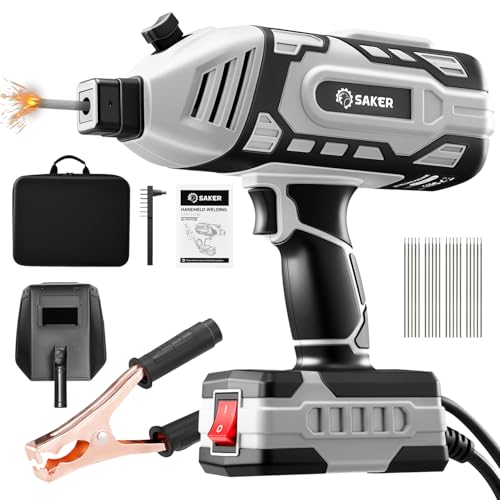
Unlike the bundle with a helmet and case, this grey Saker package is specified with 20 rods and the welding machine. Its 110V inverter welder has a five-speed current knob spanning 20–120 amps and fits 3/32-inch rods. The maker says the IGBT inverter supports arc stability and easier arc starting, making the adjustable output useful when matching current to a job.
This option suits buyers who already have protective equipment and want a small rod supply. The package data identifies the machine and 20 rods, so plan on obtaining a helmet, eye protection, gloves and safe work setup separately if needed.
Bottom line: Choose this one if you have protective gear and want 20 rods included.
Saker Grey Portable Welder

Saker Grey Portable Welder is the machine-only option among these Saker models, with no rod quantity or accessory bundle indicated. It is a grey 110V handheld welder with five current levels and compatibility with 3/32-inch welding rods. The maker says its IGBT inverter is designed for stable output and easier arc starting on carbon steel and iron.
This package can suit someone who already owns suitable electrodes and protective gear and wants the welder without an additional rod pack. Its current range is the same as Saker Grey Portable Welder, 20 Rods, so the deciding difference is package contents, not a broader amperage capability.
Bottom line: Pick this model if you already have 3/32-inch rods and welding safety gear.
How to Choose a Saker Portable Welding Machine
Start with the kit contents and match the current to the electrode and workpiece. These are 110V stick welders with five current settings; two packages state a 20–120 amp range, while Sakerplus Portable Welder, 110V gives the individual settings from 20 to 120 amps. Choose Sakerplus Portable Welder, 110V if the bundled helmet, case and 30 rods matter; choose a machine-only package if you already own the supporting gear.
Stick welding uses a consumable coated electrode held in an electrode holder, and the arc melts both rod and base metal. Electrode diameter and material thickness guide the amperage choice, so a five-position dial is less precise than a continuously adjustable control. Stay within the rod maker’s range and practice on scrap of the same metal and thickness before working on a repair.
Choosing Rod Size and Amperage
A 3/32-inch electrode is the size these Saker models are identified to fit. Common 3/32-inch mild-steel stick electrodes often run roughly 40–100 amps, with the specific range depending on electrode type and position; use the electrode package’s range rather than assuming every rod takes the same setting. Lower current helps reduce burn-through on thin stock, while too little current can make the arc difficult to maintain.
Set the machine for the electrode and metal thickness, then test on scrap before welding a part you need to keep. These units’ five-step controls jump between settings, so a narrow acceptable current window may not line up exactly with a dial position. Keep the workpiece clean and dry, and do not use a rod diameter or material the machine is not described as supporting.
Portable Welder Safety and Setup
Stick welding creates intense ultraviolet light, hot metal, sparks and fumes; wear a properly rated welding helmet, safety glasses under the hood, welding gloves and flame-resistant clothing. The accessory package on Sakerplus Portable Welder, 110V includes a helmet, goggles and glove, but these items do not remove the need to keep skin covered or clear flammable materials from the work area. Weld in ventilation that carries fumes away from your breathing zone.
Use a correctly grounded 110V outlet and inspect the power lead, electrode holder and work clamp before each session. A generator’s suitability depends on its output and the welder’s electrical demands, so confirm its capacity before relying on one at a jobsite. Keep dry and avoid welding near fuel, solvents or wet surfaces.
What Changes Between These Saker Welder Kits
The key difference is what arrives with the machine, not the rod fit: each option is associated with 3/32-inch rods, while only Sakerplus Portable Welder, 110V names a helmet and carrying case. Use this quick guide to narrow the package by what you already own.
| Need | Package to consider | Distinction |
|---|---|---|
| Safety gear and transport case | Sakerplus Portable Welder, 110V | 30 rods, helmet, goggles, glove and case |
| Some rods, own gear | Saker Grey Portable Welder, 20 Rods | 20 rods included |
| Welder only | Saker Grey Portable Welder | No accessory quantity given |
Accessory fit matters because stick welding requires an electrode holder, ground connection and appropriate protective equipment in addition to the power unit. Before starting, also confirm that the rod type is right for the base metal; carbon steel and iron are the materials named for the grey models.
Frequently Asked Questions
What is the maximum current on these Saker welders?
The Saker models with a range reach 120 amps, and each has five current levels. Sakerplus Portable Welder, 110V gives settings of 20, 45, 70, 95 and 120 amps.
Which welding rods fit the Saker portable welders?
All three product names or features identify 3/32-inch rods. Confirm the electrode type and its amperage range for the metal you plan to weld; diameter alone does not determine the correct setting.
Can I use a Saker welder with a generator?
The maker says Sakerplus Portable Welder, 110V can work with a generator, but generator output must suit the welder’s electrical load. Check the generator’s continuous output and the machine’s input requirements before connecting them.
What protective equipment is needed for stick welding?
Use a welding helmet, safety glasses, welding gloves and flame-resistant clothing because the arc emits intense UV light and throws sparks. Work with ventilation that moves fumes away from your breathing zone.
How should I choose an amperage for a 3/32-inch rod?
Many 3/32-inch mild-steel stick electrodes commonly operate around 40–100 amps, but the electrode type and welding position change the suitable range. Use the rod maker’s range and make a test weld on matching scrap before a repair.