
Schrade 152 Old Timer Sharpfinger Models Compared

For most buyers seeking a Schrade 152 Old Timer Sharpfinger, Old Timer 152OTBC Pro Hunter Camo Sharpfinger is the closest match because its 3.3-inch blade and 7.1-inch overall length fit the standard size. Choose Old Timer Generational USA 152OTG instead for a longer 3.5-inch blade and bone handle, or 152OT Sharpfinger and 12OT Folder Combo if a folding knife alongside the Sharpfinger matters.
A Sharpfinger is a compact fixed-blade knife with a curved skinning profile; use a folder or longer blade only if your intended task calls for that different format.
We earn a commission if you buy through links on this page. As an Amazon Associate I earn from qualifying purchases. Products are compared on manufacturer specifications, not hands-on testing.
- Best overall: Old Timer 152OTBC Pro Hunter Camo Sharpfinger – Its 3.3-inch blade and 7.1-inch overall length match the standard Sharpfinger size.
- Best for USA-made construction: Old Timer Generational USA 152OTG – It is identified as made in the USA and has a 3.5-inch blade with a full tang.
- Best for a knife combo: 152OT Sharpfinger and 12OT Folder Combo – The set pairs a 152OT Sharpfinger with a traditional folding knife and gift tin.
| Product | Best for | Blade length | Overall length | Weight | Shop |
|---|---|---|---|---|---|
| Old Timer 152OTBC Pro Hunter Camo Sharpfinger | Standard-size Sharpfinger | 3.3 in | 7.1 in | 3.1 oz | Check Price on Amazon |
| Old Timer Sharpfinger 3.3 in | Classic Delrin handle | 3.3 in | 7.1 in | 3.1 oz | Check Price on Amazon |
| Old Timer Generational USA 152OTG | Bone handle, longer blade | 3.5 in | 7.25 in | 3.77 oz | Check Price on Amazon |
| 152OT Sharpfinger and 12OT Folder Combo | Fixed-and-folding set | — | — | — | Check Price on Amazon |
Schrade 152 Old Timer Sharpfinger Knives
Compare blade dimensions and construction to choose the Sharpfinger variant that fits your intended carry and cutting tasks.
Old Timer 152OTBC Pro Hunter Camo Sharpfinger
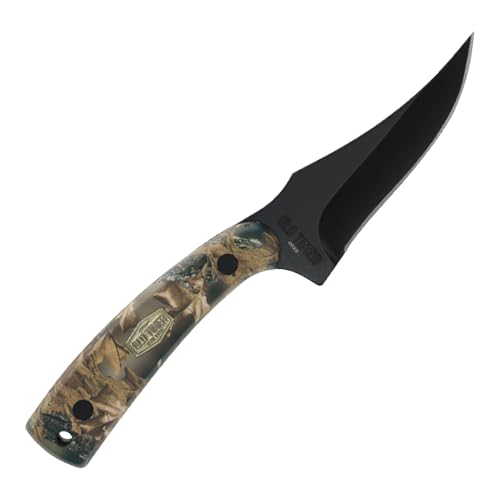
The 152OTBC keeps the compact 3.3-inch blade and 7.1-inch overall length, with a Pro Hunter Camo handle that distinguishes it from the black-handled version. Its high-carbon stainless-steel blade, full tang, and black leather belt sheath suit field carry and precision cutting. The blade shape combines a fine clip point with an upswept belly for controlled detail work and slicing. Choose this model if camo styling matters; buyers wanting a bone handle or a longer blade should consider another variant. The maker describes the blade as designed to maintain an edge through rugged outdoor use.
Bottom line: Choose this if you want the standard-size Sharpfinger with a camo handle and leather sheath.
Old Timer Sharpfinger 3.3 in

The black sawcut Delrin handle and brown leather belt sheath set this Sharpfinger apart from the camo and bone-handle variants. Its 3.3-inch high-carbon stainless-steel blade sits in a 7.1-inch full-tang fixed blade weighing 3.1 ounces. A thumb rise and finger choil provide grip features for controlled handling, while the compact blade profile suits small outdoor cutting jobs. This is a straightforward choice for someone who prefers the classic dark handle and belt carry. The limitation is its shorter blade compared with the 3.5-inch USA-series option.
Bottom line: Choose this if you want the 3.3-inch model with a sawcut Delrin handle and leather sheath.
Old Timer Generational USA 152OTG

The Generational USA 152OTG is the longer, heavier Sharpfinger variant here, with a 3.5-inch blade, 7.25-inch overall length, and 3.77-ounce weight. It pairs a full-tang 1095 high-carbon stainless-steel blade with a sawcut bone handle, nickel silver bolsters, and pins. The maker identifies it as made in the USA. Those wanting the classic compact 3.3-inch dimensions or a Delrin handle should favor a different option. The features also include a lanyard hole; the handle material and added fittings give this model a distinctly traditional build.
Bottom line: Choose this if you prefer a 3.5-inch blade, bone handle, and USA-made construction.
152OT Sharpfinger and 12OT Folder Combo

The combo is the only choice here that pairs a 152OT Sharpfinger with a traditional folding knife, and it includes a gift tin. The Sharpfinger is supplied with a nylon sheath, rather than the leather sheath included with the standalone variants. This set suits someone who wants both fixed-blade and folding formats in one package. Its tradeoff is that the facts do not give blade dimensions or weights for either knife, so buyers who need exact size or carry-weight comparisons should choose a model with those measurements available and verify the set’s contents before buying.
Bottom line: Choose this if you want a 152OT Sharpfinger packaged with a traditional folder.
How to choose a Sharpfinger size
A 3.3-inch blade in a 7.1-inch knife is the compact size represented by most of these options, while the USA-series model extends to a 3.5-inch blade and 7.25 inches overall. Blade length is not the only fit factor: the handle material and sheath affect grip and carry preference. For fine cuts where tip control matters, the Sharpfinger’s clip point is useful; for longer slicing strokes, its upswept belly supplies a curved cutting edge. Choose the 3.5-inch version if that extra blade length is useful for your work, and the 3.3-inch version if a shorter profile is your priority. Confirm local carry rules before carrying a fixed blade, since legal limits vary by jurisdiction.
Sharpfinger blade shapes and field tasks
A clip-point blade places a clipped spine near the tip, making the point useful for controlled detail work; the Sharpfinger profile also has an upswept edge suited to slicing. Fixed blades do not fold into a handle, so they need a sheath for safe carry and storage. A folder instead pivots its blade into the handle, as the combo’s 12OT does. Use the blade type that matches the task rather than treating the folder and fixed blade as interchangeable. For field dressing, work slowly with the edge directed away from your body and keep the free hand behind the cutting path. Never test sharpness against skin.
Handle and sheath choices for carry
Handle material changes feel and upkeep, not the basic blade dimensions: these variants use sawcut Delrin, Pro Hunter Camo, or sawcut bone. The standalone 3.3-inch options in the assortment have leather belt sheaths, while the combo provides a nylon sheath. A sheath should fully cover the edge and retain the knife securely; do not carry a fixed blade loose in a pocket or pack. Before relying on a belt sheath, check that it fits your belt and holds the knife when you move. Keep the edge covered during storage, and avoid using the knife as a pry bar, screwdriver, or chisel, which can damage the edge or cause loss of control.
Sharpfinger care and safe handling
Clean and dry a knife after each use, especially after contact with moisture or acidic material, then apply a light coat of food-safe oil if it will be stored. High-carbon stainless steel still benefits from drying; “stainless” does not mean rust-proof. Sharpen with a consistent angle and light strokes, maintaining the existing bevel rather than grinding away material unnecessarily. For a curved edge, use a sharpening surface that can follow the belly without flattening its curve. Cut on a stable surface, keep fingers clear of the edge, and pass a sheathed knife handle-first. Inspect the sheath and handle for looseness or damage before field use.
Frequently Asked Questions
What does the Sharpfinger blade shape suit?
The clip point supports controlled detail cuts, while the upswept belly provides a curved edge for slicing. Keep the cutting motion directed away from your body, especially during field work.
How long is the standard Old Timer Sharpfinger?
The standard-size variants here measure 7.1 inches overall with a 3.3-inch blade. The USA-series 152OTG measures 7.25 inches overall and has a 3.5-inch blade.
Does stainless steel need drying after use?
Yes, dry a high-carbon stainless-steel blade after use, particularly after moisture or acidic materials. A light coat of food-safe oil can help protect a knife during storage.
How should I carry a fixed-blade knife safely?
Carry a fixed blade in a sheath that fully covers the edge and retains the knife during movement. Check local carry laws first because restrictions vary by jurisdiction.
Can I use the Sharpfinger as a prying tool?
No, use the blade for cutting rather than prying, twisting, or striking. Those forces can damage the edge or cause the knife to slip.