
Best Shoes for Water Aerobics: 5 Picks Compared

For most water aerobics classes, Ryka Hydro Sport Cross Training Shoe, Blue 10 is the strongest choice because its midfoot support and multi-port drainage are built for water fitness. Choose SEEKWAY Quick-Dry Aqua Sock, White 8.5W/7.5M instead for a flexible aqua sock; its lighter, less structured design is a different fit for class workouts.
We earn a commission if you buy through links on this page. As an Amazon Associate I earn from qualifying purchases. Products are compared on manufacturer specifications, not hands-on testing.
- Best overall: Ryka Hydro Sport Cross Training Shoe, Blue 10 – Multi-port drainage and built-in midfoot support suit water fitness and higher-impact workouts.
- Best for arch support: KOLILI Arch Support Aqua Water Shoe, Gray/Aqua 9 – Its cushioned sole adds slight arch support, with sticky rubber for wet and dry surfaces.
- Best for lightweight flexibility: SEEKWAY Quick-Dry Aqua Sock, White 8.5W/7.5M – An elastic, breathable upper and thick rubber sole make it a flexible water shoe option.
| Product | Best for | Drainage | Support | Outsole | Shop |
|---|---|---|---|---|---|
| Ryka Hydro Sport Cross Training Shoe, Blue 10 | Supported water fitness | Multi-port system | Midfoot support | — | Check Price on Amazon |
| KOLILI Arch Support Aqua Water Shoe, Gray/Aqua 9 | Light arch cushioning | Multi-port system | Slight arch support | Sticky rubber | Check Price on Amazon |
| SEEKWAY Quick-Dry Aqua Sock, White 8.5W/7.5M | Flexible water use | — | — | Thick rubber | Check Price on Amazon |
| Ryka Hydro Sport Training Shoe, Blue/Sapphire 7 | Wet-surface traction | Multi-port system | Midfoot support | Sticky rubber | Check Price on Amazon |
| Ryka Hydro Sport Cross Training Shoe, Blue 8 | Water workout support | Multi-port system | Midfoot support | — | Check Price on Amazon |
Best shoes for water aerobics
Compare the options by drainage, support, and the amount of structure you want for class.
Ryka Hydro Sport Cross Training Shoe, Blue 10
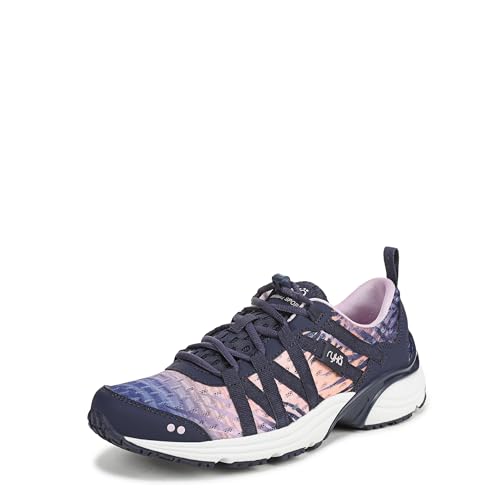
Ryka Hydro Sport Cross Training Shoe, Blue 10 pairs water-workout drainage with built-in midfoot support. Its chlorine-friendly, quick-drying mesh and faux-leather overlays are designed for water activity, and the removable cushioned insole has drainage holes. A toggle closure and padded collar give it more structure than a simple aqua sock. The women-specific shape has a narrower heel and roomier toe. The maker recommends sizing down for a closer fit, so consider that advice if you prefer more toe room or are between sizes.
Bottom line: Choose this for a supportive, structured shoe for water fitness classes.
KOLILI Arch Support Aqua Water Shoe, Gray/Aqua 9

KOLILI Arch Support Aqua Water Shoe, Gray/Aqua 9 is the option with explicit arch support, though the cushioning is described as slight rather than substantial. Its stretch-knit and mesh upper is designed for a light feel, and the slip-on neck stretches around the ankle. A multi-port drainage system and sticky rubber outsole are intended for traction on wet and dry surfaces, making it suitable for class and walking between activities. The support is less clearly substantial than a dedicated structured training shoe, so buyers who need firm arch control should favor a more supportive design.
Bottom line: Pick this if slight arch cushioning and slip-on wear are priorities.
SEEKWAY Quick-Dry Aqua Sock, White 8.5W/7.5M

SEEKWAY Quick-Dry Aqua Sock, White 8.5W/7.5M differs from the training shoes with an elastic spandex vamp and overshoe-style slip-on design. The maker says tiny air holes in the upper support breathability and quick drying; the shoe also has thick rubber soles, a toe cap, and 3D tread. Those features make it a flexible choice for pool sessions and other water activities. Its aqua-sock construction is less structured than a cross-training shoe, so buyers seeking explicit midfoot or arch support for higher-impact routines should consider another style. The size is 8.5 for women and 7.5 for men.
Bottom line: Choose this for a flexible aqua sock rather than a structured trainer.
Ryka Hydro Sport Training Shoe, Blue/Sapphire 7

Ryka Hydro Sport Training Shoe, Blue/Sapphire 7 pairs multi-port drainage and built-in midfoot support with a sticky rubber outsole, giving it an explicit traction feature. Its quick-drying, chlorine-friendly mesh and faux-leather overlays are intended for water activities and high-intensity workouts. The women-specific shape provides a narrower heel, roomier toe, and softer cushioning. Compared with a simple water sock, this shoe offers more training shoe structure. The features do not identify a closure style, so anyone who specifically wants toggle lacing should consider a different option.
Bottom line: Choose this when wet-surface grip is a key priority.
Ryka Hydro Sport Cross Training Shoe, Blue 8

Ryka Hydro Sport Cross Training Shoe, Blue 8 is a structured Hydro Sport option with built-in midfoot support, a chlorine-friendly mesh upper, and faux-leather overlays. Its quick-drying construction is intended for water fitness and outdoor water activities, and the toggle closure and padded collar add a more held-in feel than a simple aqua sock. Buyers who need a particular wet-deck tread should prioritize a shoe with an explicitly described outsole.
Bottom line: Pick this for a structured water-workout shoe with toggle closure.
How to choose shoes for water aerobics
For pool classes, prioritize a secure fit, drainage, and a sole made to grip wet surfaces. Water shoes typically use ports or channels to shed water; drainage helps reduce sloshing but does not make a shoe slip-proof. A closed toe and covered upper can help protect against pool-deck scrapes, while a flexible, thin sole feels less structured than a cross-training shoe. If your routine includes jumps or fast lateral moves, choose a shoe with defined midfoot support rather than a sock-like upper. For gentle water walking, flexibility and quick-drying materials may matter more. As a practical rule, if your feet slide inside the shoe when you push sideways, choose a closer-fitting design with a secure closure.
Water shoes and training shoes compared
Aqua socks favor flexibility, while cross-training water shoes offer more structure for active classes. The choice depends on the class movements: repeated side steps place different demands on fit than stationary water walking. A rubber outsole can provide grip, but pool-deck traction varies with surface texture, soap residue, and water film, so no tread guarantees a slip-free step. Chlorine-friendly materials are useful for regular pool exposure; rinse footwear with fresh water after class and let it dry fully to reduce lingering chlorine and odor. This table maps common needs to shoe styles without assuming every model has the same support or traction.
| Class need | Style to favor | Reason |
|---|---|---|
| Side steps and higher-impact moves | Structured training shoe | Supportive fit and more coverage |
| Light movement and flexibility | Aqua sock | Flexible upper and simple slip-on wear |
| Frequent pool sessions | Quick-drying, chlorine-friendly materials | Designed for repeated water exposure |
Fit and traction on wet pool decks
Water aerobics shoes should feel snug without pinching, because a loose upper can shift when you change direction. Wet conditions also soften the feel of some materials, so try the fit with the socks or bare-foot setup you plan to use. A shoe with drainage ports still needs an outsole that suits the deck; look for rubber tread and avoid assuming that a smooth aqua sock has the same grip as a training shoe. Keep steps controlled when entering or leaving the pool, where wet tile can be slick even with tread. If a maker recommends sizing down, consider whether the closer fit leaves enough toe room before choosing that size.
Care for water aerobics shoes
Rinse pool shoes in clean water after each chlorine session and air-dry them fully before storing. Chlorine exposure and damp storage can wear materials and encourage odor, while direct high heat can damage adhesives and synthetic uppers. Remove a removable insole for separate rinsing and drying when the shoe design allows it; open drainage ports and loosen closures so trapped moisture can escape. Check the outsole periodically for worn or smoothed tread, especially if you also walk on pavement. Replace footwear when the sole no longer grips reliably or the upper no longer holds the foot securely, rather than relying on the original tread pattern.
Frequently Asked Questions
Can I wear regular sneakers for water aerobics?
Regular sneakers are usually a poor substitute because they can retain water and feel heavy. Water shoes use drainage ports or quick-drying uppers; choose a secure fit if your class includes lateral steps.
Do water aerobics shoes need drainage holes?
Drainage ports help water escape and reduce sloshing, but they are not mandatory for every class. A quick-drying upper and a snug fit matter too, especially for faster movement.
Are water aerobics shoes supposed to fit tightly?
They should fit securely without pinching or curling the toes. If your heel lifts or your foot slides sideways during a step, try a closer fit or a more secure closure.
How should I clean shoes after pool aerobics?
Rinse them with fresh water after each chlorinated-pool session and air-dry them fully. Remove a removable insole so both it and the shoe can dry separately.
Can I wear water shoes outside the pool?
Many water shoes can also be used for walking or outdoor water activities, but tread and support differ by style. For regular pavement walking, choose a shoe with an outsole and support suited to that use.