
Shed for Portable Generator: 4 Options Compared

For a portable generator that needs protection during operation and storage, GenShed Standard Generator Shed is the closest match because its frame-mounted covers convert between those uses. Choose GenArmor Standard Running Tent if you need a running-only tent, or a resin cabinet if the generator will be stored with the engine off.
Never operate a generator inside a shed, garage or other enclosed space: carbon monoxide can build up quickly. Keep a running generator outdoors, at least 20 feet from doors, windows and vents, with exhaust directed away from the building.
We earn a commission if you buy through links on this page. As an Amazon Associate I earn from qualifying purchases. Products are compared on manufacturer specifications, not hands-on testing.
- Best overall: GenShed Standard Generator Shed – Its steel frame and flip-side covers are designed for both running and outdoor storage.
- Best for running cover: GenArmor Standard Running Tent – Its integrated metal frame and tarp form a running-only generator tent.
- Best for large storage: Aoxun 35-Cubic-Foot Resin Cabinet – The resin cabinet offers 35 cubic feet for storage when the generator is off.
| Product | Best for | Dimensions (L × W × H) | Weight | Intended use | Shop |
|---|---|---|---|---|---|
| GenShed Standard Generator Shed | Running and storage | 32 × 24 × 27.5 in | 16 lb | Running and storage | Check Price on Amazon |
| GenArmor Standard Running Tent | Running-only cover | 34.5 × 26.5 × 19 in | 14 lb | Running cover | Check Price on Amazon |
| Aoxun 35-Cubic-Foot Resin Cabinet | Large storage cabinet | 52.3 × 29.7 × 36 in | 81.57 lb | Storage only | Check Price on Amazon |
| LHBcraft 36-Cubic-Foot Resin Cabinet | Lockable storage | 29.1 × 51.1 × 43.3 in | — | Storage only | Check Price on Amazon |
Sheds for portable generators
Compare whether each option is intended for operation, storage, or both before choosing a fit.
GenShed Standard Generator Shed

Unlike a storage-only cabinet or running-only tent, GenShed Standard Generator Shed is designed to switch between outdoor storage and operation by flipping its side covers. Its steel frame sits on the generator’s top frame, and the maker says the covers attach outside that frame rather than hanging freely. The 32-by-24-inch footprint and 27.5-inch height are useful fit checks against your generator. This option suits owners who want one cover for both modes; its Standard size may not fit every generator, so compare your unit’s dimensions before buying.
Bottom line: Choose this if you want one framed cover for storage and operation.
GenArmor Standard Running Tent

GenArmor Standard Running Tent is a running cover rather than a storage cabinet or a cover that converts between modes. It pairs a metal frame with heavy-duty tarp and is intended for most 4,000- to 13,000-watt generators. The 19-inch height is lower than GenShed Standard Generator Shed, so check the generator’s height and clearance before choosing it. The maker claims waterproof protection and wind stability; a cover does not make enclosed operation safe, and a generator still needs to run outdoors with exhaust directed away from buildings.
Bottom line: Pick this for a running-only cover if its size fits your generator.
Aoxun 35-Cubic-Foot Resin Cabinet

Aoxun 35-Cubic-Foot Resin Cabinet is a horizontal resin storage cabinet, not a running enclosure. Its 35-cubic-foot interior and 52.3-by-29.7-inch footprint suit buyers who want space for a generator alongside other outdoor gear. The maker says its top supports up to 160 pounds and that it passed an outdoor rain test. It weighs 81.57 pounds, so it is less suited to a setup that needs frequent repositioning. Store the generator with its engine off; never run one inside a cabinet or shed.
Bottom line: Choose this for roomy outdoor storage with the generator switched off.
LHBcraft 36-Cubic-Foot Resin Cabinet
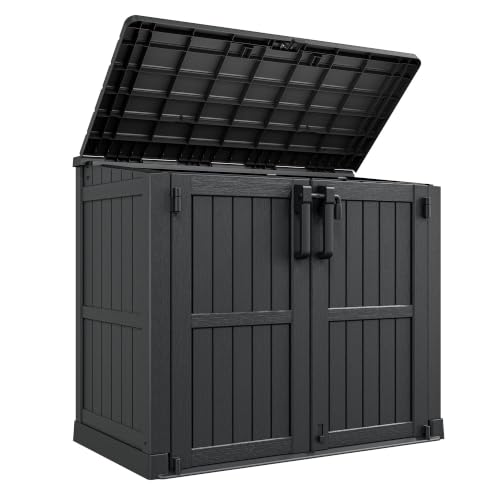
LHBcraft 36-Cubic-Foot Resin Cabinet is a lockable resin cabinet for storage, not a shelter for running a generator. Its capacity is 36 cubic feet, and its dual security design combines pre-drilled lock holes with a foot-operated bottom latch. That makes it a fit for buyers prioritizing enclosed storage and access control. The cabinet’s dimensions appear in conflicting combinations, so confirm the assembled footprint and height before ordering. As with any enclosed cabinet, keep the engine off while the generator is inside; carbon monoxide makes indoor or enclosed operation hazardous.
Bottom line: Pick this for lockable storage after confirming its assembled measurements.
How to choose a shed for a portable generator
Choose by operating mode first: a running cover is not the same as an enclosed storage cabinet. GenShed Standard Generator Shed is made for both modes, GenArmor Standard Running Tent is a running cover, and Aoxun 35-Cubic-Foot Resin Cabinet and LHBcraft 36-Cubic-Foot Resin Cabinet are storage cabinets. A generator must never run inside a shed, garage or cabinet, even with the door open; carbon monoxide is odorless and can become dangerous before it is noticed. Run it outdoors at least 20 feet from doors, windows and vents, with exhaust pointed away from the home. Then compare the generator’s actual dimensions with the cover’s usable interior and required clearances. A cover that fits the exterior footprint but blocks airflow, controls or exhaust is the wrong size.
Generator cover size and clearance
Measure the generator’s length, width and height with handles, wheels and any protruding controls included. Compare those measurements with the cover’s outer dimensions, but do not assume the outer size is the interior clearance; frame members and fabric can reduce usable space. Leave the exhaust unobstructed and follow the generator maker’s clearance guidance, especially around hot exhaust parts. For a fixed installation, also measure the path needed to move the generator into position. GenShed Standard Generator Shed is designed to remain attached while moving the generator, while a heavy resin cabinet may be less convenient to reposition. The size descriptions for LHBcraft 36-Cubic-Foot Resin Cabinet conflict, so verify its assembled measurements before ordering.
Running covers versus storage cabinets
A running cover protects an operating generator from weather while leaving it outdoors; a storage cabinet encloses equipment that is switched off. Do not treat a cabinet marketed for generator storage as a safe operating enclosure. The differences here are summarized by intended use, not by a claim that any cover makes generator operation risk-free.
| Type | Suitable mode | Key check |
|---|---|---|
| Convertible framed cover | Running outdoors and storage | Fit, airflow and exhaust clearance |
| Running tent | Running outdoors | Generator size and ventilation |
| Resin storage cabinet | Storage with engine off | Cabinet footprint and access |
For every type, keep the generator outside and route exhaust away from occupied spaces.
Generator shed safety and setup
Carbon monoxide is the critical generator hazard: never run a generator in a house, garage, shed, basement or other enclosed or partly enclosed area. The CPSC recommends at least 20 feet between a running generator and the home, with exhaust directed away from doors, windows and vents. Install battery-operated or battery-backup CO alarms on every level of the home and outside sleeping areas; test them regularly. Keep the generator dry and operate it on a level surface, away from standing water. Before placing a cover, check whether the generator maker allows that style of cover and preserve access to controls, fuel shutoff and exhaust. A weather cover cannot replace outdoor placement or safe clearance.
Frequently Asked Questions
Can a portable generator run inside a shed?
No. A shed is an enclosed space where carbon monoxide can build up, even if the door is open. Run the generator outdoors at least 20 feet from the home, with exhaust directed away from openings.
How far should a generator be from a house?
Keep a running generator at least 20 feet from doors, windows and vents, and point its exhaust away from the building. Do not run it in a garage, shed or under an enclosed porch.
Can I store a generator in a resin cabinet?
Yes, when the generator is off and the cabinet fits its dimensions. Never start or operate the generator while it is inside the cabinet because carbon monoxide can accumulate.
What should I measure before choosing a generator cover?
Measure the generator’s full length, width and height, including wheels, handles and protrusions. Compare the measurements with the cover’s usable clearance and keep the exhaust area unobstructed.
Do generator covers need ventilation?
A cover used while running must preserve airflow and leave the exhaust unobstructed; a running cover does not make indoor operation safe. Keep the generator outdoors and follow its maker’s clearance guidance.