
Shortwave Long Wire Antennas: 5 Options Compared

For a basic shortwave listening setup, Basic Longwire Antenna Kit, 100 ft is the closest match because it is a 100-foot longwire kit; choose a different design if you need a portable reel antenna or a multiband transmitting antenna.
A long-wire antenna uses a length of wire to receive radio signals, often with the wire run outdoors and connected to a receiver or matching equipment.
We earn a commission if you buy through links on this page. As an Amazon Associate I earn from qualifying purchases. Products are compared on manufacturer specifications, not hands-on testing.
- Best overall: Basic Longwire Antenna Kit, 100 ft – The 100-foot kit is explicitly made as a basic longwire for shortwave listening.
- Best for compact runs: Shortwave SWL Antenna Kit, 50 ft – The 50-foot kit gives shortwave listeners a shorter wire option.
- Best for ham bands: JYR8010-150W End-Fed Antenna – The end-fed design covers 80–10 meters and supports specified transmit modes.
| Product | Best for | Wire or element length | Design | Intended use | Shop |
|---|---|---|---|---|---|
| Basic Longwire Antenna Kit, 100 ft | Basic SWL setup | 100 ft | Longwire kit | Shortwave listening | Check Price on Amazon |
| Shortwave SWL Antenna Kit, 50 ft | Shorter wire run | 50 ft | Antenna kit | Shortwave listening | Check Price on Amazon |
| JYR8010-150W End-Fed Antenna | Multiband ham use | 131.2 ft | End-fed half wave | Ham radio, SWL | Check Price on Amazon |
| Super Antenna MS135 SuperWire, 135 ft | Custom wire builds | 135 ft | 18 AWG stranded wire | Ham, SDR, shortwave | Check Price on Amazon |
| XHDATA AN-80 Reel Antenna | Portable reception | 23 ft | Reel wire with clip | FM and shortwave | Check Price on Amazon |
Shortwave Long Wire Antennas
Compare these wire antennas and kits by their length, construction and intended role.
Basic Longwire Antenna Kit, 100 ft

The 100-foot length makes this basic longwire kit the most direct match for a listener seeking a simple shortwave antenna. Its name also identifies AM and SWL use, so it suits buyers prioritizing reception rather than a specified ham transmitting setup. A long outdoor wire can pick up more signal than a short built-in whip, but the useful result depends on placement, nearby electrical noise and the receiver connection. The kit’s contents and connection method are not described here, so confirm those before ordering if you need a particular feed line or mounting hardware.
Bottom line: Choose this kit for a basic 100-foot shortwave listening wire.
Shortwave SWL Antenna Kit, 50 ft
The 50-foot length is the key distinction: this shortwave listening kit takes less wire to deploy than the 100-foot longwire option. It fits a listener with a smaller yard or a shorter route for an outdoor wire, although 50 feet may not be the preferred length for every frequency or installation. Long-wire performance changes with wire height, orientation and the receiver’s input, not just total length. The kit is identified for SWL, but its included connectors and wire support are not detailed; check compatibility if your radio requires a specific plug.
Bottom line: Pick this for shortwave listening when a 50-foot run fits better.
JYR8010-150W End-Fed Antenna

The 40-meter radiating element and end-fed half-wave design distinguish this antenna from basic listening-wire kits. Its maker says the 1:64 transformer supports operation across 80–10-meter ham bands without constant tuning, and specifies limits of 150 watts SSB, 120 watts CW and 80 watts FT8. That makes it relevant to shortwave listeners who also want a transmitting antenna, rather than a plain receive-only wire. The product is described as an 8-band ham antenna, so buyers seeking only a simple longwire for a portable receiver may prefer a less specialized kit.
Bottom line: Choose it if you need multiband ham operation as well as shortwave reception.
Super Antenna MS135 SuperWire, 135 ft

The 135-foot roll gives DIY builders substantially more conductor than the ready-made listening kits, but it is wire stock rather than a complete antenna. It uses 18 AWG stranded tinned copper with a PTFE jacket; the maker specifies maximum RF power of 500 watts SSB or 300 watts CW/data. The low-visibility, weatherproof and UV-resistant construction suits an outdoor build where those material properties matter. Buyers must supply their own antenna connections and decide on a feed or matching arrangement, so this is less convenient than a kit intended to go directly into a listening setup.
Bottom line: Choose this wire for a custom shortwave or ham antenna build.
XHDATA AN-80 Reel Antenna
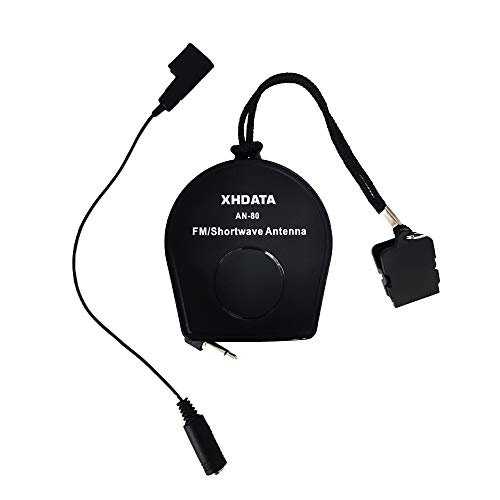
The pocketable reel format makes the AN-80 the portable option, unlike the longer wire kits intended for a fixed run. Its 23-foot wire extends from a compact reel, and a spring-loaded clip can attach to a radio’s telescoping antenna when there is no antenna jack. The maker says it is suitable for FM and shortwave radios. Its shorter length is the tradeoff for easy carrying, so listeners planning a longer outdoor wire should consider one of the kits or bulk wire instead. The clip connection also may not suit radios with a dedicated external antenna input.
Bottom line: Pick it for portable shortwave reception when a compact reel matters most.
How to choose a shortwave long wire antenna
Choose by use first: a receive-only listening kit is simpler than a transmitting antenna or a wire roll for a custom build. Shortwave spans roughly 3 to 30 MHz, corresponding to wavelengths from about 100 to 10 meters; a wire’s length and installation affect how it works across that broad range. A resonant half-wave wire is about half a wavelength at its target frequency, while a random-length wire usually needs a suitable receiver input or matching arrangement. If you want to listen only, prioritize manageable wire length and a connection that matches your radio. For transmitting, verify the antenna’s band coverage, power limits and matching requirements before connecting a transmitter.
Wire length, height and placement
Raise the wire as high as practical and keep it away from power lines; never install an antenna where it could fall onto electrical conductors. For reception, a longer wire is not automatically better if it must run beside household wiring or noisy electronics. The route, height, nearby metal and orientation can change reception, so a 50-foot run in a quieter, clearer location may work better than a longer run beside a power supply. Measure the available route before selecting a kit, and leave room for a safe support and a feed line. With less than 50 feet of usable route, the 50-foot kit or compact reel is more practical than a 100- or 135-foot wire.
Use this guide to match the construction to the installation:
| Need | Suitable type | What to plan for |
|---|---|---|
| Portable listening | Reel antenna | Shorter wire and radio connection |
| Basic outdoor reception | SWL longwire kit | Clear route and support points |
| Custom installation | Bulk wire | Feed line and matching arrangement |
| Ham transmission | Multiband end-fed antenna | Band and power limits |
Safe installation and common mistakes
Keep antennas and their supports well clear of overhead power lines, and take the wire down or disconnect it from radio equipment during thunderstorms. A receiving wire can conduct lightning-related surges even when it is not used to transmit. Avoid routing the wire where people can walk into it, and do not rely on a tree branch or temporary support to keep a taut wire secure in changing weather. A common mistake is connecting a long wire directly to a transmitter without checking whether it is designed for transmitting and whether the feed system matches the radio. Receive-only wire kits and general-purpose wire stock should not be treated as transmit antennas without confirming their intended use and safe connection.
Frequently Asked Questions
How long should a shortwave listening wire be?
A practical listening wire can range from a few dozen feet to more than 100 feet, depending on available space and the radio connection. Shortwave spans about 3–30 MHz, so no single length is resonant across the entire range.
Does a long wire antenna need to be outdoors?
An outdoor run generally avoids some indoor electrical noise and lets the wire be placed higher. Keep any outdoor antenna well away from power lines, and disconnect it from the receiver during thunderstorms.
Can I transmit through a shortwave listening antenna?
Only transmit through an antenna specified for transmitting and within its power limits. A receive-only listening kit or plain wire roll does not by itself confirm a safe transmitter match.
What is the difference between random wire and end-fed half wave?
A random wire is a length that is not necessarily a half-wavelength on the operating frequency and may need matching. An end-fed half-wave uses a radiating element intended to be roughly half a wavelength on its target band, with a feed arrangement designed for that configuration.
How high should I install a long wire antenna?
Higher placement can improve clearance and reduce nearby obstructions, but safe distance from power lines is the priority. Choose a support height that keeps the wire from sagging into walkways or hazardous conductors.