
Simmer Plates for Gas Stoves: 5 Options Compared

For most gas-stove cooks seeking gentler heat, Cast Iron Heat Diffuser, 9.45-Inch is the closest match because its 9.45-inch raised cast iron platform separates cookware from direct flames. Choose another option if you need a smaller plate, a folding handle, a two-size set, or a thin steel diffuser.
A simmer plate, also called a heat diffuser, sits between the burner and cookware to soften direct heat; burner and cookware fit matter as much as diameter.
We earn a commission if you buy through links on this page. As an Amazon Associate I earn from qualifying purchases. Products are compared on manufacturer specifications, not hands-on testing.
- Best overall: Cast Iron Heat Diffuser, 9.45-Inch – Its 9.45-inch elevated cast iron platform is designed to block direct flame during gentle simmering.
- Best for cast iron: Heat Equalizer Cast Iron Plate, 9.25-Inch – The 9.25-inch cast iron plate is 0.4 inch tall and fits a compact single-plate setup.
- Best for a handle: Heat Diffuser with Folding Handle, 8-Inch – The 8-inch plate has a folding polypropylene grip for moving and storage.
| Product | Best for | Material | Plate diameter | Height | Shop |
|---|---|---|---|---|---|
| Cast Iron Heat Diffuser, 9.45-Inch | Gentle simmering | Cast iron | 9.45 in | 1.7 in | Check Price on Amazon |
| Heat Equalizer Cast Iron Plate, 9.25-Inch | Compact cast iron | Cast iron | 9.25 in | 0.4 in | Check Price on Amazon |
| Heat Diffuser with Folding Handle, 8-Inch | Easy handling | — | 8 in | 0.4 in | Check Price on Amazon |
| SimmerMat Steel Diffuser, 7.875-Inch | Thin steel plate | Zero-carbon steel | 7.875 in | 0.004 in | Check Price on Amazon |
| WUWEOT Aluminum Diffuser Set, 9.3 and 11-Inch | Two plate sizes | Aviation aluminum | 9.3 and 11 in | — | Check Price on Amazon |
Simmer Plates for Gas Stoves
Compare plate material, diameter, and shape to match a diffuser to your burner and cookware.
Cast Iron Heat Diffuser, 9.45-Inch

The 1.7-inch raised platform sets this diffuser apart by holding cookware above the burner while its circular cast iron plate blocks direct heat. At 9.45 inches across, it suits cooks looking to reduce the intensity of a low gas flame for sauces, soups, or stews. The elevated design also gives it a different profile from flat plates. Its larger height may be a poor fit where cookware needs to sit close to the burner or the grate has limited clearance.
Bottom line: Choose this if you want a raised cast iron barrier between the flame and your pot.
Heat Equalizer Cast Iron Plate, 9.25-Inch
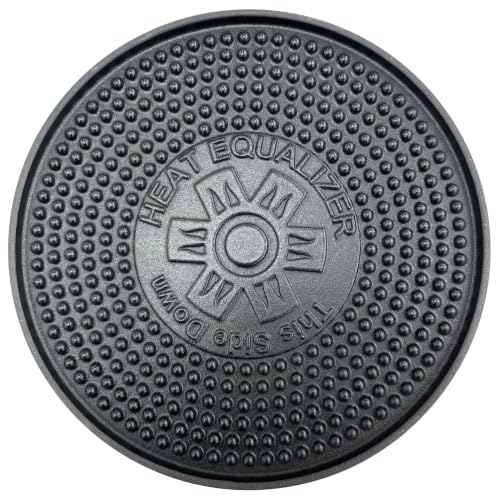
The 0.4-inch profile makes this 9.25-inch cast iron plate much flatter than the raised platform design of Cast Iron Heat Diffuser, 9.45-Inch. It is compatible with gas, electric, glass, and ceramic stovetops, while induction is excluded despite appearing in the product name. The maker positions it for simmering and defrosting as well as heat spreading. At 3 pounds, it is a substantial plate to lift and store, so it suits cooks who want cast iron but do not need a lightweight diffuser.
Bottom line: Pick this for a low-profile cast iron plate and broad non-induction stove compatibility.
Heat Diffuser with Folding Handle, 8-Inch

The folding polypropylene handle is the distinctive feature here, giving this 8-inch diffuser a grip for moving or storing the plate. Its 0.4-inch height keeps it relatively flat, and the maker says it works on gas and electric stovetops. This smaller diameter may suit compact cookware or burners better than the 9-inch-plus plates, though the smaller coverage may be less suitable for a wide pot base. The plate is dishwasher safe, according to the maker.
Bottom line: Choose this if a folding grip and compact 8-inch plate are your priorities.
SimmerMat Steel Diffuser, 7.875-Inch
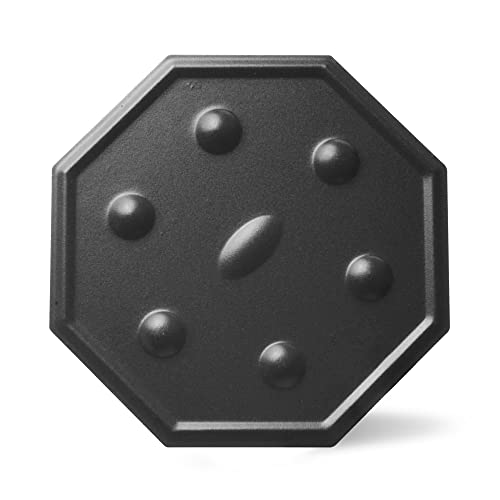
The very thin steel construction distinguishes this 7.875-inch SimmerMat from the heavier cast iron choices. The maker recommends using it with low heat to simmer or warm foods such as sauces, oatmeal, and chocolate, and says it is dishwasher safe. Its small diameter and 0.004-inch listed height make it a notably different format, so it may suit cooks seeking a slim plate rather than a raised stand. A broad pot base may extend beyond its coverage.
Bottom line: Pick this for a thin, small-diameter steel diffuser used over low heat.
WUWEOT Aluminum Diffuser Set, 9.3 and 11-Inch

The two included diameters, 9.3 and 11 inches, make this set the only option here with two plate sizes. The maker identifies the material as aviation aluminum with a non-stick coating, and says the plates heat quickly and are intended for gas stoves. The larger plate can provide more coverage for a wider cookware base, while the smaller one may be easier to pair with a compact burner. The use also includes defrosting, so it is not solely a simmer plate.
Bottom line: Choose this set if you want two aluminum plate sizes for different cookware.
How to choose a gas stove simmer plate
Start with the burner and cookware footprint, then choose the plate material and profile. A diffuser should sit flat and stable on the grate; a plate smaller than the pot base can leave the outer area directly exposed to heat. A raised plate can reduce direct flame contact, but its height changes how cookware sits and can affect stability. Cast iron has more mass than thin steel or aluminum, so it takes longer to warm and cool. For a pot base under 8 inches, an 8-inch diffuser may provide a closer size match; for a wider base, compare plates around 9 to 11 inches and ensure the full pot base is supported. Never allow a diffuser to overhang the burner grate unstably.
Flat and raised diffuser designs
Flat plates and raised platforms manage flame differently. A flat plate rests close to the grate and spreads heat across a surface; a raised platform holds the pot higher while a plate interrupts direct flame. That distinction matters if your cookware has a narrow base or a handle that sits close to the burner. The product dimensions here range from 0.004 inch to 1.7 inches in height, so check the available vertical clearance beneath nearby cookware handles and cabinets. Aluminum and steel tend to respond to heat faster than thick cast iron, while cast iron retains heat after the burner is reduced. Use low heat and make burner adjustments gradually, since the diffuser and cookware continue transferring stored heat after the flame changes.
Matching a diffuser to cookware and burner
Measure the flat contact area of the pot or pan base, not its rim, before choosing a diffuser. A 9-inch-wide pan may have a smaller flat base, while thin or curved cookware can rock on a narrow plate. Set the diffuser squarely on the grate, center the cookware, and confirm it does not wobble before heating. The table gives a simple starting point based on product dimensions; actual fit depends on the grate and pot base.
| Cookware need | Starting choice |
|---|---|
| Compact pot or pan | 8-inch diffuser |
| Common mid-size base | 9.25 to 9.45 inches |
| Different cookware sizes | Set with 9.3- and 11-inch plates |
Do not use a diameter alone as proof of fit: a stable three-point contact on the stove grate and a supported cookware base are essential.
Safe use and care for simmer plates
Use a simmer plate only on a burner and stove type for which it is compatible, and keep the flame contained beneath the plate rather than licking around its edges. A diffuser becomes hot and remains hot after the burner is off, so use a dry oven mitt or handle designed for heat when moving it; a stay-cool grip can still warm if left over the burner. Avoid covering nearby burners or blocking air openings around the cooktop. Clean only after the plate has cooled. Cast iron can rust if stored damp, so dry it promptly; follow the care directions for coated aluminum or steel surfaces.
Frequently Asked Questions
How large should a gas stove simmer plate be?
Choose a plate that supports the flat base of the cookware and rests securely on the grate. Common diffuser diameters are about 8 to 11 inches, but measure the pot base and burner area before selecting.
Can a simmer plate stay on the burner while cooking?
A diffuser is meant to be used between the burner and cookware during cooking, but it becomes very hot and retains heat after shutoff. Keep the flame under the plate and use a dry mitt or appropriate handle to move it only after cooling.
Does a heat diffuser work with induction cooking?
A gas-stove diffuser is not automatically induction compatible; the Heat Equalizer is explicitly described as excluding induction. Induction requires cookware and accessories that are compatible with the cooktop’s magnetic heating system.
How do I stop a pot from wobbling on a diffuser?
Use a diffuser that sits flat on the grate and supports the cookware’s flat base without overhang. Check stability with the burner off before cooking, especially when using a raised platform or a pot with a narrow bottom.