
Skull Caps for Helmets: 5 Liners Compared

For a versatile helmet liner, Cotton Skull Caps, 2-Pack stands out for its 100% cotton fabric and stated 21.2–23.2-inch head fit. Choose a different option if you want a multi-cap pack, cooling mesh, or a more explicitly warm-weather-focused design.
A skull cap is a close-fitting fabric layer worn beneath a helmet to absorb sweat and reduce direct contact between the helmet and scalp; fit and material matter because added bulk can affect helmet comfort.
We earn a commission if you buy through links on this page. As an Amazon Associate I earn from qualifying purchases. Products are compared on manufacturer specifications, not hands-on testing.
- Best overall: Cotton Skull Caps, 2-Pack – Its 100% cotton fabric and stated 21.2–23.2-inch fit give buyers a clear basis for choosing.
- Best for frequent rotation: Haysandy Cooling Skull Caps, 6-Pack – The six-cap set gives you more liners to exchange and wash.
- Best for hot-weather mesh: THINDUST Camo Mesh Skull Caps, 3-Pack – Its camouflage mesh fabric is designed to breathe and dry quickly.
| Product | Best for | Fabric | Pack count | Size or fit | Shop |
|---|---|---|---|---|---|
| Cotton Skull Caps, 2-Pack | Cotton preference | 100% cotton | 2 caps | 21.2–23.2 in head | Check Price on Amazon |
| Haysandy Cooling Skull Caps, 6-Pack | Frequent rotation | Polyester and spandex | 6 caps | One size | Check Price on Amazon |
| THINDUST Camo Mesh Skull Caps, 3-Pack | Warm-weather mesh | 63% polyester, 27% cationic fiber | 3 caps | One size | Check Price on Amazon |
| Cooling Skull Caps, 3-Pack | Stretchy liner | 90% polyester, 10% spandex | 3 caps | Medium | Check Price on Amazon |
| QINGLONGLIN Cooling Mesh Skull Caps, 3-Pack | Ventilated mesh | 88% polyester, 12% spandex | 3 caps | One size | Check Price on Amazon |
Skull Caps for Helmets Compared
Compare each liner’s fabric and pack size, then weigh its fit and intended use against your helmet setup.
Cotton Skull Caps, 2-Pack

For buyers who prefer natural-fiber fabric, this two-cap set uses 100% cotton rather than a polyester-spandex blend. The thin, lightweight material is intended for helmet lining as well as sleep, cycling, and running, and the fit is a 21.2–23.2-inch head circumference. That fit range makes it easier to compare against your own measurement before choosing. Cotton may feel different from the cooling mesh options, so this is a better match for someone prioritizing fabric composition than a specifically mesh construction.
Bottom line: Choose this set if cotton and a head-fit range are your priorities.
Haysandy Cooling Skull Caps, 6-Pack
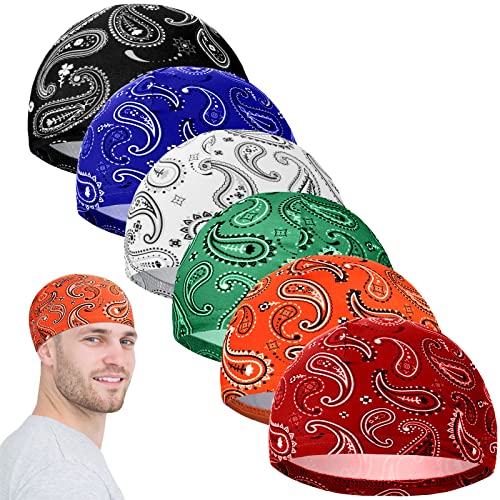
The six-cap quantity is the distinguishing feature here, giving you more liners to rotate through washing than the smaller sets. The polyester-and-spandex fabric is described as lightweight, breathable, elastic, sweat-absorbent, and cooling-feel, with use under hard hats and motorcycle helmets as well as for cycling and running. Its one-size format leaves no stated head-circumference range to compare, so buyers with an unusually small or large head should verify fit before ordering. Choose it when having several caps available matters more than a defined sizing range.
Bottom line: Pick this set when you want the largest rotation of liners.
THINDUST Camo Mesh Skull Caps, 3-Pack

The camouflage mesh construction makes this set distinct from the cotton and non-mesh fabric options. Its blend is 63% polyester, 27% cationic fiber, and 10% spandex, and the maker describes the material as breathable, moisture-wicking, and quick-drying for hot outdoor activities. The set includes three caps and is intended for use under motorcycle, cycling, sports, and hard-hat helmets, or direct wear. Its one-size fit has no numerical head range, which may be a limitation if you need to match a measured circumference.
Bottom line: Choose it for a three-cap camouflage mesh set for warm conditions.
Cooling Skull Caps, 3-Pack
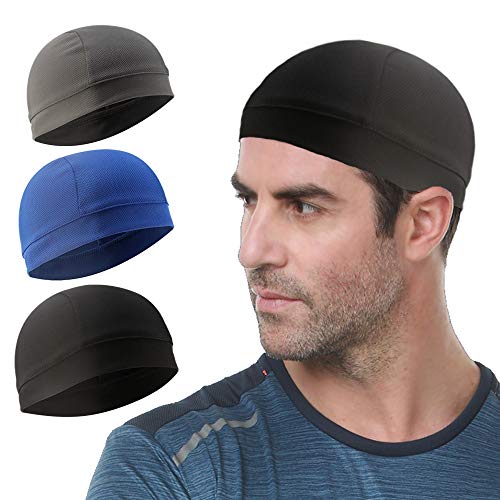
Unlike the one-size sets, this three-cap option is identified as medium and gives physical dimensions of 9.8 inches long by 7.4 inches wide. Its 90% polyester and 10% spandex fabric is described as breathable, stretchy, moisture-wicking, and quick-drying, with helmet use spanning motorcycle, cycling, sports, and hard hats. The fabric is also presented for colder-weather thermal retention, so it is not limited to hot-weather use.
Bottom line: Pick this set if a medium stretch liner suits your helmet routine.
QINGLONGLIN Cooling Mesh Skull Caps, 3-Pack
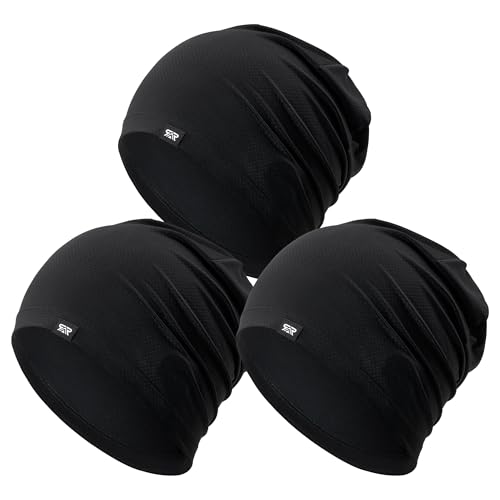
The full 3D mesh structure sets this three-cap option apart, with a blend of 88% polyester and 12% spandex. The maker describes ventilation holes, airflow, moisture-wicking, quick-drying, and a cooling effect for wear beneath helmets, alongside hard-hat, gym, cycling, running, and workout use. The non-slip fit is also emphasized, which may appeal if a liner shifting during activity is a concern. The product is one size with no numerical head range, so buyers who need a precise fit reference may prefer the measured range offered by another option.
Bottom line: Choose it if ventilated 3D mesh and a non-slip fit are priorities.
How to choose a skull cap helmet liner
Start with fit, then choose fabric for the conditions and the way you wear the helmet. A liner should sit smooth without wrinkles or a thick folded edge; bunching under a helmet can create pressure points and interfere with its intended fit. For close-fitting motorcycle or bicycle helmets, try the helmet with the liner and confirm the retention system still feels snug and stable. Cotton absorbs moisture but dries more slowly than quick-dry synthetics; polyester-spandex blends are commonly chosen for stretch and faster drying. If your head measures outside a range, prioritize a cap with a clear fit reference rather than assuming “one size” will work.
Fabric and airflow under helmets
Mesh helps air move through a liner, while a smoother knit covers more of the scalp; neither fabric replaces a helmet’s ventilation design. Polyester-spandex blends are common in athletic liners because stretch helps them conform and synthetic fibers typically dry faster than cotton. Cotton is a natural-fiber alternative, but a damp cotton layer can remain wet longer during sustained activity. For hot-weather cycling or outdoor work, choose a breathable mesh option; for skin feel and natural fiber preference, cotton may be preferable. A liner should not add enough thickness to loosen the helmet or press uncomfortably against the head.
Fit and helmet safety checks
A skull cap must not compromise the fit or protective function of the helmet. Motorcycle helmets certified to DOT requirements should remain snug and level, and bicycle helmets should sit level with the retention straps adjusted after adding any liner. Avoid bulky seams, knots, or folded fabric beneath pressure points. For a practical decision rule, if a liner makes the helmet shift when you move your head or loosens the retention system, remove it or choose a thinner-fitting cap. Keep the helmet’s interior padding and ventilation openings unobstructed, and do not treat a fabric liner as protective equipment.
Care and liner rotation
Regular washing helps remove sweat and skin oils that accumulate in a helmet liner. Follow the cap’s fabric-care label; polyester-spandex garments are generally washed gently and air-dried to preserve stretch, while cotton can shrink if exposed to high heat. Rotate a clean, fully dry liner into the helmet rather than storing a damp cap inside it, since trapped moisture can cause odor and degrade comfort. A multi-pack can help maintain a rotation during frequent use, but the cap should not replace cleaning the helmet’s removable comfort pads according to its manufacturer’s care guidance.
Frequently Asked Questions
Can I wear a skull cap under a motorcycle helmet?
Yes, if the cap is thin and the helmet still fits snugly and level. Recheck the retention system with the liner in place; remove it if the helmet shifts or feels loose.
How tight should a helmet liner fit?
A liner should stay in place without wrinkles or pressure points. If it bunches or makes the helmet move when you turn your head, use a thinner or better-fitting cap.
Is cotton or polyester better under a helmet?
Cotton suits buyers who prefer natural fiber, while polyester blends are commonly used for stretch and faster drying. For repeated hot-weather activity, a breathable mesh design can help airflow through the fabric.
How often should I wash a helmet skull cap?
Wash a cap after sweaty use, and let it dry completely before wearing or storing it in the helmet. Rotate spare caps if you use a helmet frequently, and follow the fabric-care label to limit shrinkage or damage.
Can a skull cap replace helmet padding?
No, a fabric cap does not replace protective helmet padding. Keep the helmet’s fit system and comfort pads in place, and make sure a liner does not loosen the helmet or block its vents.