
Slip Leads for Small Dogs: 3 Lengths Compared

BTINESFUL 7-Foot Slip Lead suits most small-dog owners because it pairs a 7-foot length with a 1/4-inch nylon rope and is sized for small dogs. Choose a 6-foot lead if you want less leash length to manage; a slip lead combines leash and collar in one adjustable loop.
For a dog that pulls hard or has neck or breathing concerns, consider a well-fitted harness instead: a slip lead tightens when tension is applied.
We earn a commission if you buy through links on this page. As an Amazon Associate I earn from qualifying purchases. Products are compared on manufacturer specifications, not hands-on testing.
- Best overall: BTINESFUL 7-Foot Slip Lead – Its 7-foot, 1/4-inch nylon rope is specifically sized for small dogs.
- Best for shorter reach: 6-Foot Dog Training Slip Lead – The 6-foot length gives less leash to manage than the 7-foot options.
- Best for color choice: MayPaw 7-Foot Slip Lead – The maker offers more than 13 colors, along with a 7-foot, 1/4-inch rope.
| Product | Best for | Length | Rope material | Shop |
|---|---|---|---|---|
| BTINESFUL 7-Foot Slip Lead | Everyday walks | 7 ft | Nylon | Check Price on Amazon |
| 6-Foot Dog Training Slip Lead | Shorter reach | 6 ft | — | Check Price on Amazon |
| MayPaw 7-Foot Slip Lead | Color selection | 7 ft | Nylon | Check Price on Amazon |
Slip Leads for Small Dogs
Compare the three 1/4-inch options by length, material, and the feature that sets each apart.
BTINESFUL 7-Foot Slip Lead

For a small dog, this lead combines a 7-foot length with a 1/4-inch nylon rope and is explicitly sized for small dogs and puppies. The adjustable loop serves as both leash and collar, so the maker says it can be used without a separate collar or harness. The maker also says the loop tightens when a dog pulls and loosens when the behavior is corrected. The 7-foot reach gives more slack than a 6-foot lead, which can take more attention to manage in crowded areas.
Bottom line: Choose this if your small dog needs a 7-foot slip lead made from nylon rope.
6-Foot Dog Training Slip Lead

The 6-foot length distinguishes this lead from the two 7-foot choices, while its 1/4-inch thickness matches their rope diameter. The maker describes an adjustable loop that combines leash and collar, and says tension tightens the loop while corrected behavior lets it loosen. This shorter reach may be easier to handle where you want less slack, but it gives a dog less distance from the handler than a 7-foot lead.
Bottom line: Pick this when a 6-foot lead is more useful than the extra reach of a 7-foot option.
MayPaw 7-Foot Slip Lead
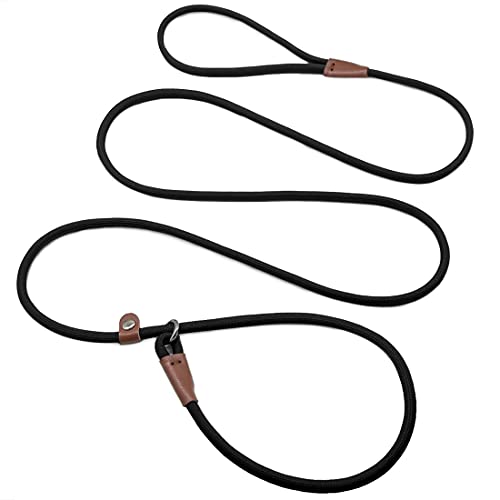
The lead measures 7 feet by 1/4 inch and uses high-density nylon rope. Its adjustable slip loop combines leash and collar, and the maker says the design is intended to provide control while walking or training. The longer reach may suit owners who want more room than a 6-foot lead provides, but it leaves more slack to manage around other dogs, people, or obstacles.
Bottom line: Choose this if color selection matters and you want a 7-foot nylon slip lead.
How to Choose a Slip Lead for a Small Dog
Choose length first: a 6-foot lead offers less slack to manage, while a 7-foot lead gives a dog more reach. The three options here use 1/4-inch rope, so length and the specific features are the useful distinctions. Slip leads work through a loop that tightens under leash tension; this makes loose-leash handling important, not optional. A lead that stays tight can put pressure on a dog’s neck. For small dogs, keep the loop positioned high on the neck and stop to reset it if it slides down. A dog that coughs, pulls persistently, or has a neck or breathing problem is a better candidate for a properly fitted harness than a tightening lead.
Slip Lead Length and Rope Size
The available lengths are 6 and 7 feet, and every included lead has a 1/4-inch rope diameter. A 6-foot lead reduces slack in close quarters; a 7-foot lead gives more room on open walks but calls for more active leash handling near hazards. Small dogs vary in neck size, so measure around the neck where the loop will sit and confirm that the adjustable loop can fit without choking or slipping over the head. Rope thickness alone does not establish a lead’s safe working load, and these options do not provide a load rating. Do not use a slip lead to tether a dog unattended or as a tie-out; a tightening loop is intended for active handling.
Slip Lead or Harness for a Small Dog
A slip lead combines a leash and an adjustable neck loop, while a harness distributes leash contact around the body instead of concentrating it at the neck. A slip lead may be convenient for brief, supervised walks when the dog stays responsive and the loop remains correctly positioned. A harness is the safer starting point for dogs that strain against the leash, cough, have breathing trouble, or have a neck condition. A harness must fit snugly enough that the dog cannot back out, but it should not restrict shoulder movement. With either setup, use a leash length you can control and avoid sudden jerks, which can cause injury.
Using a Slip Lead Safely
Check the loop fit before each walk: it should sit high on the neck and loosen when leash tension is released. Keep the lead in hand and supervise continuously; never leave a slip lead on an unattended dog, because the loop can tighten or catch on objects. Introduce the lead calmly and use gentle guidance rather than sharp corrections. Stop if the dog coughs, gags, struggles to breathe, or the loop slips toward the throat, and switch to a well-fitted harness if neck pressure is a concern. Inspect rope, knots, and any connecting hardware before use; fraying or a damaged connection is a reason to stop using the lead.
Frequently Asked Questions
Is a slip lead safe for a small dog?
A slip lead can be used under close supervision if the loop stays high on the neck and loosens when leash tension ends. Choose a harness instead for a dog that pulls hard or has breathing or neck concerns.
How long should a small-dog leash be?
A 6-foot leash is a practical choice when you want less slack to manage, while 7 feet gives more reach on open walks. Use the shorter length in crowded areas where keeping the dog close is important.
Can a slip lead replace a collar?
Yes, a slip lead’s adjustable loop can serve as both leash and collar during a walk. Remove it after the walk and do not leave a tightening loop on an unattended dog.
Where should a slip lead sit on a dog’s neck?
Position the loop high on the neck, behind the ears, and make sure it loosens when tension is released. Stop and reposition it if it slides toward the throat.
Should a small dog wear a harness or slip lead?
A harness is preferable for dogs that pull, cough, or have neck or breathing concerns because it avoids concentrating leash pressure on the neck. A slip lead is best reserved for supervised handling when the dog walks without sustained tension.