
Sougayilang Fishing Rods Compared by Length and Style

Sougayilang 6’10” Spinning Combo suits most anglers seeking a Sougayilang fishing rod because its 6-foot-10-inch, two-piece spinning setup targets bass, trout and panfish. Choose Sougayilang 12 ft Surf Combo for surf fishing or Sougayilang 5.91 ft Telescopic Kit when compact transport and an included kit matter more than a conventional multi-piece rod.
Fishing rod combos pair a rod with a reel; rod length, construction and reel style help determine where and how they fit.
We earn a commission if you buy through links on this page. As an Amazon Associate I earn from qualifying purchases. Products are compared on manufacturer specifications, not hands-on testing.
- Best overall: Sougayilang 6’10” Spinning Combo – The 6-foot-10-inch spinning combo is a two-piece setup aimed at bass, trout and panfish.
- Best for surf fishing: Sougayilang 12 ft Surf Combo – Its 12-foot, three-piece rod is paired with an 8000 spinning reel.
- Best for travel: Sougayilang 5.91 ft Telescopic Kit – The 5.91-foot telescopic rod comes with a carrier bag, reel and accessories.
| Product | Best for | Length | Pieces | Reel style | Shop |
|---|---|---|---|---|---|
| Sougayilang 6’10” Spinning Combo | Bass and panfish | 6 ft 10 in | 2 | Spinning | Check Price on Amazon |
| Sougayilang 7 ft Inshore Combo | Inshore and trolling | 7 ft | 2 | Trolling | Check Price on Amazon |
| Sougayilang 5.9 ft MH Spinning Combo | Compact freshwater use | 5.9 ft | 2 | Spinning | Check Price on Amazon |
| Sougayilang 5.91 ft Telescopic Kit | Travel and portability | 5.91 ft | Telescopic | Spinning | Check Price on Amazon |
| Sougayilang 12 ft Surf Combo | Beach and pier | 12 ft | 3 | Spinning | Check Price on Amazon |
Sougayilang Fishing Rod Combos
Compare each combo’s length, construction and reel style against the water and transport needs you have.
Sougayilang 6’10” Spinning Combo

Among these Sougayilang options, this 6-foot-10-inch model is a conventional spinning combo aimed at bass, trout and panfish. Its two-piece graphite-composite blank has stainless steel guides and camouflage EVA handles, and the SL3000 reel is included. The maker says the guides work with monofilament and braided line. This length and setup suit anglers looking for a multipurpose freshwater rod rather than a long surf rod or a travel kit. The tradeoff is that it does not offer the telescoping portability or the 12-foot reach of other choices here.
Bottom line: Choose this for a standard-length spinning setup for bass, trout or panfish.
Sougayilang 7 ft Inshore Combo

The 7-foot inshore combo stands apart with a trolling reel and a right-hand handle orientation. The two-piece rod uses a carbon-fiber and fiberglass composite blank, stainless steel guides and full-length cork grips. The maker presents it for trolling, live bait fishing and casting, and names catfish, salmon or steelhead, and striper bass among its targets. Its length and grip style suit anglers who want a conventional two-piece rod with cork contact points. The limitation is the specified right-hand orientation, which may not suit anglers who prefer a left-hand retrieve.
Bottom line: Pick this if you want a 7-foot cork-grip combo with a right-hand trolling reel.
Sougayilang 5.9 ft MH Spinning Combo

At 5.9 feet, this medium-heavy combo is the shortest conventional two-piece rod in the group. Its carbon-fiber blank is paired with a spinning reel, and the maker describes the action as medium heavy for mid-water searching and bottom fishing. That shorter length can suit anglers fishing tighter freshwater spaces where a longer rod is awkward to maneuver. The tradeoff is reach: anglers prioritizing casting distance or keeping line above surf will be better served by a longer model, particularly the 12-foot surf combo.
Bottom line: Choose this for a shorter medium-heavy rod in compact freshwater settings.
Sougayilang 5.91 ft Telescopic Kit
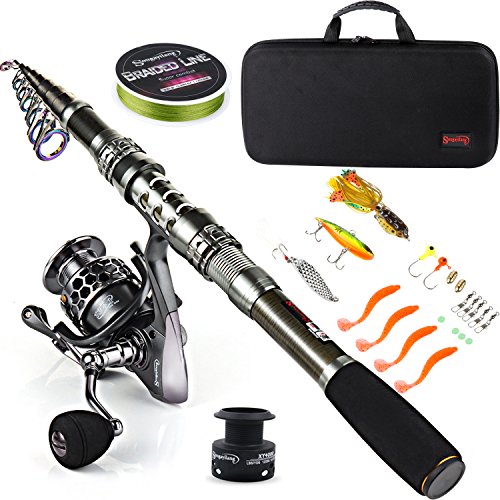
This is the travel-oriented choice: its 5.91-foot rod telescopes and the kit includes a spinning reel, carrier bag, three lures, line and accessories. The rod combines carbon fiber with fiberglass and uses SIC ceramic guide rings. The included set can suit someone who wants basic gear packaged together for freshwater or saltwater outings. The key tradeoff is its telescoping construction, unlike the separate-piece conventional rods here; anglers choosing a rod for a specific fishing technique should weigh that format against the conventional options.
Bottom line: Pick this when compact storage and an included accessory kit are priorities.
Sougayilang 12 ft Surf Combo

The 12-foot surf combo is the clear reach-focused option, with a three-piece rod and an 8000 spinning reel. Its cross-wrapped carbon and fiberglass construction is intended for beach, jetty and pier use. The maker specifies a baitfeeder-style slow-drop function, 30 kg maximum drag and a 4.7:1 gear ratio. This combination suits anglers targeting surf settings who want a long rod and a large reel. Its 12-foot length and three-piece assembly make it less suited to tight casting spaces or buyers prioritizing compact transport.
Bottom line: Choose this for beach, jetty or pier fishing where a 12-foot rod fits.
How to choose a Sougayilang fishing rod
Start with the water and casting space, then choose length and reel style. Rod length affects casting leverage and line clearance: a 12-foot surf rod is built for a different setting than a roughly 6-foot freshwater rod. Spinning combos suit anglers using a spinning reel; a trolling-reel combo is a distinct setup, so confirm the reel style and handle orientation match how you fish. Rod power describes resistance to bending, while action describes where the blank bends; the medium-heavy label on Sougayilang 5.9 ft MH Spinning Combo refers to power, not its length. As a practical rule, choose a rod around 6 feet for tight freshwater spaces and reserve 12-foot rods for open surf or pier areas where the added length is useful.
Rod length and piece count for transport
Rod length describes the assembled fishing length, not how small a rod packs for travel. Conventional two-piece rods separate at a joint; three-piece construction breaks down further, while telescopic rods collapse into nested sections. Those formats have different carry profiles, so compare assembled length and collapsed dimensions when storage space is limited. The measurements here give assembled lengths, but not a collapsed length for each model. Check the travel space you have before choosing a rod based on portability alone. A telescopic design is the most direct fit when compact transport is the priority; select a conventional multi-piece option when your main need is a particular rod length or fishing setup.
Match rod style to fishing location
Surf fishing favors longer rods because extra length can help keep line clear of breaking waves and reach water beyond the shoreline. A 12-foot rod is a specialized choice, not a universal upgrade: shorter rods are easier to manage around tight banks, brush or crowded areas. For inland bass, trout and panfish fishing, a conventional spinning combo around 6 to 7 feet is a more general fit. Trolling is different from casting because the line is presented behind a moving boat; choose a trolling-reel setup when that is the planned method, rather than assuming any spinning combo is interchangeable. Make the location and technique decision before comparing included accessories.
Rod and reel checks before fishing
Check the rod’s line path, joint connections and reel orientation before making a cast. Guides should be aligned toward the reel, and each rod section should seat fully without forcing a joint; loose sections can separate under load. On a spinning reel, the bail manages line release and retrieval, while a baitfeeder-style function on a reel changes how a bait presentation can release line. Confirm the handle side is comfortable before fishing, especially on a right-hand reel. In saltwater, rinse rod guides and reel surfaces with fresh water after use and dry them before storage; salt residue can corrode metal parts. Never exceed the rod or reel’s actual limits when those limits are known.
Frequently Asked Questions
What rod length works for general freshwater fishing?
A roughly 6- to 7-foot rod is a useful general range for many freshwater situations. Shorter lengths are easier to manage around tight cover, while longer rods can provide more casting leverage in open space.
Is a telescopic fishing rod good for travel?
A telescopic rod is designed to collapse into nested sections, making it a practical format when packed size matters. Compare its collapsed dimensions with your bag or storage space before choosing it for a trip.
What does medium-heavy rod power mean?
Medium-heavy describes the rod’s resistance to bending, not the rod’s length or where it bends. Match power to the lure, line and fish size you plan to handle, using the rod’s specified limits when available.
How many rod pieces are easier to carry?
Three-piece rods separate into shorter sections than two-piece rods of the same assembled length. Telescopic rods collapse differently, so compare actual packed dimensions rather than relying on piece count alone.
How should I care for a rod after saltwater fishing?
Rinse the rod guides and reel with fresh water after saltwater use, then dry the equipment before storing it. Salt residue can corrode metal components, so pay particular attention to guides and reel surfaces.