
Libre 3 Plus Sensor Covers: 5 Options Compared

For most people seeking Libre 3 Plus sensor covers, Not Just a Patch Air stands out for its compatibility with Libre 3 and Libre 3 Plus and breathable, edge-to-edge adhesive. Choose Amolyfe Hard-Cap Covers instead if you want a hard cap for added bump protection, or compare the other covers for their pack size and adhesive construction.
Overpatches are adhesive covers worn around a continuous glucose monitor (CGM) sensor; they do not replace the sensor itself.
We earn a commission if you buy through links on this page. As an Amazon Associate I earn from qualifying purchases. Products are compared on manufacturer specifications, not hands-on testing.
- Best overall: Not Just a Patch Air – Purpose-built for Libre 3 and Libre 3 Plus, with a non-stick center and breathable micropore material.
- Best for bump protection: Amolyfe Hard-Cap Covers – Includes a hard cap in addition to adhesive patches.
- Best for a larger pack: HECHUAN Transparent Covers – Comes with 50 transparent covers and a center without adhesive.
| Product | Best for | Pack size | Center design | Material or protection | Shop |
|---|---|---|---|---|---|
| Not Just a Patch Air | Breathable coverage | 20 patches | Non-stick center | Non-woven micropore | Check Price on Amazon |
| Amolyfe Hard-Cap Covers | Bump protection | 20 patches + 1 cap | — | Hard cap; latex-free adhesive | Check Price on Amazon |
| HECHUAN Transparent Covers | Transparent 50-pack | 50 patches | No glue in center | — | Check Price on Amazon |
| Ceeport Tan Adhesive Patches | Cotton patch material | 30 patches | No glue in center | Natural cotton | Check Price on Amazon |
| Onida Tan Covers | Pre-cut backing | 20 patches | No glue in center | Breathable; latex-free | Check Price on Amazon |
Libre 3 Plus Sensor Covers Compared
Compare center construction, materials and included protection to find the overpatch style that suits your routine.
Not Just a Patch Air

For a breathable, thin overpatch made specifically for Libre 3 and Libre 3 Plus, this option uses non-woven micropore material and a non-stick center. The 20 beige patches are described as stretchable and flexible. The maker says they are designed to hold for 15 or more days, including through workouts, sweat and swimming. That is a maker claim, not a guarantee for every wearer; skin, placement and activity can affect adhesion. Choose another style if you want a hard cap or a larger pack.
Bottom line: Choose this if breathable, flexible coverage and stated Libre 3 Plus compatibility are your priorities.
Amolyfe Hard-Cap Covers
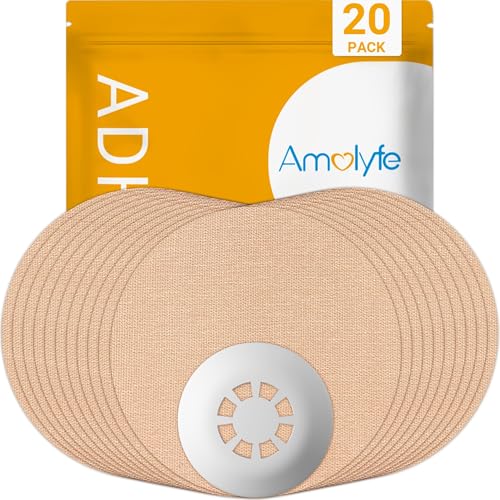
The hard cap sets this option apart from covers that rely on an adhesive patch alone. The pack includes 20 tan patches and one hardshell cap; the maker says the cap helps shield the sensor from bumps and snags. The patches use latex-free, hypoallergenic medical-grade adhesive, and the maker describes them as waterproof and breathable. This is the only option here that adds a rigid cover, so it may suit active routines; the cap adds bulk compared with a thin overpatch.
Bottom line: Choose this if a hard shell over the sensor matters more than a minimal profile.
HECHUAN Transparent Covers

The 50-count pack is the largest here, and the transparent covers have no adhesive in the center. That center design may matter to people who want to avoid sticking the patch directly to the sensor when changing the cover. The maker says the waterproof patches are designed to last and not affect sensor readings. The pack is a practical match if you want many transparent covers, but it does not include a hard cap or identify a particular patch material.
Bottom line: Choose this for a large transparent pack with an adhesive-free center.
Ceeport Tan Adhesive Patches

Among these options, this tan 30-pack specifically identifies natural cotton as its patch material. The patches have no glue in the center and are intended for Libre 1, 2, 3 and Plus, as well as certain Medtronic sensors. The maker says the medical-grade adhesive is waterproof, sweatproof, latex-free and hypoallergenic. Its broad sensor compatibility may suit someone using more than one compatible device, but check that the selected patch shape fits your exact sensor before applying it.
Bottom line: Choose this if you want cotton patches with broad stated sensor compatibility.
Onida Tan Covers

The pre-cut backing paper and tan color distinguish this 20-pack from the transparent and cotton options. Its title identifies Libre 3 Plus, and the patches have no glue in the center. The maker says the breathable, latex-free, hypoallergenic adhesive is designed to resist water and sweat for the sensor wear period. Pressing firmly around the edges after application is the maker’s advice for adhesion. The material itself is not identified, so choose another option if a specific fabric is important to you.
Bottom line: Choose this if pre-cut backing and a tan, center-free patch fit your preferences.
How to Choose Libre 3 Plus Sensor Covers
Start with sensor fit and the cover style, then compare material and pack count. These products include options with a non-stick center, a hard cap, breathable micropore material and natural cotton; those distinctions matter more than a general waterproof claim if you have a specific preference. For added physical coverage, choose a cap-style option; for a flexible, low-profile patch, look for thin, breathable material. Adhesive performance can change with skin preparation, sweat, movement and placement, so no wear-duration claim guarantees the same result for every person. If a patch edge lifts, do not let it pull on the sensor; replace or remove it according to the sensor maker’s guidance. Check that the patch is intended for your exact sensor model before applying it.
Libre 3 Plus Patch Fit and Sensor Wear
A cover should secure around the sensor without preventing normal use or interfering with its placement. Libre 3 is designed for up to 14 days of wear, while Libre 3 Plus is designed for up to 15 days; an overpatch does not extend either sensor’s approved wear period. Choose a patch size and shape made for the model you use, and do not assume that a patch for another CGM will fit just because its package names several devices. Clean, dry skin helps adhesive make contact; lotions or moisture under the patch can contribute to lifting. Keep the sensor itself accessible as directed by its maker, and replace a cover if it becomes loose or contaminated.
Overpatch Styles and Their Trade-Offs
Overpatch designs trade coverage, flexibility and material choice. A thin, breathable patch can feel less bulky, while a hard cap adds a physical barrier but sits over the sensor. A center without adhesive avoids sticking the patch to the sensor surface; a full-adhesive design may differ in how it contacts the device. Use this comparison to prioritize the feature that changes your decision, rather than treating all covers as interchangeable.
| Need | Style to consider | Trade-off |
|---|---|---|
| Added bump coverage | Patch with hard cap | More bulk |
| Flexible breathable patch | Non-woven micropore | No hard shell |
| Keep adhesive off sensor center | Center-free patch | Does not add a cap |
| Specific fabric preference | Natural cotton patch | Material may feel different on skin |
Applying and Removing CGM Sensor Covers
Apply an overpatch to clean, fully dry skin and smooth the adhesive from the center outward so edges lie flat. Avoid stretching the patch during application, since tension can encourage edges to curl as skin moves. Leave the insertion area and sensor surfaces unobstructed as instructed by the sensor manufacturer. When removing a patch, peel slowly and support the skin rather than pulling sharply on the sensor. Stop using an adhesive that causes irritation, and seek guidance from a healthcare professional if a skin reaction persists. A patch that is wet, soiled or lifting should not be treated as secure coverage; replace it with a fresh cover if appropriate for the sensor maker’s instructions.
Frequently Asked Questions
How long can a Libre 3 Plus sensor stay on?
Libre 3 Plus is designed for up to 15 days of wear, while Libre 3 is designed for up to 14 days. An overpatch does not lengthen the sensor’s intended wear period.
Can I use a Libre 3 patch on Libre 3 Plus?
Use a patch whose compatibility includes your sensor model. Some covers name both Libre 3 and Libre 3 Plus, but compatibility with one model should not be assumed for every patch.
How do I keep a CGM overpatch from peeling?
Apply it to clean, dry skin and press the edges down firmly; moisture or lotion can weaken contact. Avoid stretching the patch, and replace it if an edge lifts.
What should I do if a sensor patch irritates my skin?
Stop using a patch that causes irritation and ask a healthcare professional for guidance if the reaction persists. Latex-free and hypoallergenic claims do not guarantee that every skin will tolerate an adhesive.