
Sponge Brushes for Painting: 4 Sets Compared

For general sponge-brush painting, the 24-piece set is the most flexible choice because it includes 1-, 2-, and 3-inch heads. Choose a different set if you need many small applicators, a consistent 2-inch width, or round sponges for dabbing rather than flat coverage.
We earn a commission if you buy through links on this page. As an Amazon Associate I earn from qualifying purchases. Products are compared on manufacturer specifications, not hands-on testing.
- Best overall: 24-Piece Foam Paint Brush Set – Three flat widths—1, 2, and 3 inches—cover varied painting and staining tasks.
- Best for bulk touch-ups: TX Liteart 1-Inch Foam Brushes, 50-Pack – The set includes 50 foam brushes with 1-inch heads for narrow areas and small projects.
| Product | Best for | Head shape and width | Set count | Handle | Shop |
|---|---|---|---|---|---|
| 24-Piece Foam Paint Brush Set | Mixed-size projects | Flat; 1, 2, 3 in | 24 | Wood | Check Price on Amazon |
| Bates 2-Inch Foam Brushes, 16-Pack | Consistent coverage | Flat; 2 in | 16 | Wood | Check Price on Amazon |
| TX Liteart 1-Inch Foam Brushes, 50-Pack | Bulk small touch-ups | Flat; 1 in | 50 | Wood | Check Price on Amazon |
| DMSVK 1-Inch Foam Brushes, 20-Pack | Small craft jobs | Flat; 1 in | 20 | — | Check Price on Amazon |
Sponge Brushes for Painting Compared
Match the head shape and width to the strokes your project requires, then consider how many applicators you need.
24-Piece Foam Paint Brush Set

The three flat widths make this set more adaptable than the single-width options: use a 1-inch head for trim and a 3-inch head for broader areas. The set contains 24 brushes with wooden handles and is intended for painting, staining, varnishes, and craft projects. It suits a household or workshop with jobs that vary in scale. The tradeoff is that the set splits its count across three widths, so it is less useful if you need many of one specific size.
Bottom line: Choose this set when your projects range from narrow edges to broader surfaces.
Bates 2-Inch Foam Brushes, 16-Pack
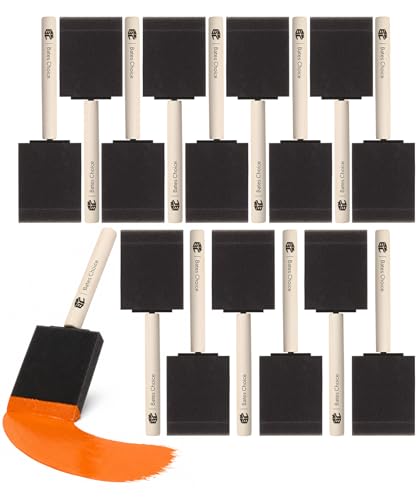
The fixed 2-inch width distinguishes this set from mixed-size assortments and is a practical middle size for repeated strokes across moderate areas. Its 16 foam brushes have wooden handles; Bates says the absorbent foam cells help reduce dripping and that the tips are securely glued to the handles. The product is intended for paint, stain, varnish, and glue, including narrow areas such as window frames and door jambs. A single width limits versatility when a job calls for finer detail or wider coverage.
Bottom line: Pick this set when you want the same 2-inch applicator throughout a project.
TX Liteart 1-Inch Foam Brushes, 50-Pack

This 50-piece set has the largest count among the flat foam options, all with 1-inch heads for smaller areas. TX Liteart says the foam applies paint or stain evenly without brush marks or shedding fibers, and positions the brushes for acrylic paint, staining, varnish, glue, and craft use. The narrow width can help with corners, trim, and touch-ups. It is a poor match for covering large panels quickly, and the maker frames the brushes as disposable or short-term applicators.
Bottom line: Choose it for many small jobs where narrow heads and easy disposal matter.
DMSVK 1-Inch Foam Brushes, 20-Pack

The 20-piece count offers a smaller batch of 1-inch flat foam applicators than the 50-piece set, while keeping the same narrow width for edges and touch-ups. DMSVK says the soft, elastic foam is intended to distribute paint evenly and absorb enough material to reduce repeated dipping. The product is described for painting, crafts, staining, varnish, and retouching on surfaces such as wood, paper, and canvas. The single head width is the main constraint: it cannot substitute for a wider brush when broad coverage is the priority.
Bottom line: Pick this set for small projects that need narrow foam heads without a large assortment.
How to choose a sponge brush width
Choose head width by the area you need to cover: a 1-inch foam brush is easier to steer on trim and corners, while a 2-inch head covers moderate flat areas and a 3-inch head reaches broader surfaces. A useful rule is to keep the head narrower than the narrowest edge or recess you must coat; for a 1.5-inch trim edge, use a 1-inch head rather than a 2-inch head. Wider foam heads reduce passes on open surfaces but can leave excess paint at corners if overloaded. Round sponge heads work differently: their diameter controls the size of a dab or print, not the width of a continuous stroke.
Flat foam and round sponge brushes compared
Flat foam brushes spread a coating in strokes, while round sponge brushes make localized marks by pressing or dabbing. This distinction matters more than count when choosing between these tool types. Use this guide to match the shape to the task.
| Need | Shape | Typical use |
|---|---|---|
| Coat edges or a flat strip | Flat foam | Staining, varnishing, touch-ups |
| Make dots or textured marks | Round sponge | Stippling, acrylic craft patterns |
Round tools can create repeated circular marks, but they are not a direct replacement for a flat brush when you need an even band of coating.
How to apply paint or stain with foam
Load a foam brush lightly and make a test pass on scrap material before coating a visible surface; foam can carry liquid, and an overloaded tip may leave drips or heavy edges. For wood stain, work with the grain and wipe away excess according to the stain maker’s directions, since a sponge applicator does not determine the required drying or finishing process. Use a fresh brush when changing from glue or varnish to paint to avoid carrying residue into the next coating. On delicate craft surfaces, test the foam and coating in an inconspicuous spot first because absorption and surface texture affect the finish.
Cleaning and replacing sponge brushes
Water-based paint and many craft coatings can often be rinsed from foam with water before they dry, while oil-based stains and varnishes require the cleanup solvent named on their containers. Dry coating can stiffen or damage foam, so clean a reusable head promptly; round sponge brushes in this group are described as washable with soap and water. Foam applicators are also commonly treated as disposable after a short task, particularly when the coating is difficult to clean or the head is compressed or torn. For a repeated finish job, keep one applicator dedicated to each coating rather than mixing paint, stain, and glue residue.
Frequently Asked Questions
Can sponge brushes be used for acrylic paint?
Yes, foam applicators are used for acrylic paint on crafts and touch-ups. A 1-inch head gives more control on small shapes, while a round sponge head makes dabs and printed marks.
What size foam brush works for trim?
A 1-inch flat foam brush is a sensible starting point for narrow trim and corners. Choose a head narrower than the surface when the trim is under 2 inches wide so the foam can stay within its edges.
Are round sponge brushes the same as foam paint brushes?
They are related tools but make different marks: flat foam brushes spread coating in strokes, while round sponges are pressed to create dots or texture. Use a round head when the pattern matters more than covering a continuous strip.
How do you avoid drips with a foam brush?
Dip only part of the foam head and let excess coating drain back into the container before applying it. A narrower head is easier to control on small edges, and a test stroke can reveal whether the brush is overloaded.
Can foam paint brushes be reused after staining?
Some foam brushes can be reused if cleaned before the coating dries, but the correct cleanup depends on whether the stain is water- or oil-based. Check the stain container for cleanup directions; replace a head that is torn or permanently stiffened.