
Starfire Solarus Tires: 4 Sizes Compared by Fit

For a passenger car that calls for 205/70R15, the Starfire Solarus AS 205/70R15 is the closest match here, with a passenger-touring design and 96T rating. Choose another size or an LT tire only if it matches your vehicle’s required fitment; these tires are not interchangeable just because they share the Solarus name.
Solarus AS and HT are all-season tires in passenger and truck/SUV sizes. This comparison focuses on the sizes, load/speed ratings and maker-claimed features so you can narrow the choices to tires that meet your vehicle’s requirements.
We earn a commission if you buy through links on this page. As an Amazon Associate I earn from qualifying purchases. Products are compared on manufacturer specifications, not hands-on testing.
- Best overall: Starfire Solarus AS 205/70R15 – The 205/70R15 passenger-touring size suits vehicles that call for that exact fitment.
- Best for LT fitments: Starfire Solarus HT LT245/75R16 – The LT245/75R16 is an E-rated, 10-ply tire with 120/116S load/speed markings.
- Best for standard-load SUVs: Starfire Solarus HT 245/70R16 – The 245/70R16 HT has a standard-load construction and a 50,000-mile warranty.
| Product | Best for | Size | Warranty | Shop |
|---|---|---|---|---|
| Starfire Solarus AS 205/70R15 | Passenger car fit | 205/70R15 | — | Check Price on Amazon |
| Starfire Solarus HT LT245/75R16 | LT truck fit | LT245/75R16 | 50,000 miles | Check Price on Amazon |
| Starfire Solarus HT 245/70R16 | Standard-load SUV | 245/70R16 | 50,000 miles | Check Price on Amazon |
| Starfire Solarus AS 215/60R15 | 15-inch passenger fit | 215/60R15 | 50,000 miles | Check Price on Amazon |
Starfire Solarus Tire Sizes Compared
Match the size and load requirement on your vehicle placard before comparing the differences among these Solarus AS and HT tires.
Starfire Solarus AS 205/70R15
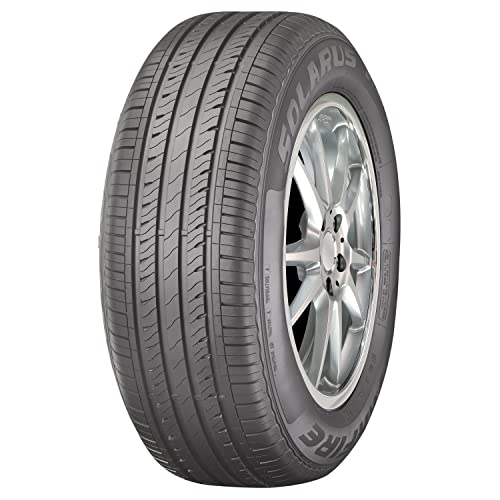
This passenger-touring Solarus AS is the option here in 205/70R15, so its main advantage is serving vehicles that require that exact size. The tire has standard-load radial construction and a black sidewall. Starfire says its all-season tread, shoulder slots and biting edges support wet and dry traction, while its solid center rib supports controlled handling and its variable-pitch tread is designed to reduce highway noise. The limitation is fit: this passenger tire is not a substitute for an LT size or a different placard size.
Bottom line: Choose this for a passenger vehicle whose required size is 205/70R15.
Starfire Solarus HT LT245/75R16
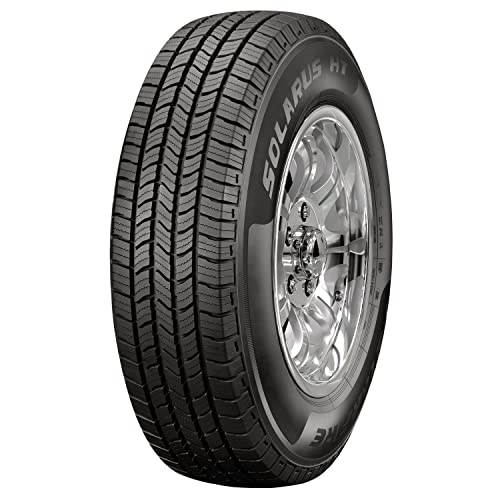
The LT245/75R16 HT is the only E-rated, 10-ply LT tire among these choices, distinguishing it from the standard-load passenger and truck/SUV sizes. Starfire says this all-season highway tire is intended for SUVs, CUVs and pickups, and claims a quiet ride, even treadwear and all-season traction. It carries an M+S marking and a 50,000-mile warranty. Its LT construction and size matter: this is not the appropriate pick for a vehicle requiring a passenger tire or another tire size.
Bottom line: Pick this when your vehicle calls for an LT245/75R16 tire and its load rating.
Starfire Solarus HT 245/70R16
This standard-load HT provides a 245/70R16 option for a truck or SUV that calls for that size, unlike the LT245/75R16 alternative. Starfire says the all-season highway tire is intended for SUVs, CUVs and pickups, with a quiet ride, even treadwear and all-season traction. The maker also gives it an M+S marking and a 50,000-mile warranty. Its standard-load construction is the key limitation: choose it only when the vehicle’s required fitment and load capacity permit this specification.
Bottom line: Choose this for a standard-load vehicle requiring 245/70R16.
Starfire Solarus AS 215/60R15
The 215/60R15 Solarus AS is the other passenger-touring size here, with a 94H rating rather than the 96T rating of the 205/70R15 option. Starfire says it is an all-season touring tire for drivers seeking mileage, traction and fuel economy; the maker specifies a 50,000-mile warranty and M+S marking. This is a standard-load radial with a black sidewall. The size difference is decisive, so it belongs only on a vehicle whose placard or manufacturer-approved fitment calls for 215/60R15.
Bottom line: Pick this for a passenger vehicle requiring 215/60R15.
How to choose a Starfire Solarus tire
Start with the tire size and load requirement on the driver-door placard, then compare the matching Solarus option. The size code encodes section width in millimeters, aspect ratio as a percentage of width, construction type and wheel diameter in inches; for example, 205/70R15 means a 205-mm nominal width, a 70 aspect ratio and a 15-inch wheel. The load index and speed symbol are separate requirements, not interchangeable measures of tread performance. Do not downsize the load or speed rating below the vehicle maker’s requirement. In this group, LT245/75R16 is E-rated 10-ply, while the other tires are standard load. If the placard calls for an LT tire, do not choose a standard-load size merely because its wheel diameter matches.
Solarus AS and HT size and fit
Choose by the complete size string, not by the shared Solarus name: 15-inch passenger sizes and 16-inch truck/SUV sizes have different intended applications. The AS options are passenger-touring tires; the HT options are highway all-season tires identified for SUVs, CUVs and pickups. A tire’s nominal width and sidewall ratio also affect overall diameter, so changing from 245/70R16 to 245/75R16 changes more than the load construction. Use the vehicle placard or approved fitment guide rather than assuming a nearby size will clear the suspension, wheel well or brakes. This table is a quick way to separate the size types before checking the vehicle requirement.
| Stated size type | Choice in this group | Use when |
|---|---|---|
| Passenger, 15-inch | Solarus AS 205/70R15 or 215/60R15 | The placard specifies that exact size |
| Truck/SUV, 16-inch standard load | Solarus HT 245/70R16 | The vehicle calls for this size and load rating |
| LT, 16-inch | Solarus HT LT245/75R16 | The vehicle calls for an LT tire in that size |
All-season tire limits and safe use
All-season tires are designed for a broad range of ordinary road conditions, but the label does not make them equivalent to dedicated winter tires on snow and ice. M+S means mud and snow designation; it is not the same as the Three-Peak Mountain Snowflake symbol used for tires meeting a severe-snow performance standard. For frequent winter driving, check for that mountain-snowflake marking and consider local conditions. Maintain inflation at the cold pressure on the vehicle placard, not the maximum pressure molded on a tire sidewall, and check pressure monthly and before long trips. Tires also need adequate tread: 2/32 inch is the U.S. minimum legal tread depth in most states, while wet-road grip can be compromised before that threshold.
Rotation, pressure and replacement checks
Rotate tires at roughly 5,000 to 8,000 miles as a common maintenance interval, unless the vehicle maker calls for a different schedule. Regular rotation helps manage front-to-rear wear differences, especially on front-wheel-drive vehicles, but it cannot correct poor alignment or underinflation. Check tread across the width of each tire; uneven wear can point to inflation, alignment or suspension issues that should be addressed before fitting replacements. Replace tires in pairs or as a full set when needed to preserve balanced handling, and follow the vehicle maker’s rules for matching tread depth and tire type, especially on all-wheel-drive vehicles. Confirm the complete size and minimum load/speed ratings before ordering, and never exceed the tire’s load or inflation limits.
Frequently Asked Questions
What does 205/70R15 mean on a tire?
205/70R15 identifies a nominal 205-mm width, a sidewall height equal to 70% of that width, radial construction and a 15-inch wheel diameter. The full size must match an approved fitment; matching only the wheel diameter is not enough.
Is M+S the same as a winter tire rating?
No. M+S is a mud-and-snow designation, while the Three-Peak Mountain Snowflake symbol identifies tires meeting a severe-snow performance standard. For regular snow and ice driving, check the sidewall for the mountain-snowflake symbol.
How often should all-season tires be rotated?
A common rotation interval is about every 5,000 to 8,000 miles, though the vehicle maker’s schedule takes priority. Uneven wear or a vibration calls for an inspection rather than waiting for the next routine interval.
What tire pressure should I use for my vehicle?
Use the cold inflation pressure on the vehicle’s door placard or owner’s manual, not the maximum pressure printed on the tire sidewall. Check when the tires are cold, because driving warms them and raises the reading.
When should I replace an all-season tire?
Replace a tire at 2/32 inch of remaining tread, the U.S. minimum legal tread depth in most states, and consider replacement sooner if wet traction is declining. Cracks, bulges, punctures or unusual wear warrant prompt professional inspection.