
Strips Between Stove and Counter: 5 Fits Compared

For most kitchens, Flexible Silicone Gap Covers, 21-Inch is the most adaptable choice because its 21-inch silicone strip can be cut shorter to fit the counter run. Choose a different option if you need adjustable metal trim or have a gap wider than the cover can span.
Stove gap covers sit between a range and counter to catch crumbs and spills; measure both the length of the opening and its width before choosing.
We earn a commission if you buy through links on this page. As an Amazon Associate I earn from qualifying purchases. Products are compared on manufacturer specifications, not hands-on testing.
- Best overall: Flexible Silicone Gap Covers, 21-Inch – Its flexible 21-inch silicone strip can be cut shorter for a smaller opening.
- Best for narrow gaps: Lomesion Retractable Steel Covers, 13.8–27.5-Inch – The telescoping steel design fits gaps from 0.08 to 0.7 inches.
- Best for gaps under 1 inch: FLSEPAMB Silicone Covers, 21-Inch – Its fit range covers gaps up to 1 inch.
| Product | Best for | Material | Length | Gap width fit | Shop |
|---|---|---|---|---|---|
| Flexible Silicone Gap Covers, 21-Inch | Shorter counter runs | Silicone | 21 in | — | Check Price on Amazon |
| Linda’s Essentials Silicone Covers, 21-Inch | Wider silicone strips | Silicone | 21 in | Up to 2.3 in | Check Price on Amazon |
| Stainless Steel Range Trim, 13.8–27.5-Inch | Adjustable metal fit | Stainless steel | 13.8–27.5 in | 0.04–0.7 in | Check Price on Amazon |
| FLSEPAMB Silicone Covers, 21-Inch | Gaps up to 1 inch | Silicone | 21 in | Up to 1 in | Check Price on Amazon |
| Lomesion Retractable Steel Covers, 13.8–27.5-Inch | Adjustable narrow gaps | Stainless steel | 13.8–27.5 in | 0.08–0.7 in | Check Price on Amazon |
Strips Between Stove and Counter Compared
Match the strip material and fit range to the space beside your range before choosing.
Flexible Silicone Gap Covers, 21-Inch
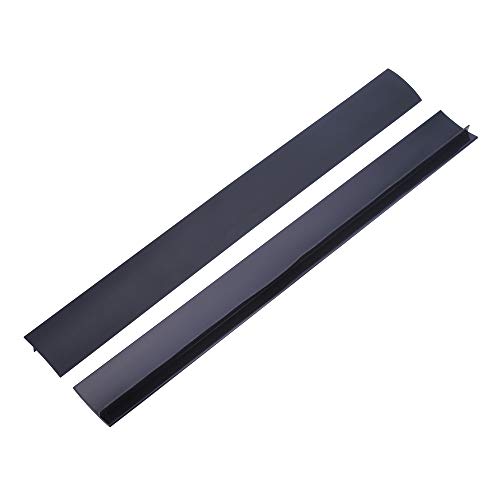
Unlike the fixed-length strips, this flexible silicone pair can be cut shorter to fit a shorter counter run. Each strip is 21 inches long and 2.3 inches wide, and the maker says the food-grade silicone conforms to the stove and counter surfaces. The soft material suits buyers who want a trim-to-length cover rather than telescoping metal pieces.
Bottom line: Choose this if you want flexible silicone and the option to trim the length.
Linda’s Essentials Silicone Covers, 21-Inch
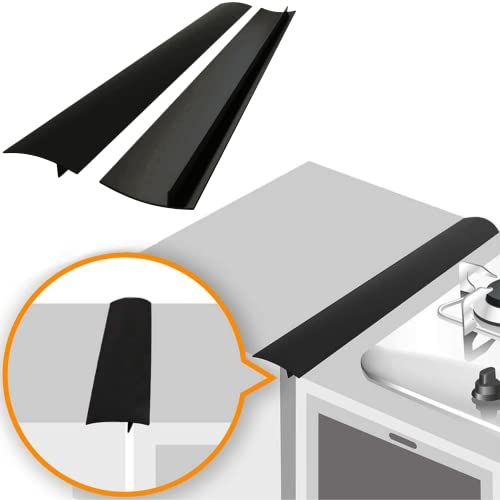
The 21-inch cover is 2.3 inches wide, making it the widest silicone option in this group by the dimensions. The maker says its food-grade silicone is heat resistant and designed to block crumbs and spills from falling into the range-counter gap. It suits buyers whose opening is wider than the 1-inch maximum given for FLSEPAMB Silicone Covers, 21-Inch. This length may not span a longer counter run; measure the opening along the stove before selecting a strip.
Bottom line: Choose this for a 21-inch run where the cover width suits your gap.
Stainless Steel Range Trim, 13.8–27.5-Inch
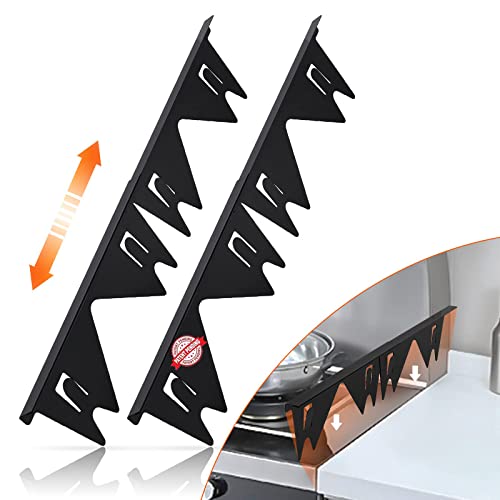
The telescoping stainless steel construction distinguishes this pair from the fixed silicone strips: each can extend from 13.8 to 27.5 inches. The maker specifies gaps from 0.04 to 0.7 inches and a minimum depth of 3.9 inches, with compatibility for flat or uneven stove and counter surfaces. It suits buyers who need adjustable length and have a narrow gap. The 0.7-inch width ceiling rules it out for openings wider than that, so measure the gap at the front and back.
Bottom line: Choose this when an adjustable metal strip fits your measured gap.
FLSEPAMB Silicone Covers, 21-Inch

The maker gives this 21-inch silicone pair a specific gap limit of 1 inch and allows height differences up to 1/4 inch. Its cover dimensions are 21 by 2.25 inches. The maker also describes an oil-repellent coating and mirror-finished underside intended to resist stains and shifting. This may suit a smooth counter-and-range junction with a small height mismatch. The 1-inch gap limit is narrower than Linda’s Essentials Silicone Covers, 21-Inch’s stated 2.3-inch fit, so measure before choosing it for a wider opening.
Bottom line: Choose this for a 21-inch run with a gap no wider than 1 inch.
Lomesion Retractable Steel Covers, 13.8–27.5-Inch

The L-shaped, telescoping steel pair is specified for gaps from 0.08 to 0.7 inches and adjusts from 13.8 to 27.5 inches. The maker says built-in tabs can be bent to create installation tension without tools, and says the shape works with flat or raised stove and counter layouts. Unlike Stainless Steel Range Trim, 13.8–27.5-Inch, this model explicitly excludes uneven surfaces, so it is not the choice for a lipped or irregular junction. Measure both the opening and counter depth to check fit.
Bottom line: Choose this for an adjustable steel cover on a flat or raised layout.
How to Measure a Stove Gap Strip
Measure the opening in two directions before choosing a stove gap strip: length along the range and width from the appliance edge to the counter. Check the width at the front and rear because the range or counter may not sit perfectly parallel. Also note any height difference between the surfaces; FLSEPAMB Silicone Covers, 21-Inch allows up to 1/4 inch, while a mismatch outside that limit may leave a poor fit. Compare your measurements with the strip’s fit range, not just its overall width. For adjustable metal strips, check the minimum and maximum lengths as well as the gap range; a strip that spans the opening length can still be too narrow or too wide for the gap.
Silicone or Stainless Steel Gap Strips
Silicone strips are flexible, while telescoping stainless steel strips adjust in length and hold a more rigid profile. Silicone is a practical choice when the range-counter junction is irregular or when a strip needs trimming; steel designs can fit a range of lengths but have narrower gap limits in these options. This table compares the included designs by their fit properties.
| Type | Typical fit in this group | Choose when |
|---|---|---|
| Fixed silicone | 21-inch length | You want a flexible strip or trim-to-length option |
| Telescoping steel | 13.8–27.5-inch length; up to 0.7-inch gap | You need an adjustable length and a narrow gap fit |
Material alone does not determine fit: verify the opening width and any height step before choosing either type.
Heat and Placement Near a Stove
Keep any gap strip clear of burners and open flames; a heat-resistant claim does not mean a strip can touch a flame or hot cookware. Silicone and steel may respond differently to heat, so do not bridge the cover onto a burner surface. Let the range cool before removing or repositioning a strip, especially when cleaning grease or spills near the cooktop. A strip should sit between the counter and range without obstructing controls, ventilation openings, or appliance movement. If sliding the range forward changes the fit or exposes a sharp edge, stop and reassess placement rather than forcing the cover into the opening.
Cleaning and Fit Checks
Wipe spills from a stove gap strip promptly, then remove the strip periodically to clean the surfaces beneath it. Silicone can generally be washed with warm water and dish soap; stainless steel can be wiped with a soft damp cloth and dried to limit water marks. Avoid abrasive pads that may scratch a coated or brushed finish. Recheck the fit after cleaning and after moving the range: a strip should not buckle, slide into a burner area, or leave a new opening at either end. Do not assume a universal length or width; even similar-looking ranges can leave different gaps depending on counter position and installation.
Frequently Asked Questions
How wide should a stove gap strip be?
Choose a strip whose gap range includes your measured opening; overall strip width is not the same as the gap it can cover. Measure at both the front and rear, since the opening can vary along the range.
Can silicone stove gap covers be cut shorter?
Some flexible silicone covers can be trimmed, including Flexible Silicone Gap Covers, 21-Inch, whose maker says it can be customized for a shorter space. Cut only after measuring the counter run, because removing material cannot make a strip longer.
Can stove gap covers touch a burner?
No; keep gap covers out of burner and open-flame areas, even when the maker calls a material heat resistant. Let the range cool before repositioning a strip near the cooktop.
How often should I clean under a stove gap strip?
Remove the strip whenever spills or crumbs collect beneath it, and clean the surface underneath rather than only wiping the top. A quick fit check after cleaning can catch a shifted or buckled cover.
Will an adjustable metal stove strip fit any gap?
No; the steel options here fit gaps only up to 0.7 inches, despite their adjustable lengths. Measure gap width and counter depth as well as length, and confirm the model’s surface-fit limits.