
Tape to Repair Water Hose: 4 Self-Fusing Options

For water-hose leaks, XFasten Self-Fusing Silicone Tape is the closest match because its self-fusing silicone design is specifically intended for hose repair and comes in a 36-foot roll. Choose another option if you need a shorter roll or want a different stated temperature range; shut off water before wrapping, and treat tape as a temporary repair rather than a substitute for replacing damaged hose.
We earn a commission if you buy through links on this page. As an Amazon Associate I earn from qualifying purchases. Products are compared on manufacturer specifications, not hands-on testing.
- Best overall: XFasten Self-Fusing Silicone Tape – Its 1-inch by 36-foot roll is specifically described for hose repair.
- Best for stated temperature range: ARVYNE Self-Fusing Silicone Tape – It gives a continuous-use range of -76°F to 392°F.
- Best for two-roll set: AnykNow Self-Fusing Tape, 2 Rolls – The package includes two 1-inch by 10-foot rolls.
- Best for thicker tape: Romeda 0.5 mm Self-Fusing Tape – The 1-inch tape is 0.5 mm thick.
| Product | Best for | Length | Temperature range | Shop |
|---|---|---|---|---|
| XFasten Self-Fusing Silicone Tape | Long hose repairs | 36 ft. | -60°F to 500°F | Check Price on Amazon |
| ARVYNE Self-Fusing Silicone Tape | Temperature range | 36 ft. | -76°F to 392°F | Check Price on Amazon |
| Romeda 0.5 mm Self-Fusing Tape | Thicker tape | 10 ft. | -58°F to 482°F | Check Price on Amazon |
| AnykNow Self-Fusing Tape, 2 Rolls | Two-roll pack | 20 ft. total | -100°F to 500°F | Check Price on Amazon |
Tape to Repair Water Hose
These self-fusing silicone tapes differ in roll length, thickness, and stated operating temperatures.
XFasten Self-Fusing Silicone Tape
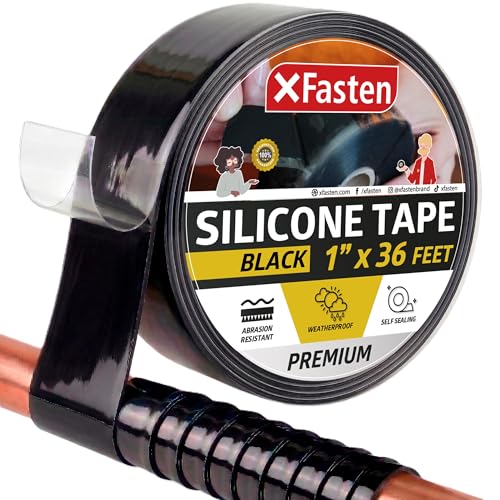
XFasten Self-Fusing Silicone Tape has the longest roll among these options at 36 feet, while remaining 1 inch wide. The maker says its silicone tape self-fuses for hose, plumbing, and other repairs, with a temperature range from -60°F to 500°F. That length may suit repeated wraps or several small repairs. The limitation is that a roll’s length does not establish a repair’s pressure rating or permanence; use it only on a compatible hose and consider replacement if the hose is split, bulging, or still leaking after wrapping.
Bottom line: Choose this for a longer roll of self-fusing tape intended for hose repair.
ARVYNE Self-Fusing Silicone Tape
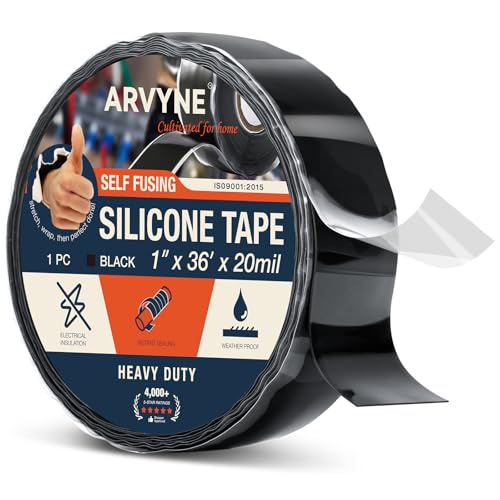
ARVYNE Self-Fusing Silicone Tape pairs a 36-foot roll with the widest low-temperature reach in this group: -76°F to 392°F for continuous use. The maker also gives tensile strength of at least 950 PSI and says the tape bonds to itself without adhesive, leaving no residue. Those specifications may help when a repair needs flexibility across changing conditions. Stop using a hose that remains wet at the repair or shows structural damage.
Bottom line: Pick this when its continuous-use temperature range is the deciding factor.
Romeda 0.5 mm Self-Fusing Tape
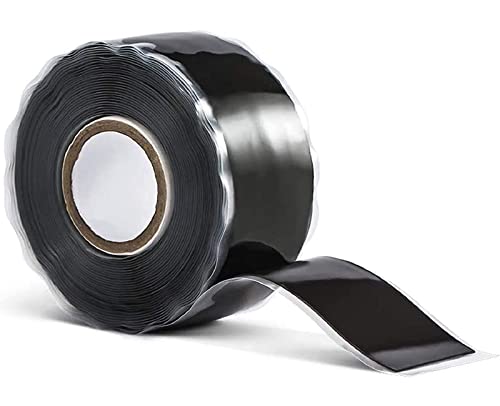
Romeda 0.5 mm Self-Fusing Tape stands out for its 0.5 mm thickness and 10-foot roll, rather than the longer rolls offered by some alternatives. The maker gives a temperature range of -58°F to 482°F, which is equivalent to -50°C to 250°C. A shorter roll may be sufficient for one small, localized repair and easier to keep with hose supplies. The tradeoff is less tape length for multiple repairs or extensive overlap.
Bottom line: Choose this for a 10-foot roll with a 0.5 mm thickness.
AnykNow Self-Fusing Tape, 2 Rolls

AnykNow Self-Fusing Tape, 2 Rolls provides two 1-inch rolls, each 10 feet long, for 20 feet total. The maker says the tape has no stickiness of its own and must be stretched and overlapped tightly so it bonds to itself; it also gives a temperature range from -100°F to 500°F. The two-roll format separates spare material from the roll in use. Follow the wrapping method carefully, since a loose wrap can leave gaps rather than seal a leak.
Bottom line: Pick this when two separate 10-foot rolls are more useful than one longer roll.
How to Choose Hose Repair Tape
Self-fusing silicone tape is the relevant type for wrapping a hose because stretched, overlapping layers bond to one another rather than relying on adhesive against the hose. Compare width, roll length, and the maker’s temperature range; none of those figures by itself confirms suitability for a hose’s working pressure. For a short localized leak, a 10-foot roll may be enough; a 36-foot roll offers more material for overlap or additional repairs. If the hose has a split, bulge, worn coupling, or leak that persists after wrapping, replace the hose or damaged fitting instead of adding more tape. Close the water supply before handling the leak, and do not use a wrapped hose unattended.
How to Wrap Self-Fusing Tape on a Water Hose
Self-fusing tape needs stretch and overlap to make a continuous wrap: clean and dry the outside of the hose first, then begin beyond the damaged area and wrap across it under steady tension. Overlap each pass so no hose surface remains exposed, extending the wrap past both ends of the leak. Avoid trapping water or dirt under the wrap, since either can interrupt contact between layers. Turn water back on gradually and inspect the repair for seepage. If the hose is still leaking, shut it off again rather than tightening or adding layers while pressurized. A repair that holds briefly should still be treated as temporary, especially where a leak could cause property damage.
When Tape Is Not a Lasting Hose Repair
Tape is best reserved for a temporary fix on a small, localized leak in otherwise sound hose material. A long tear, a damaged connector, a bulge, or a hose that has become brittle calls for hose or fitting replacement; tape cannot restore the hose’s original structure. The numbers on silicone tape packaging also need careful interpretation: tensile strength and temperature limits are not the same as a hose system’s working-pressure rating. Use a replacement hose rated for the pressure and conditions of the water system, and never exceed its marked limit. For a leak near an electric device, shut off power to the affected area before approaching standing water.
Frequently Asked Questions
Does self-fusing tape stick directly to the hose?
Self-fusing silicone tape bonds to itself, not by an adhesive coating that grips the hose. Stretch and overlap the wrap tightly; dirt, moisture, or gaps between layers can undermine the seal.
Can tape permanently repair a garden hose leak?
Tape should be treated as temporary because it does not restore damaged hose structure or establish the hose’s working-pressure rating. Replace hose with a split, bulge, or recurring leak.
Should water be on while wrapping a leaking hose?
No; shut off the supply and depressurize the hose before wrapping. Restart water gradually after the wrap is complete and check for seepage without leaving the hose unattended.
How much overlap should hose repair tape have?
Each pass should overlap the previous pass so there are no exposed gaps across the damaged section. Extend the wrap beyond both ends of the leak and maintain consistent stretch and tension.
Can I use electrical tape instead of silicone hose tape?
Electrical tape is not the same as self-fusing silicone repair tape and is not a dependable hose-repair substitute. Select a tape specifically intended for hose or plumbing sealing, and replace structurally damaged hose.