
Orthotic Inserts for Duck Feet: 5 Options Compared

Dr. Scholl’s Heavy Duty Support Insole is the closest match for broad feet because it is specifically designed for wide-width feet, while the other options focus on arch support or cushioning. “Duck feet” commonly means a broad foot shape; if your shoes are already tight at the toes, choose a different insert only if it fits without crowding the shoe.
For a lower-profile 3/4-length orthotic, consider Dr. Foot’s 3/4 Length Orthotics or DR. POTTER+ 3/4 Orthotic Insoles; their shorter design leaves the forefoot uncovered, so they may not address a tight toe box.
We earn a commission if you buy through links on this page. As an Amazon Associate I earn from qualifying purchases. Products are compared on manufacturer specifications, not hands-on testing.
- Best overall: Dr. Scholl’s Heavy Duty Support Insole – Its target includes men with wide-width feet, alongside support for users over 200 pounds.
- Best for 3/4 length: Dr. Foot’s 3/4 Length Orthotics – The shorter orthotic design leaves the front of the shoe uncovered.
- Best for heavy-duty support: VALSOLE 250+ lbs High Arch Insole – It is designed for users over 220 pounds and offers high arch support.
| Product | Best for | Length style | Arch support | Fit or weight focus | Shop |
|---|---|---|---|---|---|
| Dr. Scholl’s Heavy Duty Support Insole | Wide-foot support | Full-length | Arch support | Wide feet; men over 200 lb | Check Price on Amazon |
| Dr. Foot’s 3/4 Length Orthotics | Shorter insert fit | 3/4 length | Anatomical arch support | Men’s sizes 9.5–12.5 | Check Price on Amazon |
| VALSOLE 250+ lbs High Arch Insole | High-load support | Full-length style | High arch support | Over 220 lb; size shown: men’s 12–12.5 | Check Price on Amazon |
| High Arch Support Insoles, XL | Extra-large sizing | Full-length style | Rigid high arch | Men’s 12.5–14.5; women’s 13.5–15.5 | Check Price on Amazon |
| DR. POTTER+ 3/4 Orthotic Insoles | Heel cushioning | 3/4 length | High-density EVA arch | Men’s 11.5–14; women’s 12.5–15 | Check Price on Amazon |
Orthotic inserts for duck feet
Compare the fit, length and support focus before choosing an insert for broad feet.
Dr. Scholl’s Heavy Duty Support Insole

Among these options, this is the only one that explicitly targets wide-width feet. Dr. Scholl’s says the insole is designed for men over 200 pounds, tall men and people with wide feet, and describes heel cushioning, arch support and pressure distribution. Its men’s size range is 8–14, with a trim-to-fit design for work boots and shoes. The fit limitation is that the size range is men’s; people outside that range should not assume it will fit. A supportive insert also cannot make a shoe’s toe box wider, so roomy footwear remains important.
Bottom line: Choose it if you need an insert expressly intended for wide feet and wear a compatible men’s shoe size.
Dr. Foot’s 3/4 Length Orthotics
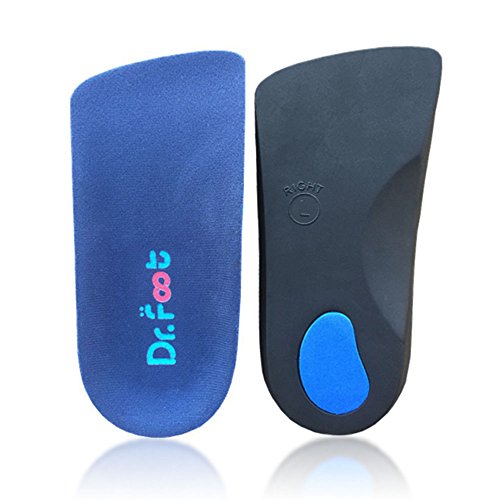
The 3/4-length format distinguishes this orthotic from the full-length options: it supports the arch and heel without covering the entire shoe bed. The EVA construction has a sweat-wicking, anti-skid top layer and dual-layer cushioning. The brand identifies flat feet, fallen arches and overpronation among its intended use cases. Its men’s size choices cover 9.5–12.5, so check that range before considering it. The short length does not add forefoot width; if your toes need more room, shoe shape matters more than the insert’s arch support.
Bottom line: Pick it if a 3/4-length insert suits your shoe and the men’s size range fits.
VALSOLE 250+ lbs High Arch Insole

VALSOLE emphasizes high-load support and foot stability rather than a wide-foot fit. The brand says its insoles are designed for people weighing over 220 pounds and describes high arch support, shock absorption, and rearfoot and midfoot control points intended to reduce overpronation. The size choice is men’s 12–12.5, with a corresponding women’s size shown. That narrow displayed size choice makes sizing the key limitation: buyers outside it should not assume another size is available. This option is relevant to duck feet only when its size and arch shape suit the wearer.
Bottom line: Choose it when the shown size fits and high-load, high arch support is your priority.
High Arch Support Insoles, XL

This option stands out for its extra-large sizing and rigid high arch support, not for a specific wide-foot design. The specifications give men’s sizing of 12.5–14.5 and women’s sizing of 13.5–15.5, and describe cushioning and shock protection for users over 220 pounds. The maker also says the insert is intended to reduce overpronation and support people with flat feet. A larger size does not necessarily mean a wider shape.
Bottom line: Consider it if you need the larger size range and a rigid high arch.
DR. POTTER+ 3/4 Orthotic Insoles

Heel cushioning is the distinguishing feature here: the 3/4-length insert pairs a high-density EVA arch with gel material beneath the heel. The maker describes a deep heel cup for foot stability and targets overpronation, flat feet, and arch or heel discomfort. Its extra-large size covers men’s 11.5–14 and women’s 12.5–15. The shorter format can suit shoes where a full-length insert crowds the front, but it does not increase toe-box width or guarantee a broad fit. Buyers should prioritize shoe width if the forefoot is what feels cramped.
Bottom line: Choose it if heel cushioning and a 3/4-length format match your shoe and size.
How to choose orthotic inserts for duck feet
Start with shoe width and toe-box space, then match the insert’s length and arch shape. In US men’s shoes, D is commonly the standard width, 2E is wide and 4E is extra wide; women’s standard is commonly B, with D wide. Width labels vary by brand and size, so try the shoe with the insert in place and check that toes can spread without rubbing. A practical decision rule: if the forefoot already presses against the shoe sides when standing, choose a wider shoe before adding a thicker orthotic. Arch support changes how the foot is supported, but it cannot create extra space in the shoe’s upper.
Full-length and 3/4-length orthotics
Full-length inserts cover the shoe bed, while 3/4-length inserts end behind the toes and leave the forefoot area uncovered. Use the short format when a full-length insert crowds the toe area or when the shoe’s existing forefoot lining needs to remain in place; use a full-length design when you want support extending farther forward. Most removable insoles are about 3–5 mm thick, but replacement inserts can be thicker, reducing space above the foot. Remove the original insole when the shoe permits and compare thickness before fitting. An insert that lifts the heel too high or makes the shoe tight is a poor fit, even if its arch feels supportive.
Check shoe fit before wearing new inserts
A properly fitted shoe should leave roughly a thumb’s width—about 1/2 inch—between the longest toe and the front when standing, with no side pressure at the forefoot. Try orthotics in both shoes and walk indoors briefly to check for heel slip, edge pressure and toe crowding. A new arch contour can feel unfamiliar; increase wear gradually over several days rather than starting with a full day. Stop using an insert that causes numbness, blistering or worsening pain. Persistent foot pain, diabetes-related sensation loss or circulation problems warrant advice from a clinician or podiatrist before changing footwear support.
What these orthotic insert styles prioritize
These options differ mainly in their fit focus, length and arch design, so use the table to narrow the match rather than assuming an orthotic labeled supportive will fit a broad forefoot. The wide-foot option explicitly targets that shape; the 3/4-length products trade forefoot coverage for a shorter profile. Weight thresholds and size ranges are useful filters, but they do not substitute for checking shoe width and internal volume.
| Need | Style to consider | Fit check |
|---|---|---|
| Explicit wide-foot targeting | Wide-foot design | Confirm shoe toe-box width |
| More room at the front of the insert | 3/4 length | Check arch placement |
| Specific larger shoe size | Size-range match | Compare actual shoe insole length |
Frequently Asked Questions
Do orthotic inserts make shoes wider?
No, an insert does not widen a shoe’s upper or toe box. If the shoe feels tight at the sides, try a wider shoe; standard US men’s width is commonly D, with 2E and 4E wider options.
How much toe room should shoes have?
Aim for about 1/2 inch between the longest toe and the shoe front while standing. Also check side-to-side space, because a shoe can have adequate length and still pinch a broad forefoot.
Can a 3/4-length orthotic work in any shoe?
A 3/4-length insert can fit many shoes, but arch placement and shoe depth still matter. Check that its arch sits under your arch and that the insert does not let your heel slip.
Should I wear new orthotics all day immediately?
No; begin with a short period, such as 1–2 hours, and increase wear over several days if comfortable. Remove the insert if it causes numbness, blisters or worsening pain.
When should foot pain be checked by a clinician?
Seek clinical advice for persistent or worsening pain, and before changing support if you have diabetes-related sensation loss or circulation problems. An insert should not be used to mask new numbness or skin injury.