
TheraBreath Healthy Gums Mouthwash: Rinse Compared

TheraBreath Healthy Gums Oral Rinse is the closest match for gum care because it is an alcohol-free antigingivitis rinse; choose another formula if breath freshening or fluoride is your priority. TheraBreath Healthy Gums Toothpaste is toothpaste, not mouthwash, so it is a related option rather than a rinse alternative.
We earn a commission if you buy through links on this page. As an Amazon Associate I earn from qualifying purchases. Products are compared on manufacturer specifications, not hands-on testing.
- Best overall: TheraBreath Healthy Gums Oral Rinse – This alcohol-free oral rinse is specifically formulated to reduce plaque associated with gingivitis.
- Best for breath: TheraBreath Fresh Breath Icy Mint – This rinse focuses on bad-breath bacteria and claims 12-hour breath protection.
- Best for fluoride: TheraBreath Complete Mouthwash – This mouthwash combines breath freshening with anticavity fluoride benefits.
| Product | Best for | Product type | Volume | Key focus | Shop |
|---|---|---|---|---|---|
| TheraBreath Healthy Gums Oral Rinse | Gum care | Oral rinse | 32 fl oz total | Antigingivitis, antiplaque | Check Price on Amazon |
| TheraBreath Fresh Breath Icy Mint | Breath freshening | Oral rinse | 32 fl oz total | Bad-breath control | Check Price on Amazon |
| TheraBreath Complete Mouthwash | Fluoride rinse | Oral rinse | 32 fl oz total | Fluoride, anticavity | Check Price on Amazon |
| TheraBreath Healthy Gums Toothpaste | Gum-care toothpaste | Toothpaste | 8 oz total | Stannous fluoride, gums | Check Price on Amazon |
TheraBreath Healthy Gums Mouthwash and Alternatives
Compare the gum-care rinse with related TheraBreath toothpaste and mouthwash formulas by type and stated benefits.
TheraBreath Healthy Gums Oral Rinse
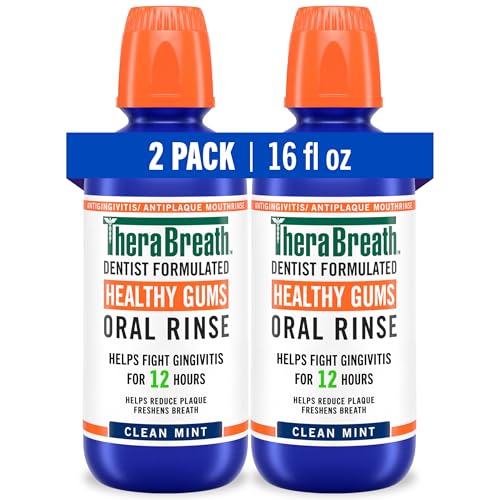
Unlike the other rinses here, this formula is specifically positioned for gum care: it is an alcohol-free antigingivitis and antiplaque oral rinse. The two-pack contains two 16 fl oz bottles in Clean Mint. The maker says it helps reduce plaque that can lead to bleeding gums and gingivitis, and describes the rinse as non-burning. It also carries vegan, gluten-free, halal and kosher certifications. Choose it when gum-care focus matters more than fluoride or a primary bad-breath claim; the features do not describe it as a fluoride rinse.
Bottom line: Choose this rinse if reducing plaque associated with gingivitis is your priority.
TheraBreath Fresh Breath Icy Mint

Where the Healthy Gums rinse centers on gum care, Fresh Breath Icy Mint is aimed at bad-breath control. The two-pack holds 16 fl oz per bottle, and the alcohol-free formula is described as pH-balanced and non-burning. The maker says it starts working instantly against odor-causing bacteria and fights bad breath for 12 hours. It is also made with xylitol and is certified vegan, gluten-free, halal and kosher. This is a better match when breath freshening is the main goal; it is not presented as an antigingivitis rinse.
Bottom line: Pick this when breath control matters more than a gum-care focus.
TheraBreath Complete Mouthwash

This Complete rinse stands apart by adding anticavity fluoride benefits to breath freshening. Its Revitalizing Mint formula comes as two 16 fl oz bottles and is alcohol-free. The maker says the rinse cleans the whole mouth, kills bad-breath bacteria, strengthens teeth and helps rebuild enamel. Adult directions call for swishing twice a day for one minute after brushing, then spitting it out. Select it for fluoride-focused oral care rather than a formula marketed specifically for gingivitis; the directions are for adults 18 and older.
Bottom line: Choose this if you want an alcohol-free fluoride rinse alongside breath freshening.
TheraBreath Healthy Gums Toothpaste
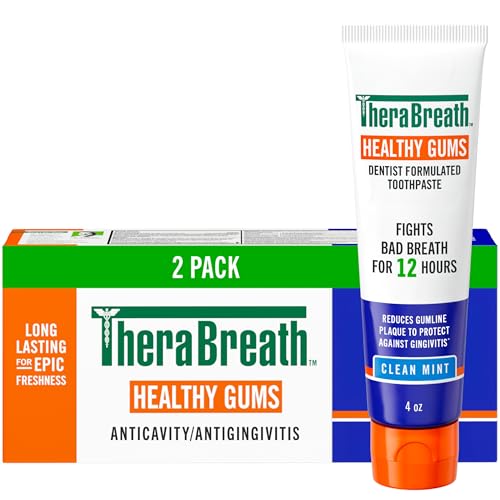
This is the only toothpaste in the group, so it suits someone seeking a brushing product rather than a mouth rinse. The two-pack contains 4 oz tubes in Clean Mint, with stannous fluoride for cavity protection and gingivitis protection. The maker also says it reduces gumline plaque for 24 hours and gently whitens teeth, including sensitive teeth. Its formula is certified vegan. The key limitation is type: toothpaste is brushed on and spit out, so it cannot replace a rinse if you specifically want mouthwash.
Bottom line: Choose this toothpaste if you want a brushing formula for gum care, not a rinse.
How to choose a mouthwash for gum care
Start with the benefit you want, because a mouth rinse marketed for gingivitis is not interchangeable with a breath freshener or fluoride rinse. Antigingivitis rinses generally use an antimicrobial active ingredient; check the Drug Facts panel for the active ingredient and directions rather than judging by mint flavor or alcohol content. Fluoride rinses target cavity prevention, while cosmetic breath rinses focus on temporary odor control. Alcohol-free describes the base formula, not the treatment purpose. For bleeding gums that persist, swelling or pain, mouthwash is not a substitute for a dental exam; gum disease needs professional assessment.
Use the decision rule that matches your need: choose an antigingivitis label when plaque-related gum inflammation is the goal, fluoride when added cavity protection is the goal, and a breath-focused rinse when odor control is primary.
How to use mouthwash safely
Use a rinse according to its label, because adult directions and recommended frequency can vary by active ingredient. A typical fluoride rinse is swished for about one minute and spit out; avoid swallowing mouthwash, and keep it away from young children. The Complete formula here gives adult directions of twice daily for one minute after brushing. Do not assume every rinse follows that schedule: antimicrobial formulas may have their own instructions, and using extra rinse does not guarantee better gum health.
Brushing twice daily with fluoride toothpaste and cleaning between teeth are the foundation of routine oral care; mouthwash is an add-on, not a replacement. If a rinse causes persistent irritation or you have a dental condition, stop and ask a dentist about an appropriate formula.
How mouthwash types differ
Therapeutic mouthwashes address a specific oral-care goal, while cosmetic rinses mainly freshen breath. Fluoride rinses help prevent cavities, and antigingivitis rinses target plaque-related gum problems; the active ingredient and label claim matter more than whether a formula burns. Alcohol-free rinses can avoid alcohol-related stinging, but alcohol-free alone does not indicate gum or cavity protection.
Use this guide to match the rinse category to the job before comparing flavor:
| Goal | Rinse type | What to verify |
|---|---|---|
| Gum care | Antigingivitis | Gingivitis claim and active ingredient |
| Cavity prevention | Fluoride | Fluoride and directions on label |
| Breath freshness | Breath-focused | Odor-control claim and duration |
When to seek dental care for gum symptoms
Bleeding during brushing can be a sign of gum inflammation, but mouthwash cannot diagnose its cause. Persistent bleeding, tender or swollen gums, gum recession, or loose teeth warrant a dental appointment rather than switching rinses repeatedly. A dentist can assess plaque and tartar, which brushing and rinsing cannot remove once hardened below the gumline.
Keep routine cleanings on the schedule recommended by a dental professional; many adults are seen about every six months, though risk and oral health can change that interval. Do not delay care for pain, pus, or rapidly worsening swelling.
Frequently Asked Questions
Can mouthwash replace brushing and flossing?
No, mouthwash does not replace brushing twice daily or cleaning between teeth once a day. Rinsing cannot remove all plaque from tooth surfaces or between teeth.
Does alcohol-free mouthwash treat gingivitis?
Alcohol-free alone does not mean a rinse treats gingivitis. Look for an antigingivitis claim and check the active ingredient and directions on its label.
Should I use fluoride mouthwash every day?
Use a fluoride rinse as its label directs; some are intended for daily use, but frequency and age guidance vary. Spit it out rather than swallowing it.
Why do my gums bleed when I brush?
Bleeding can accompany gum inflammation, but it can have other causes and cannot be diagnosed with mouthwash. If bleeding persists or gums are swollen or painful, arrange a dental evaluation.
Can young children use adult mouthwash?
Do not assume adult mouthwash is appropriate for a child. Many products warn against use under age 6 because children may swallow rinse; follow the product label and ask a dentist.